A visit to the Shippagan region would not be complete without trying its restaurants. Some celebrate local traditions and regional culture, while others offer different and exciting culinary adventures.
In Shippagan, near the bridge to the islands of Lamèque and Miscou,
Pinokkio – Pizzeria Resto-Bar
offers panoramic views of the surrounding area. Its wood-fired white- and rosé-sauce pizzas, starters, salads, pasta, seafood and steaks delight diners. The menu combines international and regional cuisine. The moules marinières in a creamy white-wine sauce are particularly delicious, and the seasonal outdoor terrace is popular.
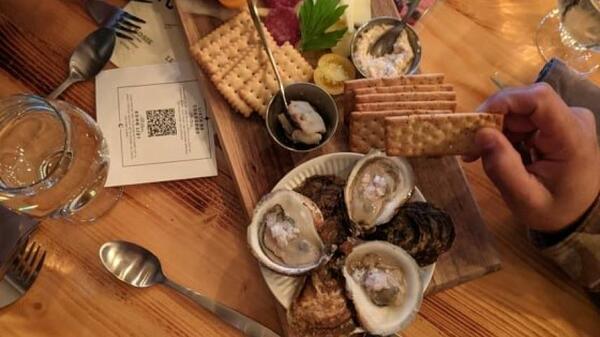
On the Haut-Shippagan side, on the Cielo Glamping site, the Hub chez Cielo has developed a different dining concept that offers a unique culinary and creative experience. The chef has made it his mission to introduce you to the region’s products through the Planches Cielo concept: you build your own meal from the shop’s offerings. The Perles et huîtres package is also popular. You can also enjoy coffee from the roastery or savour one of the famous cocktails, their famous wines and local beers.
On the island of Lamèque, there is no shortage of interesting places. Café boutique Aloha on rue Principale, for example, has Hawaiian-inspired décor and an exotic menu featuring homemade carrot-and-turnip soup, corn chowder, poke bowls, filled paninis, bagels and baguettes, a tempting Aloha salad and its famous Crookies, baked fresh daily. It also serves smoothies. A pretty terrace at the rear welcomes guests in season, and the gift shop is filled with all sorts of practical and playful things.
Nearby, Restaurant du Malia Spa et Villégiature offers a varied menu centred on seafood, along with tempting breakfasts. Its Taco Wednesdays are especially popular.
When a restaurant takes its name from a great wine, diners can expect superior-quality food made with fresh ingredients. A quintessential family restaurant, Kabernet Gourmet-pub serves a wide range of starters, chef’s selections, burgers, meats and fish, as well as an extensive dessert menu. Its wine and spirits list offers remarkable variety and choice. Tables can be reserved from Thursday to Sunday.
On the island of Miscou, Vieille école de Miscou serves breakfast to overnight guests and welcomes passers-by for
coffee or a light meal from a menu that changes through the season. Do not miss the Festival du thon in August and its festive menu for
the occasion.
Brothers James and Charles Atkins, originally from the Estrie region, settled in Haute-Gaspésie in 1988 and founded their company in 1993. “Pleasure was our starting point and has remained our destination. Travellers beneath very beautiful skies, we arrived in Haute-Gaspésie, where a single landscape brought together our memories of sea and mountains. Our company springs from a deep-rooted family tradition of gastronomy, coupled with a great curiosity about culinary culture and everything associated with the pleasures of the table,” they explain.
 James and Charles Atkins, founders
After nearly two decades of accomplishments in the beautiful but remote village of Mont-Louis, the brothers felt carried away by a wind of boldness that came with the spirit of the times. They have now passed the torch to the next generation, and chef Guillaume Thibault is the company’s new sole owner. Of French origin, Mr. Thibault first joined the company as an intern in 2008 while studying agri-food engineering in Brittany. After earning his MBA, he was invited to join the team permanently. He served as general manager for more than three years before buying the company in 2016, and in the meantime became a Canadian citizen.
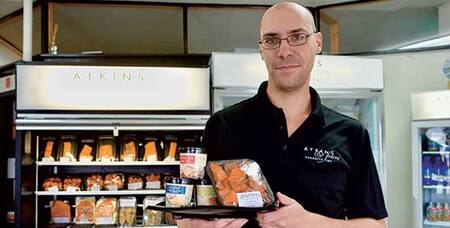 Guillaume Thibault, president
For him, as for the founding brothers, “connecting and talking with our devotees, as we love to do at the Mont-Louis counter, and offering products directly from our workshop is a long-held dream that continues to motivate the team working year-round to create exceptional products.”
The artisans of Mont-Louis are taking their mission of contributing to the convivial pleasures of good food even further by sharing it directly with loyal customers and various connoisseurs, past and present, as well as those who discover and embrace their products each year. “We can now serve customers directly from our home to yours, or through a short detour to one of our preferred partners, who share our commitment to warm, personal relationships with fellow enthusiasts,” says Isabelle Lafrenière, manager at the head office.
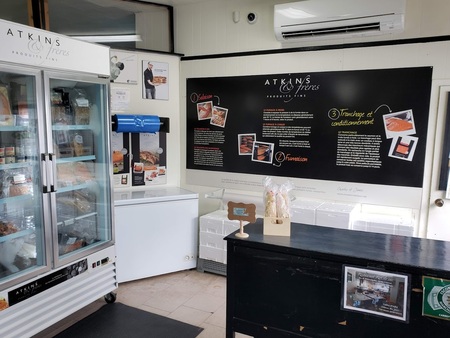
One of the great secrets behind the success and quality of the products is the smoking process. As in various related trades, it is both an art and a technique. Even when working from the same basic principles and broadly similar technology, every artisan and company contributes a distinctive touch, making its products as individual as Scotch whiskies, cured meats, wines or cheeses from different producers.
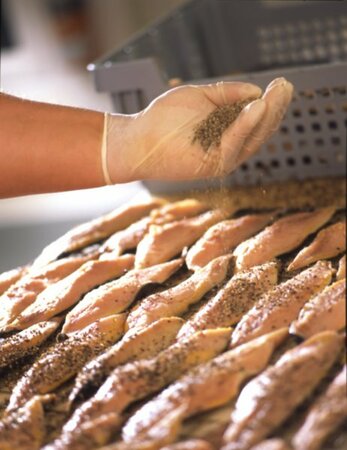
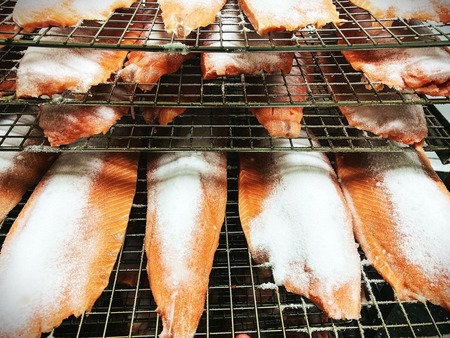
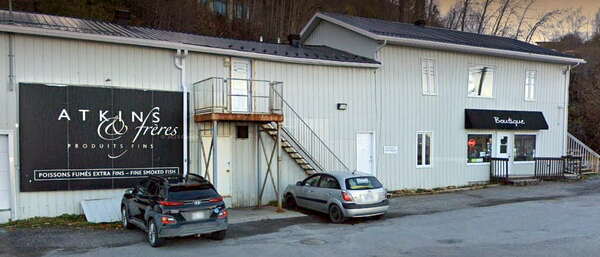
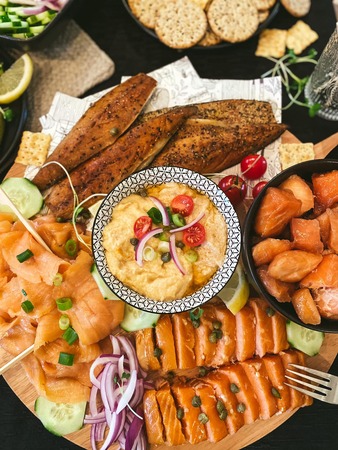
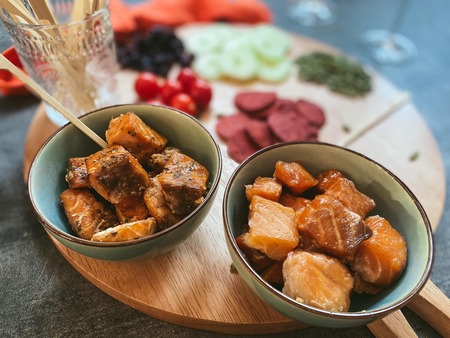
At Atkins & Frères, distinctive production standards underpin the promise to create smoked fish and seafood of the same quality the team would want to serve family and friends at its own table. Now and always, the company strives to work exactly according to the vision and aspirations on which it was founded, with an unmistakably culinary approach.
“Our expertise is devoted to the convivial pleasures of good food: the desire to please, entice and amaze; an unpretentious but unmistakable invitation to indulgence, good times and Rabelaisian feasting. That is what drives us,” says Guillaume Thibault.
Atkins & Frères has received the Mérite national des pêches et de l’aquaculture, the Mérite national de la restauration et de l’alimentation and the Prix Renaud-Cyr, which recognizes food professionals for their outstanding contribution to Québec’s gastronomic culture.
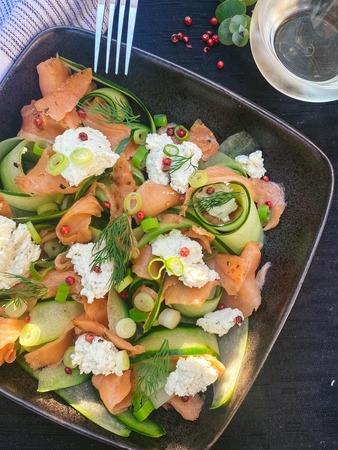
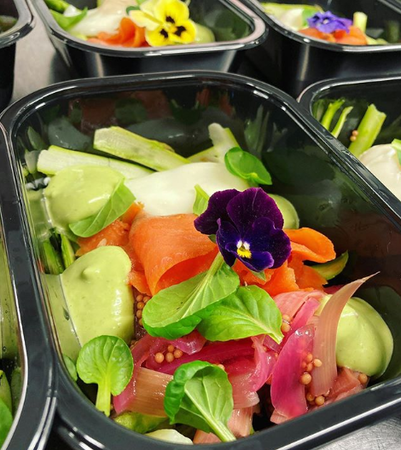
There is no need to travel to Mont-Louis to savour Atkins & Frères products. They are also available at Délices de la mer shops on rue Mont-Royal and at Marché Jean-Talon in Montréal, at Grand Marché in Québec, and in Boucherville. The company also takes part in occasional regional events to showcase its products and win over new devotees. Its website presents the range attractively, along with recipes that make the mouth water at a glance. Because Atkins & Frères sells only fresh or frozen products, online ordering is not currently available.
The company’s management wishes to acknowledge the valuable support of Investissement Québec’s regional office, which made this business-succession project possible. It enabled a young entrepreneur to demonstrate his talent while safeguarding around 20 good permanent jobs in the Mont-Louis community in Haute-Gaspésie.
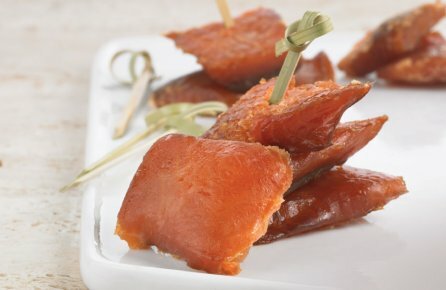

It is also worth noting that the seafood used in the company’s products comes primarily from the region, or at least from Québec and Canada. The salmon, for example, comes from Nouveau-Brunswick. “We value the proximity, freshness and ability to offer a 100% Canadian product,” says Guillaume Thibault.
Atkins & frères
atkinsetfreres.com
1, rue Chanoine-Richard
Mont-Louis (Québec) G0E 1T0
418 797-5059
The very name of this ecotourism company already evokes something special. A blend of spatial escape and earthly experience comes to mind even before discovering what it offers.
Pat Gauvin and Émilie Leblanc founded Cielo Glamping Maritime, a year-round ecotourism accommodation site open since January 2019 in Haut-Shippagan, within Acadian territory in New Brunswick. Yet, nothing initially pointed these two young professionals—who worked in vastly different fields—toward entrepreneurship. He was a film and television producer-director; she worked in health and research.
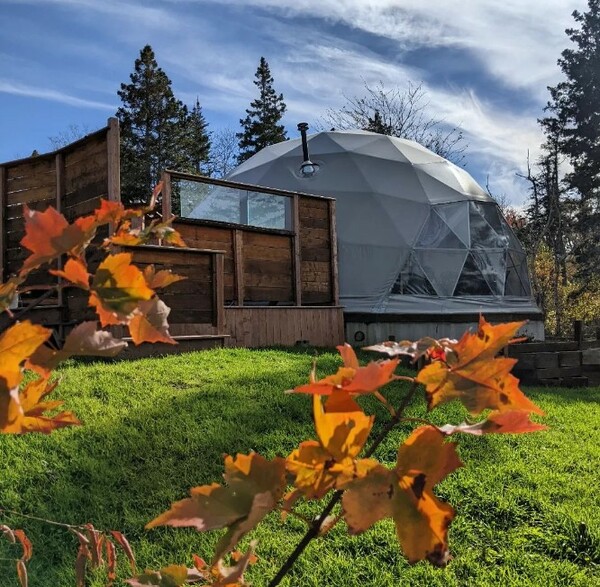
In 2017, when they conceived this project, it was their deep connection to the community, their Acadian heritage, and their desire to showcase local and regional products and producers to a wider audience that inspired them. “There was no model like it in the region or anywhere nearby. Our concept was unique. The dome structures we wanted didn’t exist in the country. We found them in Poland. Then, we designed and built the interiors ourselves. The development site was untouched wilderness, with only a single path leading to it,” explains Patrick, whose family has a long entrepreneurial history near Moncton. Patrick grew up in Haut-Shippagan, while Émilie hails from the region.

Cielo Glamping is located on the shores of St. Simon Bay, where guests can enjoy stunning sunsets from one of five luxurious domes available for rent. These domes, nicknamed the Pearls, are fully equipped small homes featuring a full kitchen, a bathroom with a glass shower, a charcoal BBQ, a hammock, a seasonal outdoor shower, and year-round electric hot tubs.
The Pearl of the Woods: Named for the surrounding forest. Sparse trees and coastal hay highlight an unrivaled view of St. Simon Bay. The Munro Pearl: Offers a unique view of Munro Island, framed by the famous sunsets over the water. It is the only dome with a semi-accessible ramp for people with reduced mobility. The St. Simon Pearl: Showcases the beautiful St. Simon Bay, whose breathtaking sunsets are unforgettable. It is also named after the famous oyster cultivated by Huîtres Mallet. The Moon Pearl: The only dome where guests can bring their dog. Watch the stars from the second-floor bed in this moon-inspired dome. The Lunatia Pearl: Inspired by the Atlantic moon snail found in the bay and the skylight that lets you glimpse the moon.

To give guests a full Acadian experience and showcase local products, they created the Hub—a space focused on sharing resources and networking between community members, visitors, and local producers. The Hub emphasizes developing, producing, promoting, and selling new local products. The Cielo site includes extensive gardens where vegetables, small fruits, and edible flowers are grown and transformed in the on-site kitchen.
Since its inception, the Hub team has created dozens of new products, either made in the commercial kitchen or in collaboration with various regional producers.
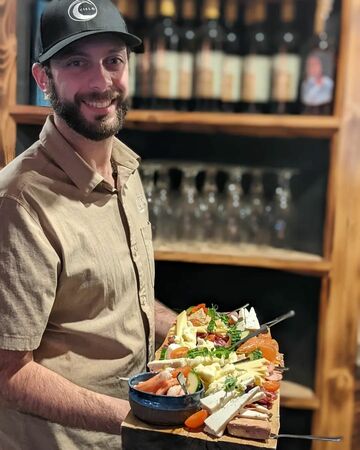
The Hub’s unique dining concept revolves around discovering these products and others from New Brunswick producers. Guests can select products from the Hub’s gourmet shop, and the team will transform them into exquisite Cielo sharing boards. Gift boxes with three or more products can also be assembled.
Cielo’s owners, Patrick and Émilie, are thrilled with their growing international recognition, with features in multiple publications and television programs locally and abroad. According to them, 60% of their clientele comes from New Brunswick, about 30% from Quebec and Ontario, and the rest from European tourists.
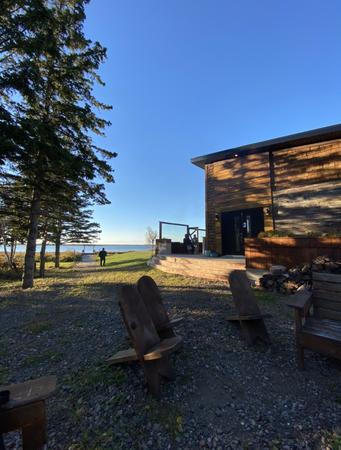
For now, there are no plans to add more domes or undertake major work. However, the entrepreneurial couple is working on a unique new accommodation project: converting a crabbing boat into a tourist lodging. Patrick and Émilie are sure to keep surprising everyone.
Also, watch for upcoming events in 2024 and 2025: the Hub will host performances by various artists (singers, musicians, etc.) from Acadia and beyond. Memorable evenings await.
Cielo Glamping Maritime
glampingcielo.com
232, Chemin des Huîtres
Haut-Shippagan, New Brunswick
506 601-8005
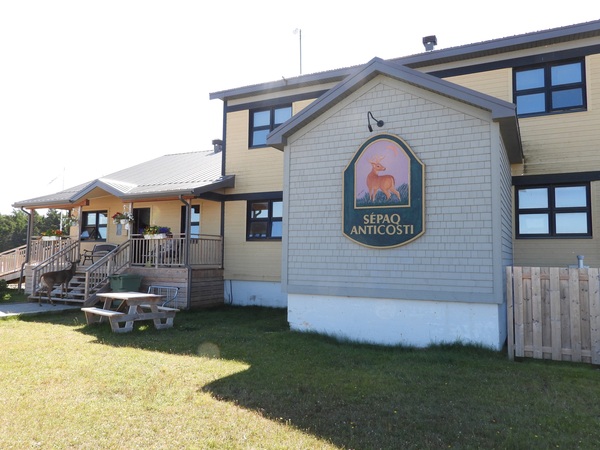
During a Guides GQ visit to Anticosti in early September, as part of a Minganie tour organized by Voyages CoSte, SÉPAQ Anticosti general manager Éric Harnois welcomed us to his offices in Port-Menier.
Harnois has held the position since 2022; before being appointed to lead Québec’s largest SÉPAQ operation, he spent 12 years as director of Réserve faunique de Mastigouche. He had dreamed of wide-open spaces and found his own ‘Yukon’ in Québec, on Anticosti.
 Éric Harnois, General Manager of SÉPAQ Anticosti
Since December 2021, SÉPAQ Anticosti has operated nearly three-quarters of Anticosti Island, which is now more accessible to the public than ever. High-quality new facilities and additional hunting sectors allow even more hunters to fulfil a lifelong dream: tracking deer on the natural jewel that is Anticosti.
‘We are somewhere completely different, yet we feel at home. It is a truly unique experience.’ LGBTQ+ outdoor enthusiasts and adventure seekers will be pleased to know they can expect a warm welcome on Anticosti. The guest-services and management teams work to ensure that every visitor and leisure guest enjoys the best possible conditions.
Anticosti is immense!
A few years ago, SÉPAQ Anticosti acquired Safari-Anticosti’s 1,500-square-kilometre territory, expanding its presence alongside Parc national Anticosti and the island’s other outfitting operations. Since arriving, Harnois has seen not only the vastness of his new territory but also the density of a deer herd that, in his view, has weathered recent seasons very well. Anticosti offers 7,943 square kilometres to explore, 16 times the area of the island of Montréal, as well as air service from Montréal aboard a Nolinor Boeing 737 and more than 160 employees in peak season.
‘The landscape changes as you travel deeper into the territory. Chute Vauréal, for example, is stunning in spring when the thaw swells its flow, and there are many deer to observe along the way,’ he says.
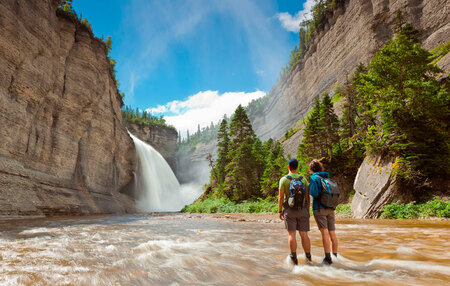
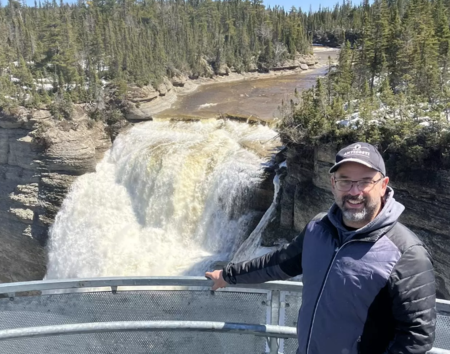 Chute Vauréal
Éric Harnois describes a long-term vision for making this environment even more accessible. His priorities are the quality of the welcome and safety everywhere, at all times. Now that Anticosti is recognized as a UNESCO World Heritage site, its standards must also reflect that status. Most of the thousands of hunters, anglers and leisure guests who visit SÉPAQ Anticosti are Quebecers and Canadians, Harnois notes. To better meet their needs, the organization has begun a programme of infrastructure upgrades.
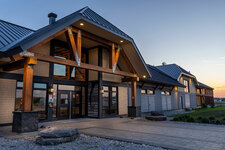

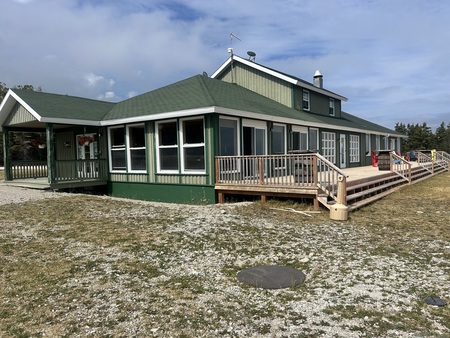
The island also offers leisure accommodation and new chalet packages. New salmon-fishing packages with lodging have been introduced, and the number of vacation chalets has increased. Solar power and other alternative systems are also being installed in some pavilions to reduce the site’s environmental footprint by limiting generator use.
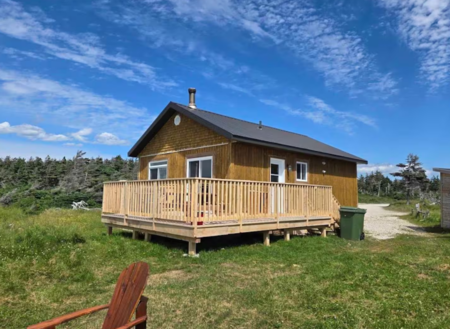
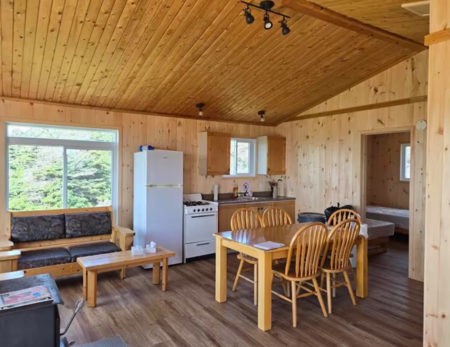
‘We wanted to provide services that meet guests’ expectations,’ explains the director of SÉPAQ Anticosti. ‘Our goal was to act quickly and ensure the long-term durability of our facilities, using materials such as sheet-metal roofing, pine-board interiors and cedar decks. We have invested several million dollars in this work over the past three years, and further improvements remain for the years ahead.’
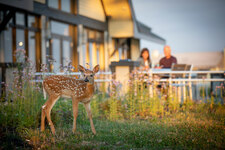
Across the island in 2024, figures for the preceding season supplied by the ministère de l’Environnement, de la Lutte contre les changements climatiques, de la Faune et des Parcs (MELCCFP) recorded 8,091 deer: 2,250 females, 4,978 males and 863 fawns. From the 220 white-tailed deer introduced to the island in 1896, the population has grown into the greatest concentration of deer in eastern North America. Isolation from the mainland protects Anticosti deer from disease, while the island’s distinctive geography differentiates them in several respects from their mainland counterparts.
Last year, SÉPAQ Anticosti welcomed 3,837 hunters, 217 more than the year before. By the end of the 2025 season, many hunters had already confirmed for 2026 and several more were on a waiting list. ‘Places remain, but they go quickly. People can still try their luck in the draw, which runs until January 15.’
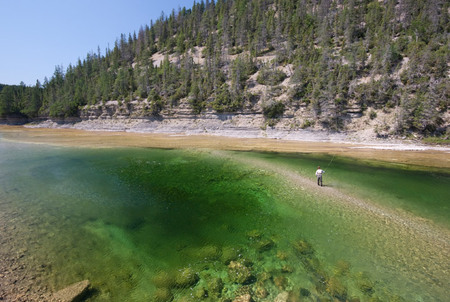
Anticosti is also a wonderful destination for anglers seeking salmon, anadromous brook trout (sea trout) and native lake-dwelling brook trout (speckled trout), all amid generous and captivating natural surroundings. Each day, anglers can choose, for example, between fly-fishing the pools of rivière La Loutre and fishing for brook trout on Grand lac Long or Petit lac Long.
Exploring Anticosti by Land or Sea
Other leisure options include visiting in July for a Photo Exploration stay with an experienced guide. Guests can capture Anticosti’s wild beauty and exceptional light through a camera or smartphone. ‘It is a unique opportunity to explore the trails of this fascinating island, whose abundant nature awakens every sense. Anticosti is much more than an island of deer,’ Harnois says.
Discovering the spectacular island of Anticosti is becoming increasingly affordable through a range of excursions on land and at sea. Visitors can take a cruise along the coast, choose a picnic at sea or walk through canyon Vauréal with a guide.

The island’s beauty is breathtaking. We experienced it ourselves.
See the SÉPAQ Anticosti website for full details and to find the package that meets your expectations: sepaq.com/sepaq-anticosti/vacances-ete/
See the Voyages CoSte website as well for packages that explore this national treasure, including Escapade Anticosti and SÉPAQ Anticosti: voyagescoste.ca/tour/escapade-anticosti.
_______________
Photos: SÉPAQ Anticosti and Pierre Perreault
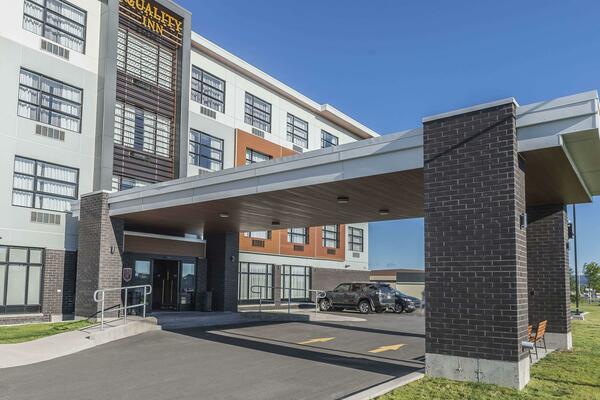
The new Quality Inn hotel at the western entrance to the City of Sept-Îles was built in 2014–15 on land bordering the Galeries Montagnaises shopping centre. It offers 61 rooms with breakfast included, a fitness room, meeting rooms, a games room and a laundry room.
The land forms part of the Uashat territory, an enclave within Sept-Îles administered by the Innu Takuaikan Uashat Mak Mani-Utenam Band Council, which financed the hotel’s construction. The hotel is owned by a company overseen by a board appointed by the Band Council.


Mylène Babin-Duclos, the hotel’s general manager since 2017, manages and coordinates a team of about 25 people, 90% of whom are from the Innu community. Some are students who work during the summer and continue for a few hours a week during the rest of the year.
She has a degree in psychoeducation but soon found she was drawn to hospitality. She worked at Château Arnaud for a time before applying to manage the hotel she now runs. She admits, however, that her psychoeducation background is useful in day-to-day personnel management.
Her approach clearly gets results. One employee stood out to guests, who praised her particular qualities, so Mylène Babin-Duclos nominated her for Choice Hotels Canada’s annual Spirit of Hospitality Award in honour of Mark Pearce. The 2022 award went to Élisabeth Jean-Pierre, a breakfast attendant at the Quality Inn in Sept-Îles.
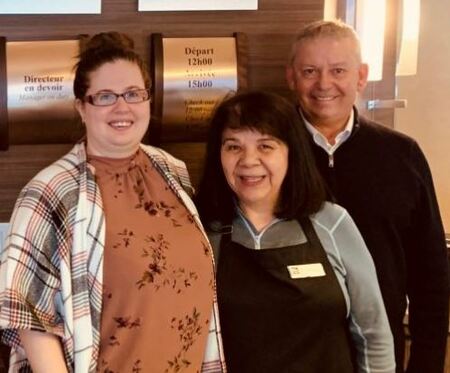
As one of the first people guests see at the hotel each morning, Ms. Jean-Pierre is greatly appreciated for her cheerful, energetic personality. She sings in the Innu language while serving guests. “One particularly impressed guest said it was a truly unique experience that made the hotel especially charming,” reads a Choice Hotels Canada news release.
The recognition created pride among staff and boosted the motivation of several. Departmental team meetings are held regularly so employees can speak up and, if needed, any issues can be addressed, explains Ms. Babin-Duclos.

The general manager adds that the Innu community provides constant support to the business. Support also comes through Shipeku, Tourisme Autochtone Québec’s sustainable Indigenous tourism programme, backed financially by Développement économique Canada through the Fonds d’aide au tourisme and by Tourisme Québec.
Finally, she highlights the Quality Inn brand’s ongoing collaboration on the hotel’s operational and financial management.
Quality Inn Hôtel & Suites Sept-Îles
qualityinnsept-iles.com
1009, Boulevard Laure
Sept-Îles (QC) G4R 4S6
(418) 960-5600
In December 2010 in Natashquan, Minganie, representatives of socioeconomic, tourism, municipal, government and business organizations gathered for a forum. They concluded that a cooperative approach would allow the community to coordinate more effectively and develop a tourism offering beneficial to visitors and the region itself.
Jacques Lachance, one of the people who initiated this process of reflection and coordination among local and regional forces, arrived in Natashquan in the early 1970s with his sheep, after spending time as an antiques dealer and horse-drawn-carriage driver in Vieux-Québec. A lover of heritage, the Saint-Laurent and nature, he had travelled widely and worked in many fields before settling where his heart drew him.
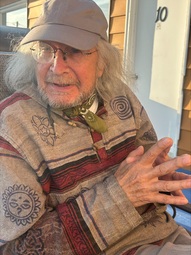
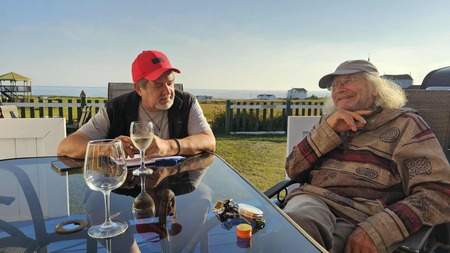
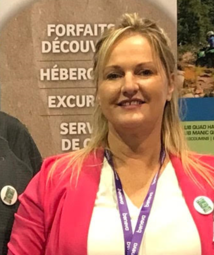
Now a consultant, producer and project lead in tourism development and promotion, he says the Coopérative de solidarité en tourisme équitable (CoSte) serves as a catalyst for political and socioeconomic stakeholders throughout Minganie and even across Côte-Nord, thanks to its original, energetic approach to showcasing the region and its attractions.
During our meeting on the terrace behind CoSte’s head office, he described with energy and conviction what led him to join an undertaking of which he is now very proud. He lives in Rivière-au-Tonnerre and remains regularly involved in the agency’s tourism activities, notably as a guide accompanying groups to destinations across Minganie.
Since 2006, the Agence coopérative de solidarité en tourisme équitable, or CoSte, has organized and marketed tourism experiences in Minganie and Basse-Côte-Nord. It showcases the natural environment and local people, gives travellers lively, dynamic, authentic and memorable experiences, and maximizes positive benefits for communities.
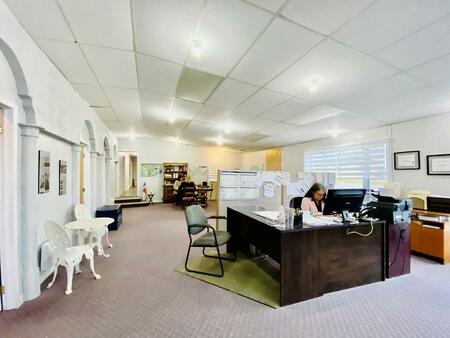
The travel agency has a visitor reception office and offers accommodation at L’Escale Lam-Air in Rivière-au-Tonnerre. Its packages and tourism services cover Côte-Nord, particularly Minganie, Anticosti Island and Basse-Côte-Nord. ‘CoSte contributes to the growth of local communities by encouraging sustainable, responsible and equitable tourism,’ Lachance says. It offers a wide range of services: flight reservations, cruises in the golfe du Saint-Laurent, tailor-made packages and à-la-carte products.
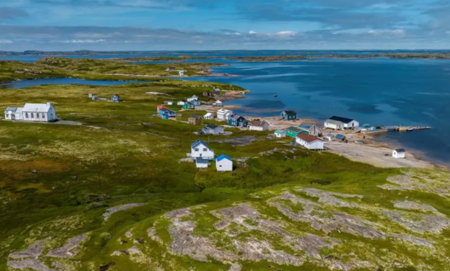
Initially housed in a small building near the church, the cooperative received an unexpected ‘gift’ in 2013. The owners of the motel in the centre of the village were retiring and, recognizing the importance of CoSte’s work and achievements, donated the property to the cooperative. The waterfront complex offered an ideal opportunity to expand its services and packages.
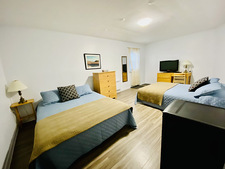
With Alberte Marcoux arriving as the new executive director that same year, CoSte established its head office in the front section of the building and also took over management of L’Escale Lam-Air’s dining room and 13 guest rooms. The gift certainly acted as a wonderful boost for the organization and its members.
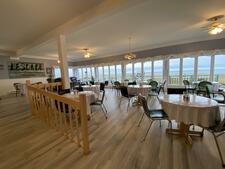
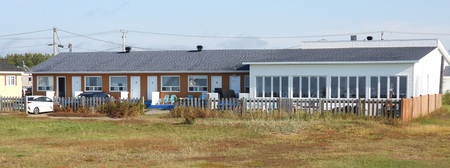
‘Voyages CoSte received start-up funding, but the cooperative has been completely self-supporting since 2016,’ Jacques Lachance explains. ‘We have received no public operating funding for nearly 10 years. The assistance we do receive is essentially tied to specific development projects, such as purchasing a minibus or carrying out a collaborative digital transition with 40 member businesses.’ The collectively owned enterprise supports itself through sales and belongs to members based mainly in the MRC du Golfe du St-Laurent and MRC de la Minganie, including Anticosti Island.
CoSte has received support and encouragement from Tourisme Québec, the ministère du Développement économique, de l’Innovation et de l’Exportation, the Centres locaux de développement (CLD) in Minganie and Basse-Côte-Nord, the Conférence régionale des élus de la Côte-Nord and Emploi-Québec. These partners contributed in various ways to the start-up phase. The cooperative also works with other local and regional partners to deliver projects and its diverse range of tourism services.
They see this community-born initiative as an enterprise that could, over time, become a model of collective development and local empowerment for northern Québec communities.
Many Canadian agencies, meanwhile, believe CoSte opens a vast and little-known territory to travellers in an original and respectful way. Without it, the region would remain difficult to reach and offer relatively few options for trouble-free travel. CoSte places the experiential character of its packages at the forefront, matching the expectations of a new generation of travellers seeking experiences.
One thing is certain: CoSte occupies an increasingly important place in Minganie tourism. Guides GQ representatives saw this directly and used a few of its services and packages last August and September. (See ‘Eight Days Exploring Minganie.’)

Voyages CoSte
voyagescoste.ca
454, Jacques-Cartier
Rivière-au-Tonnerre, QC G0G 2L0
1.877.573.2678 or 418 465-2002
Republished on March 20, 2026
Life is made up of various experiences, which we generally hope will be positive and enjoyable. Some come to us of their own accord. Others must be actively sought out, and those are often the most exciting, such as dining at a Montréal institution more than 19 years old where the meal is served in complete darkness. It is genuinely SENSational, with every sense except sight heightened.
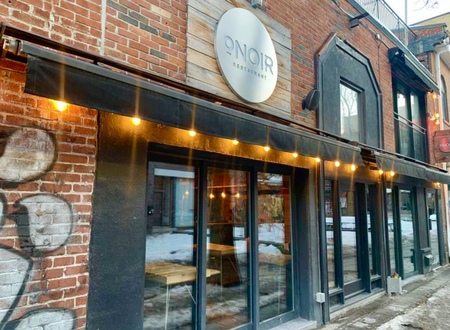
Alejandro Martinez conceived and founded Montréal’s O’Noir restaurant in 2006, the first of its kind in North America. The concept, already established in Europe and Australia, appealed to Alejandro and several family members, who became his partners in the venture. Originally located on rue Sainte-Catherine ouest, the restaurant moved in 2016 to a larger, more suitable building on rue Prince-Arthur near Carré Saint-Louis, where it could meet all the requirements of such an operation.
It has two dining rooms, one on the ground floor and another upstairs, and can accommodate up to 170 guests in an evening. A summer terrace offers a different, more bistro-style menu without reservations. O’Noir serves a range of starters, main courses and desserts, as well as drinks, cocktails and wines. Diners choose a fixed-price menu of two, three or four courses regardless of the dishes selected; drinks and wine are extra. The menu changes three or four times a year according to the seasons and special events.
Beyond the darkness that envelops diners as soon as they leave the entrance hall, where they are warmly welcomed and select their food and drinks, the experience is fairly conventional. A server leads guests to their table (how do they even find it?!) and explains what is on it. Once seated, diners become familiar with the contents: utensils and a napkin. That is all.
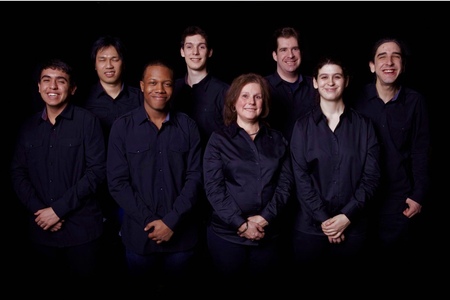
One important point: the serving staff are people with significant visual impairments who have been specially trained for the work. O’Noir partners with Horizon Travail, an organization that helps train and prepare visually impaired people to enter the workforce. The staff demonstrate exceptional skill, courtesy and attitude.
Every effort is made to ensure an enjoyable experience and ease any concerns that may arise on a first visit. Naturally, people with claustrophobia or severe anxiety would find little pleasure in it. Drinks and dishes are brought and placed on the table with precise directions from the server. This helps prevent accidents or sudden movements that could have unpleasant consequences. Alejandro also notes that a staff member remains in the dining room whenever guests are seated, ready to respond to any safety issue or emergency.
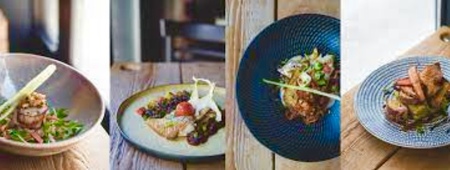
Alejandro is very proud of what he and his partners have created. Because this is not a “normal” establishment, safety, hygiene, food quality and other aspects of its layout and operations require rigorous rules and standards. Staff training is also essential and ongoing. All carefully selected employees are bilingual; they must learn the premises inside out and practise moving through the darkness with dishes, then serving them to the correct guests. It is genuinely impressive.
O’Noir employs about 25 people in total, although its kitchen and bar staff are sighted.
There has also been an O’Noir restaurant in Toronto since 2009.
Restaurant O’Noir
onoir.com
124, rue Prince-Arthur Est
Montréal, QC H2X 1B5
514 937-9727
I had dreamed of it for so long. See Le Bout du banc and die? Not quite, but almost.
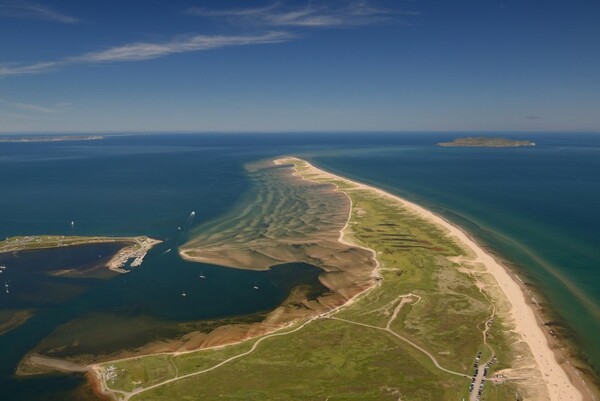
Le Bout du banc, also known as Sandy Hook, lies at the eastern end of the Havre-Aubert dune. It forms a white-sand spit, or hook, extending toward Île d’Entrée. This spectacular beach stretches for nearly 12 kilometres and has a striking shape where two ocean currents meet.
Le Bout du banc also contains a fragile and precious ecosystem: the Sandy Hook dunes. The site provides a natural refuge for migratory birds, drawn by the dunes and the stable shores of the sandy spits. Dunes are constantly evolving environments that are essential to coastal biodiversity.
This unique setting is both an aesthetic and sensory wonder: a sandbar, an ocean breeze, converging currents, a panorama of Île d’Entrée and warm, shallow water around the bar. Its vulnerability, however, is real. Visitor pressure, trampling, limited infrastructure, changing tides, erosion and rising sea levels all require careful, sustainable management.
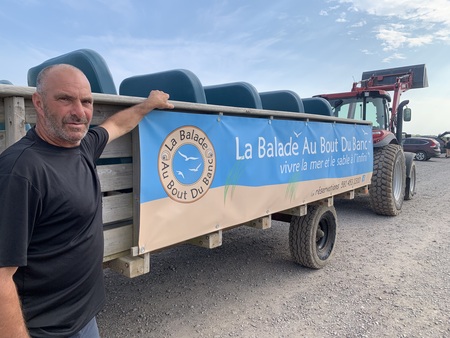
Protecting Le Bout du banc means placing its preservation within a thoughtful framework of marked trails, monitored access and visitor education. This concern helped inspire Madelinot Clermont Poirier to begin offering guided outings in 2015 aboard a long, tractor-drawn platform styled like a hay wagon, departing from the Sandy Hook beach parking lot at the end of chemin de Sable. He fitted the platform with school-bus seats, surrounded it with a safety railing, added storage for bags and chairs, and installed rear steps for easy boarding.
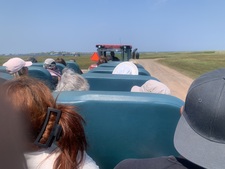
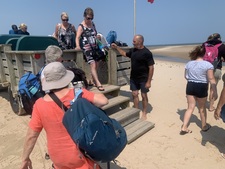
Clermont Poirier’s Balade du bout du banc saves visitors a 13-kilometre round-trip walk. After a 40-minute ride, passengers reach the end of the sandbar, where they can spend 90 minutes to two hours before boarding again for the return journey. Dogs and beach chairs are welcome.
The immense panorama and beauty of the setting are very likely to inspire deep contemplation. At the end of the sandbar, where the sea fully reasserts itself, it feels as though the end of the world has been reached. This is also the closest point to Île d’Entrée.
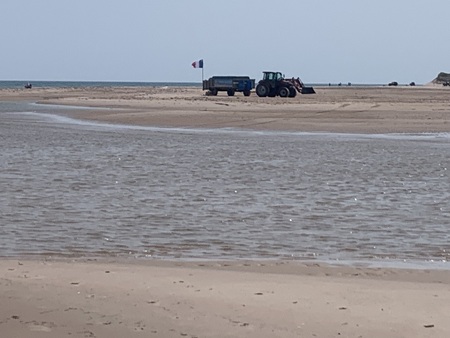
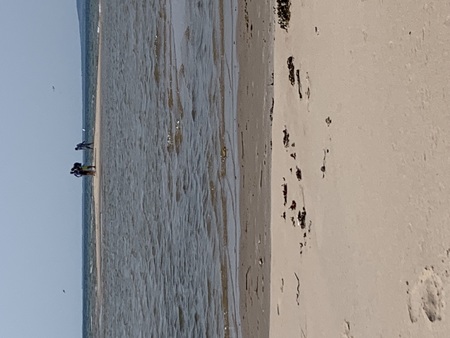
Balade du bout du banc has become so popular that reservations must be made in advance for outing days when the weather cooperates. Departures are usually at 10 a.m. and 2 p.m. Clermont Poirier is supported with bookings and administration by two team members, Josée and Colette.
For me, the outing on Saturday, July 19, was a true gift after several days on the road and encounters between Bas-Saint-Laurent and the Îles de la Madeleine, by way of Gaspésie and Acadie. Perfect weather, 22°C under brilliant sunshine, with a steady wind, made the ride unforgettable.
Balade du bout du banc
Chemin du Sable
Plage Sandy Hook (Havre-Aubert)
facebook.com/boutdubanc
Reservations: (581) 453-1310
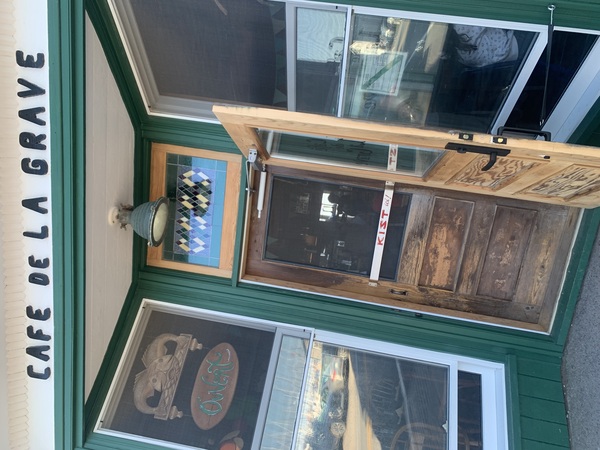
July 18, 1980. A group of dreamers named Jean-Marc, Claude, Henri and Fernand kept this place, already rich in history, alive and opened its doors to art and music. La Grave, after all, is a site that profoundly shaped the development of the Îles de la Madeleine.
I arrived in the archipelago on that same date 45 years later, after a night aboard the ferry from Souris, P.E.I., to Cap-aux-Meules, and discovered that the evening’s celebrations promised to be memorable.
Until the end of the 1950s, La Grave was the gateway to the Îles and the centre of commercial activity. The former general store played its own part in Madelinot history. Its first owner, Jersey native John Phillip Savage, settled in the Îles-de-la-Madeleine around 1865. People took the time to hear the news, whisper gossip, share worries and hopes, and speculate about the country’s future.
Within the walls of this storied place grew a strong sense of belonging, a deep attachment to local culture in all its forms and a festive spirit that has endured through every era since its founding. A new breeze swept through the café in 2007. Three dynamic entrepreneurs, Sonia, Francine and Denis, brought their vision and determination to carry the institution forward as its reputation spread far beyond the Îles. Café de La Grave was becoming an essential stop for anyone visiting the archipelago, with freshness and whimsy defining the new team.
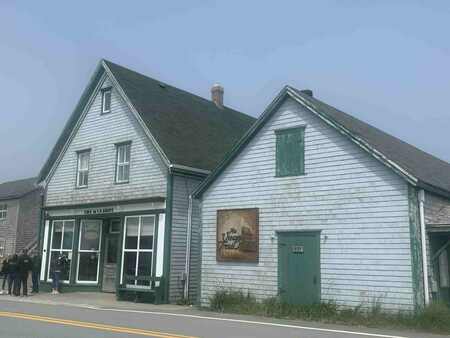
In 2015, Marie-Claude Vigneault and her mother, Nathalie, took the reins and assembled a strong team to continue the institution’s work. Over the years, a history has grown around Café de La Grave, shaped in different ways by thousands of people.
On July 18, 2025, dozens of long-time patrons, visitors, tourists, relatives and friends filled the café to take part in the anniversary. By 6:30 p.m., the dining room was alive with anticipation. Two former owners from the founding group made a special point of attending because memories are what keep history alive.
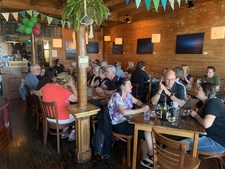
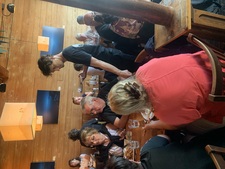
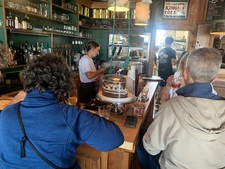
At the piano, Suzanne Richard evoked the period when music stood at the centre of café life. Many people still hold quite vivid memories of those animated evenings, a tradition that continues today.
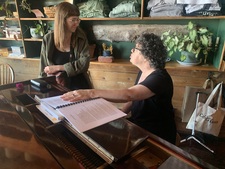
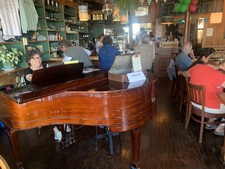
Alongside these inspiring ‘traditional’ nights, the café presents a wide range of visual-art exhibitions, performances and spontaneous jam sessions. It also sustains local culinary traditions while encouraging partnerships with food and agricultural businesses across the region. Café de La Grave’s menu rewards diners who enjoy unexpected ingredients and flavours: mussels, scallops, lamb, veal, poutine topped with pulled seal, cod and much more. There is something for everyone. At Café de La Grave, as one can see, nothing is ordinary.
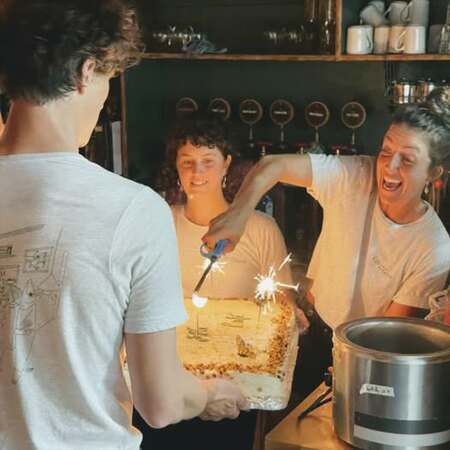
At the time of writing, the celebrations were continuing. May the people behind the café and its entire team enjoy many more years carrying this wonderful, emblematic place in the Îles forward.
Café de La Grave
cafedelagrave.com
969, Chemin de la Grave,
Havre Aubert, Îles de la Madeleine (Qc) H4T 9C8
418-937-5765
.
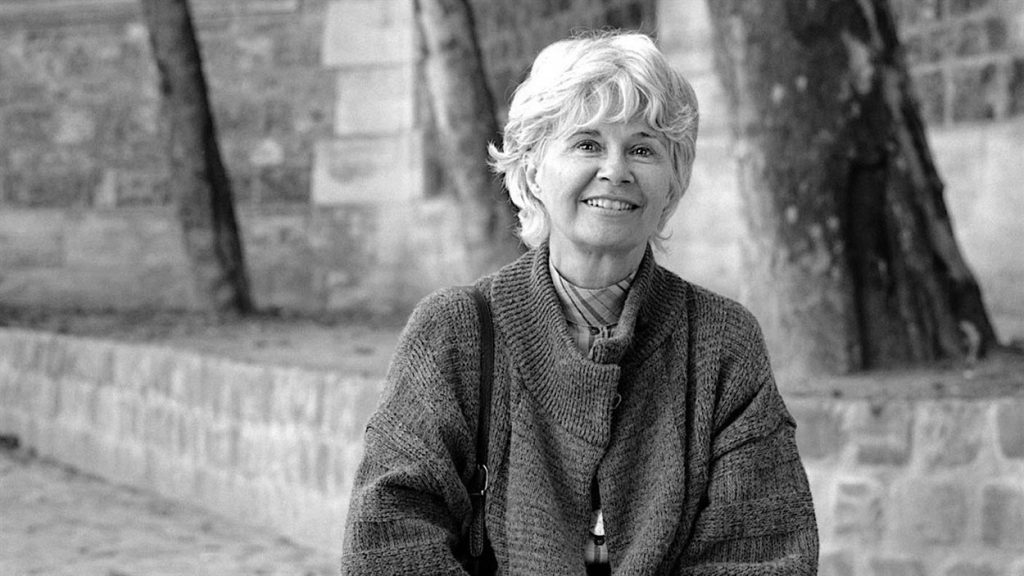
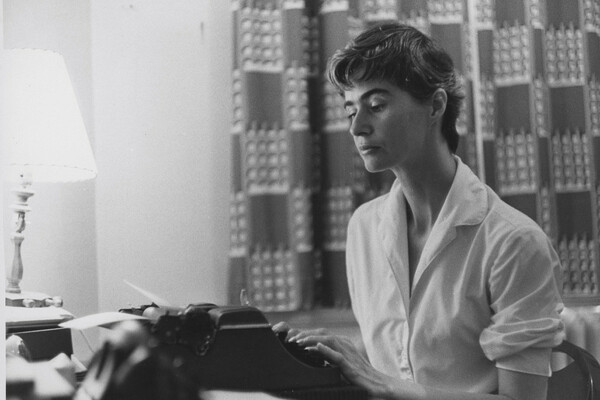
On August 1st, 2016, writer and poet Anne Hébert would have turned 100. Her centenary was to be commemorated in 2017 in Kamouraska, the village where her novel Kamouraska is set. The book made her famous and put the village on the map. Adapted for the big screen by Claude Jutra, with music by André Gagnon, the film introduced her work to the general public.
Anne Hébert was born in Sainte-Catherine-de-la-Jacques-Cartier and spent her childhood in Québec. But as a descendant of the seigneurial family of Kamouraska, she spent several summers there, where she became familiar with the famous crime of passion involving her ancestor. After publishing various poetry collections from 1942 to 1953, in 1958 she published her first novel, Les Chambres de bois, with Éditions du Seuil, and in June 1960 was elected a member of the Royal Society of Canada.
In 1965, after her mother’s death, she moved to Paris. She finally achieved success with the publication of Kamouraska in 1970, which earned her the Prix des libraires de France. In 1975 she published Les enfants du sabbat, her third novel, followed in 1980 by a fourth, Héloïse. Her fifth novel, Les Fous de Bassan (1982), made her the fourth French-Canadian woman and the second Québécoise to win one of France’s major literary prizes: the Prix Femina. She was preceded only by Gabrielle Roy, also a Femina winner, Marie-Claire Blais, winner of the Médicis, and Antonine Maillet, winner of the Goncourt. Between 1969 and 1983, she received honorary doctorates from the University of Toronto (1969), the University of Guelph (1970), UQÀM (1979), McGill University (1980) and Université Laval (1983).
In 1988, her sixth novel, Le Premier Jardin, paid tribute to the women who founded Nouvelle-France. A seventh novel, L’Enfant chargé de songes, appeared in 1992. In 1995, at the age of 79, she published Aurélien, Clara, Mademoiselle et le Lieutenant anglais, a story midway between poetry and prose. Her fifth and final poetry collection, Poèmes pour la main gauche, was published two years later.
Early in 1998, after 32 years in Paris, she returned to Montréal. In 1999, her last novel, Un habit de lumière, was published, a few months before her death in Montréal in January 2000.
Anne Hébert always remained discreet about her private life; she never married or had children. Living in Paris, far from home, enabled her to keep her artistic and private lives separate, as it did for her friend Mavis Gallant, an English-speaking Montréal writer who had also moved to the City of Light and with whom Hébert shared a long friendship.