Things to do

coucher du soleil

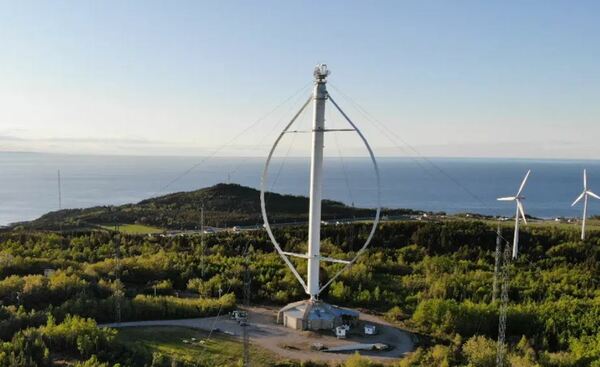
In Greek mythology, he is the master and regulator of the winds. In a vast cavern, Aeolus keeps the winds and noisy storms chained and imprisoned, striving to escape. In Cap-Chat, Gaspésie, since 1994, people have been visiting the great Aeolus, one of the world's largest vertical-axis wind turbines.
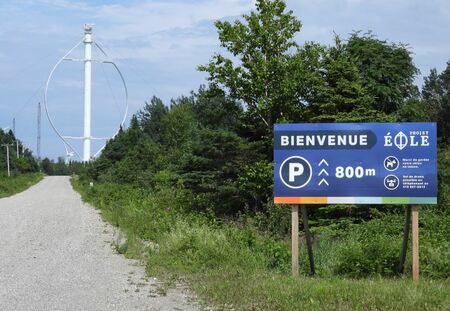
Projet Éole Projet Éole
In 2019, two Gaspésie enthusiasts, Benjamin Leduc and Benoit Bénéteau, acquired the vertical-axis wind turbine of Cap-Chat. A new young and dynamic management team is in place, bringing together diverse experiences. The ambitions of these promoters are significant for this project, which was nearly abandoned at one time, but is now undergoing complete revaluation and transformation. "Former wind research laboratory becomes a laboratory on the environment and renewable energy," explain its co-owners.


"I see the site as a unique industrial heritage in the world," Benjamin Leduc declared in an interview with Radio-Canada shortly after the acquisition. The site is intended for tourist purposes and presents the project as a monument dedicated to Quebec's technological heritage and is also an interpretation center on wind energy. The artistic and educational aspects around the theme of wind energy, omnipresent all around, are also being developed.

"Our concept is a bit like a research project of a research project," he explains, to demonstrate the unique and fascinating aspect of their commitment.
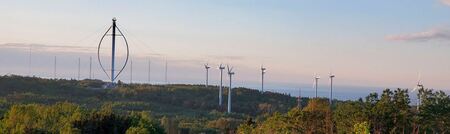
Projet Éole
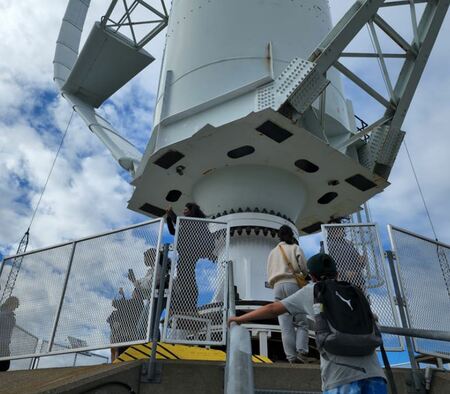
Located in the middle of an important wind farm in the region that adorns the plateaus at some distance from route 132 along the Saint Lawrence estuary, Éole is a relic from the beginnings of renewable energy research in Quebec. The 110-meter-high giant was an important step in the development of wind power. Anyone traveling in the area is surprised by the immensity of this large vertical ellipse that overlooks the landscape.


Built in the mid-1980s, Éole was decommissioned since 1993, following an unexpected strong wind that damaged the main bearing of the device, probably also due to the enormous weight of this structure. The power station was not in operation long enough to transition from experimental mode to the status of a modern electric power plant. The project launched by Hydro-Québec pooled resources from the National Research Council Canada (NRCC) and the Quebec Electricity Research Institute (IREQ) to develop these technologies in North America.

It is also important to understand that this experimental wind turbine, entirely made of steel, was erected at a time when the composite materials that characterize the blades of today's wind turbines were not yet available.
 Projet Éole Projet Éole 
The two partners and co-owners wish to invest more in modernizing the tourist site. They see a lot of potential. In addition to knowledge transmission, they propose discovering the Éole site through various initiatives and playful activities. The site is intended to be a leading attraction for Gaspésie. "A place of wonder and discoveries," adds Benjamin Leduc. Beyond the technological and scientific aspect, the Éole Project also wants to capitalize on the growing interest in self-production of electric energy through small wind turbines. It will offer training and workshops for those interested in getting involved.


The visit to the Éole Project includes:
- Discovering the experimental energy plant built in the 80s.
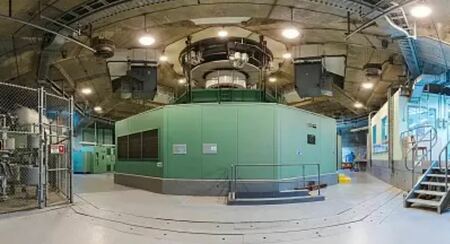
- Entering the generator and seeing all its vestiges to understand its unique design.
- Explanatory panels on the history of Éole, wind power development, and current industry facts, along with a guide to answer all your questions.
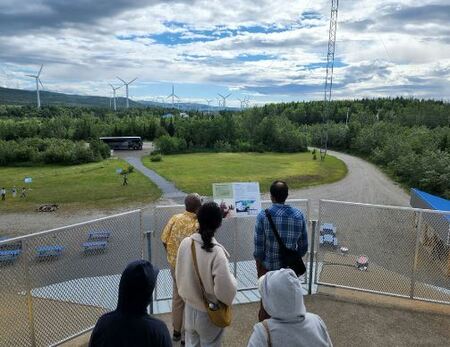
- A panoramic viewpoint with a 360 view to admire the picturesque landscape of the Nordais wind park (first in Quebec) and its surroundings (Cap-Chat, the sea, and the Chic-Chocs mountains), as well as a closer view of the tower.
Projet Éole  Projet Éole

A Foundation to Ensure Its Future
Finally, let us mention the creation of the Fondation Éole, a new development tool for the project. It is an organization focused on the education of renewable energies and sustainable development. It will develop in a way to popularize and share new developments related to these current topics, all within a playful framework and a purpose of integration into community and cooperative initiatives.


Conferences, educational workshops, physical and digital documentation, research and development in energy, and community involvement are the vectors of progress for the foundation. It will provide tools for exporting and disseminating information, content, and vision beyond the physical boundaries of the site. Both will evolve in synergistic development in the coming years. The foundation will synthesize the information present on the site for national dissemination.

An Attraction for the Whole Family

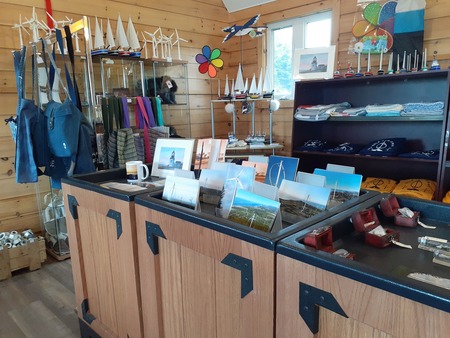
The Éole Project welcomes visitors every year from June 15 to October 1, 7 days a week, from 9 am to 5 pm. A visit that will interest the whole family with its originality and related educational activities. Visitors can also have a picnic, walk through flowered trails, and a permaculture garden at the foot of Éole. The wind-themed souvenir shop at the reception and on the site offers local Gaspesian crafts and unique Éole products.


Éole Project

projeteole.ca
5, chemin du Cap
Cap-Chat (Québec) G0J 1E0
418 967-8812

Following a successful first edition that attracted about 500 people, the second Fierté aux Îles de la Madeleine, organized by the Vent de Fierté committee, will take place on August 22 and 23. For the first time, a Pride March will be held on Sunday, August 23. It will leave Cap-aux-Meules town hall and follow local streets for one kilometre to Place des Gens de Mer.
The preceding day, Saturday, August 22, the Marché Queer at Anse-aux-Baleiniers will bring together about 15 artists and craftspeople from 12:30 to 4:30 p.m. Representatives of Coalition des familles LGBT+ will also travel to the Îles especially for the event. Founded in 1998, the coalition advocates for legal and social recognition of LGBT+ families and provides a network in which lesbian, gay, bisexual and trans parents and prospective parents share information and activities.
A barbecue is planned, while DJs Beausir and Le Spiz of La Plage électronique will create a festive atmosphere. Usually based at Parc de Gros Cap, the DJ collective founded by Le Spiz and Beausir will once again energize the site with a moment of sharing, dancing and letting go. Drawing on their passion for house and electronic music, they will perform a set designed to celebrate our community.
Fantasy face painting will be available, and participants will make signs for the Pride March.

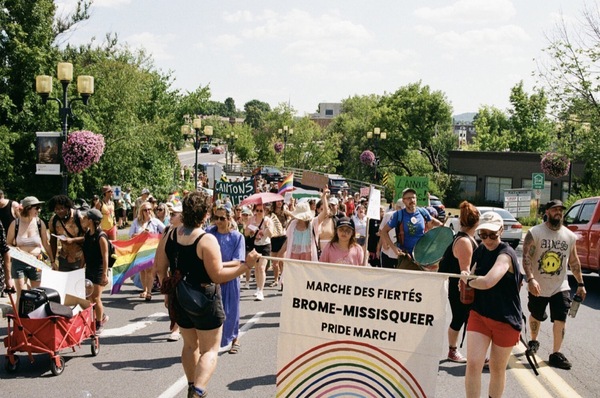
The Brome-Missisqueer collective is back with a second Cowansville Pride March on August 22. LGBT+ people, allies and friends are invited to join a march starting at 1:30 p.m. on rue du Sud, then head to an LGBT+ village set up at parc Centre-ville at 3 p.m.

The event will feature festive, fun and educational activities. ‘This year, it was important for us to apply the lessons from the first edition, which was organized in five weeks, so we can improve our facilities and include more partners in our event,’ says Béa Touchette, one of the collective’s members.

‘Last year’s success truly energized us as a collective. Our first goal is to show that welcoming communities for queer people exist in our rural areas and that people can put down roots there and build networks of solidarity,’ added Alex Fortin, another member of the collective.

The Brome-Missisqueer collective was recently formed by six people to promote the fulfilment of 2ELGBTIA+ people in rural communities and counter the rise of intolerance.

August 23: a Pride day in Sept-Îles
Queer Nord will once again present a day celebrating sexual and gender diversity. The expression of LGBTQ2E+ Pride and community sharing will take centre stage on Sunday, August 23, beneath the Tente jaune on the Vieux-Quai in Sept-Îles.
The day has particular significance for Queer Nord because it is the first Pride celebration since the group incorporated as a non-profit organization. ‘This is a new stage in the committee’s history as it continues to develop and help improve the living conditions and well-being of people representing sexual diversity and gender plurality (DSPG) on Côte-Nord.’
Organizers note that the chosen site in Sept-Îles stands on the unceded Innu territory of Uashat mak Maliotenam. They invite members of Innu communities and residents from across Côte-Nord to celebrate together at parc du Vieux-Quai.
The programme includes creative, participatory activities such as sign-making, a collective artwork, face painting, a music jam and karaoke. The day will conclude with the Pride March at 3 p.m.
Queer Nord will provide tables for artists and organizations wishing to present their work, services or projects. An open microphone will allow participants to share a text, poem, song or any other form of expression that inspires them.

By Pierre Perreault

--------------------------

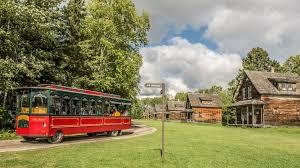
At Village historique de Val-Jalbert in Chambord, Lac Saint-Jean, the new season highlights the site’s railway heritage with two wooden railcars resembling those once used to carry pulp to major centres.

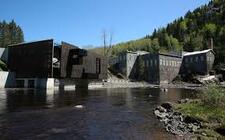
This is an opportunity to bring new life to the rich railway history of this emblematic place, shaped in the first half of the 20th century by a major industrial undertaking: the Val-Jalbert pulp mill and the company village created around it. Inside the cars, a pulp-themed maze and activities for children aged six to 12 offer a playful introduction to the transport and processing of wood pulp. For grandparents, the experience provides a wonderful opportunity to share part of industrial history with a younger generation.
Val-Jalbert 2026 Val-Jalbert 2026

The renowned regular activities at Village historique de Val-Jalbert will also return from May 16 to October 12. At Val-Jalbert, the 1920s never ended. Feel the soul of the Village through more than 40 preserved historic buildings, including workers’ homes, the general store, post office and convent school.

The immersive production « Du cœur à l’ouvrage » is presented within the industrial fabric of the pulp mill itself, transporting audiences to the workers’ workplace of the period and revealing the true stories of all the people who lived in this company town.

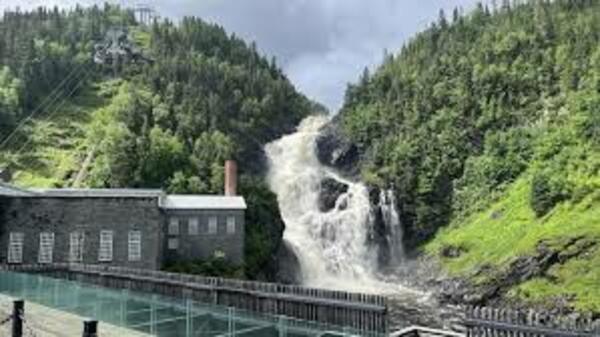
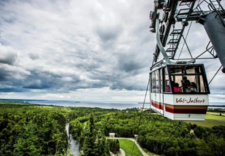
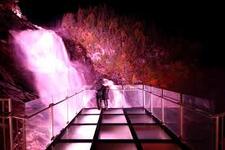
Enhance your experience with a cable-car ascent to the lookouts, with exceptional views of the powerful chute Ouiatchouan.

Val-Jalbert 2026 Val-Jalbert 2026

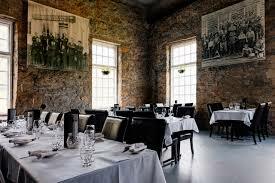
Several special events run throughout the summer and even into autumn. A range of accommodation options lets visitors extend their stay. The Moulin restaurant serves lunch and dinner, with a gourmet dinner featuring the region's rich terroir, while the Magasin général sells snacks and souvenirs to take home.

Val-Jalbert 2026 Val-Jalbert 2026


Designated a classified heritage site in 1996, Val-Jalbert now contains more than 90 buildings and remains, including 42 surviving structures, as well as an associated archaeological site covering the entire property. It is therefore a major place for transmitting Québec’s collective memory.

In 2009, Corporation du Parc régional obtained approval from the ministère de la Culture, des Communications et de la Condition féminine (MCCF), Développement économique Canada and the Municipalité régionale de comté du Domaine-du-Roy, the site’s current owner, to finance a $19.7 million project fully revitalizing Village historique de Val-Jalbert. The work covered infrastructure, historical interpretation and the visitor experience.

Annual passports have been available since April and include several benefits, among them a partnership with Zoo sauvage de Saint-Félicien that gives access to two distinct and incredible regional experiences, restaurant discounts and other advantages. Individual and family passports provide unlimited access to the site and many seasonal activities, whether for a full day or simply an evening walk. They are valid from the date of purchase through April 30, 2027, with different prices in low and high season.

Further details are available at valjalbert.com.

Val-Jalbert 2026
Village historique Val-Jalbert
valjalbert.com
95, rue Saint-Georges
Chambord (Québec) G0W 1G0
418 275-3132

The Pointe-au-Père Maritime Historic Site in Rimouski is unusual in that it takes visitors from ground level to the heights and then down into the ocean depths. Parcs Canada manages and operates the site, which offers visitors curiosities and thrills.
Martin Debolfe, the historic site’s marketing coordinator, explains that everything is in place to surprise and educate visitors through three distinct attractions:

Phare Pointe-au-père 2

• The Onondaga submarine, the first submarine in Canada opened to the public, offers a glimpse into the daily lives of the 70 crew members once confined aboard this 90-metre vessel. In summer, visitors can spend an evening and a night on board as part of an interactive experience.
• The lighthouse and its associated buildings. Built in 1909, it is the second-tallest lighthouse in Québec and one of the few that still has its prism. The keeper’s house contains an exhibition on the lighthouses of the Saint-Laurent.
• The Empress of Ireland Museum. Although the sinking of the Titanic is well known, fewer people know the story of this ocean liner, which sank off Rimouski in 14 minutes in 1914. The exhibition is impressive and moving, and its video presentation is surprising.
The museum opened in 2000, was expanded in 2017 and now features a completely redesigned exhibition. Digital technology allows for captivating interaction with visitors. A video simulation lets them relive the collision between the two ships and then watch the liner sink, which leaves no one indifferent, especially knowing that 1,102 people lost their lives in the disaster.

Pointe-au-Père Maritime Historic Site (SHMP)
shmp.qc.ca
1000, rue du Phare
Rimouski, QC G5M 1L8
418.724.6214

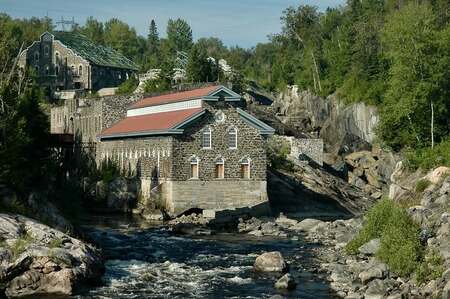
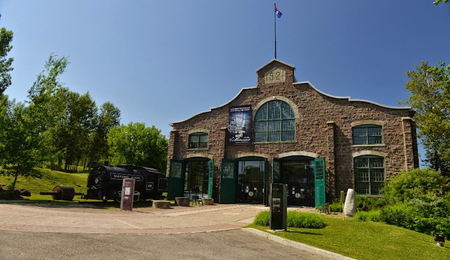
With more than a century of history, La Pulperie de Chicoutimi is now considered one of the major historic sites in Saguenay–Lac-Saint-Jean. It features an extensive collection of 26,000 objects documenting the region’s history and heritage; six exhibition galleries, two built to the technical standards of leading Canadian museums and able to host internationally renowned exhibitions; the Maison du peintre Arthur Villeneuve; meeting rooms; a documentation centre; a substantial collections storage facility; interpretive trails; and a gift shop offering regional products.

In 1896, the founders of the Compagnie de pulpe de Chicoutimi laid the first stone of what quickly became a true empire. More than a century later, the former facilities gave way to another major undertaking: La Pulperie de Chicoutimi / Musée régional.

Pulperie Chicoutimi

After its glory days and flourishing business, conditions began to worsen in 1921. The market had changed, and prices fell drastically. All its expansion projects had left the company in debt. In March 1924, the Compagnie de pulpe de Chicoutimi liquidated all its assets. Despite a major restructuring, falling orders and prices led to the mills’ permanent closure in 1930.

Saved from demolition in the late 1970s, the old buildings were gradually restored and now contribute to the site’s tourism and cultural role.

Pulperie Chicoutimi

Unfortunately, on Thursday, July 18, 1996, a major low-pressure system formed over the Great Lakes. Over 48 hours, Saguenay–Lac-Saint-Jean received 150 to 280 mm of rain, compared with a normal monthly average of about 125 mm. The downpour came on top of the 120.5 mm already recorded since the beginning of July, which had saturated the ground, filled reservoirs and increased the flow of several rivers. All the conditions had converged for a catastrophic flood, a true deluge.

The raging water destroyed century-old stone walls, landscaping, interpretive installations and service infrastructure. Within hours, years of restoration work at La Pulperie de Chicoutimi were undone; only the walls and red roof remained. The damage was severe and required major reconstruction.
Thanks to the determination of local and regional leaders, support from several levels of government and, above all, a deep commitment to reviving this remnant of the region’s industrial and historic past, La Pulperie de Chicoutimi reopened in June 2002.

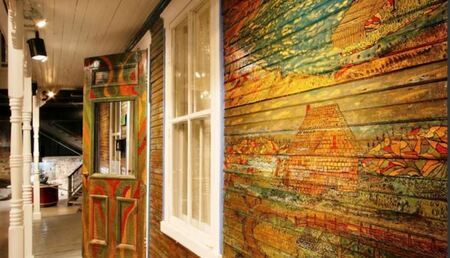
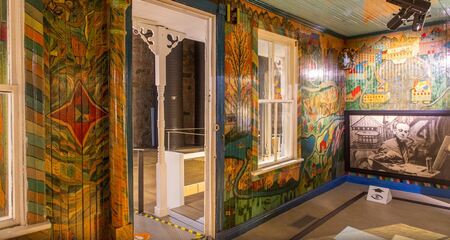
Danny Cloutier, who has been the Musée régional’s communications director for 15 years, recalls that the effort to preserve painter Arthur Villeneuve’s house was the catalyst for the project. The merger of two organizations promoting the Saguenay region led to the creation of the Musée régional La Pulperie de Chicoutimi. In November 1994, after years of negotiations, the painter-barber’s house left its foundations on rue Taché and made its way to La Pulperie de Chicoutimi.

Pulperie Chicoutimi  Pulperie Chicoutimi

The spectacular move stirred passions across Saguenay–Lac-Saint-Jean, with some calling it a scandal and others a stroke of genius. Moving the house 1.4 kilometres was a major challenge intended to protect Villeneuve’s work: in the late 1950s, he had covered every wall with singular frescoes portraying his city, his region and his vision of the world. The Musée des beaux-arts de Montréal devoted a retrospective to him in 1974, and in 1993 the Canadian government recognized his house as a national treasure.

Today, La Pulperie de Chicoutimi has become an essential visitor attraction in the regional tourism sector and even in Québec. No wonder its promotional slogan is ‘More than a museum: a site, a park!’ In the heart of downtown Chicoutimi, now part of the city of Saguenay, the historic visitor complex occupies a vast park beside the rivière Chicoutimi, crossed by walking and interpretive trails.

Pulperie Chicoutimi  Pulperie Chicoutimi

La Pulperie and its museum are open year-round. They welcome groups and can host special events or children’s parties in rooms with a variety of settings.

Finally, the foundation supports, in various ways, the protection, preservation, development, marketing and promotion of the Corporation du Musée du Saguenay–Lac-Saint-Jean’s sites, including La Pulperie and the Poste de traite de Chicoutimi. It also helps enrich the museum’s collections and acquire artefacts from the old pulp mill.

Pulperie Chicoutimi

La Pulperie de Chicoutimi – Musée régional
pulperie.com
300, rue Dubuc
Chicoutimi (Québec) G7J 4M1
418 698-3100

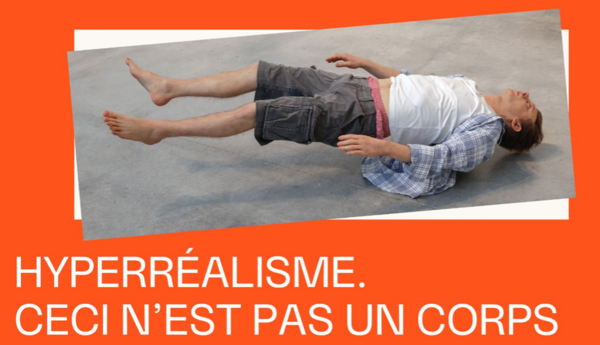
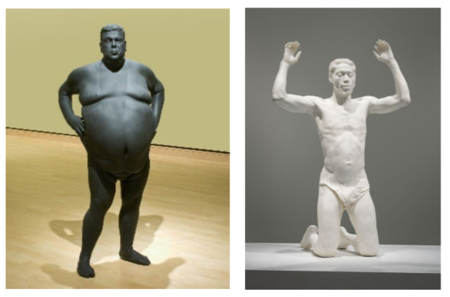
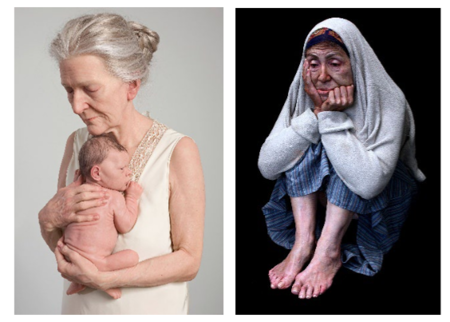
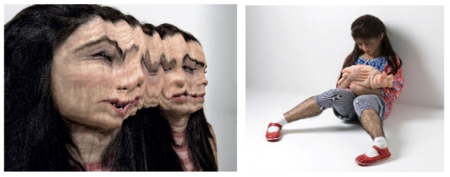
The Musée national des beaux-arts du Québec (MNBAQ) is presenting Hyperrealism. This is not a body from February 26 to October 12, 2026. The first Canadian stop on an international tour that has travelled to 17 cities, from Bilbao to Québec, this major exhibition brings together a representative selection of hyperrealist sculpture from Canada and around the world.

Through some 40 works of breathtaking realism by 35 artists from here and abroad, it traces the evolution of the human figure in sculpture from the 1970s to the present. A break with abstraction, hyperrealism emerged in the United States in the 1960s. Painters and sculptors sought a new form of realism connected to contemporary society. Sometimes drawing on cinematic special effects, they used then-unusual materials such as silicone, polyester resin and fibreglass to reproduce the appearance and textures of the human body in minute detail.

MNBAQ Hyperéalisme
These pioneers and the generations who followed achieved such technical precision that their works seem to emerge from reality itself. Through an original exhibition design, the show brings together sculptures by those pioneers and other renowned artists. The MNBAQ presentation is further enriched by work from Québec and Canadian artists who belong to this artistic movement at the boundary of the real: Alain Benoit, Stanley Février, Louis Fortier, Milutin Gubash, Karine Payette and Mark Prent.
Their works, true mirrors of the human condition, stage the transformations of society and of our relationship with the body over the past 50 years. The artists’ illusionistic methods give physical form to reflections on human experience. Their creations address universal subjects: childhood, old age, solitude, one’s relationship with oneself, the passage of time and death, while taking a critical position on the contemporary world that reaches well beyond the simple challenge of resemblance.

Their three-dimensional works blur the line between art and science and explore the themes of the simulacrum, genetic manipulation and self-awareness. The title echoes René Magritte’s famous painting bearing the words ‘Ceci n’est pas une pipe,’ which questions the relationship between art and reality.

MNBAQ Hyperéalisme

‘A gallery of figures more lifelike than life awaits visitors at the Musée national des beaux-arts du Québec. These works by the greatest names in hyperrealism from here and abroad prompt essential reflection on our relationship with the body, in private and in society. It is a profoundly moving exhibition, an experience on a human scale that will leave no one indifferent,’ says MNBAQ director general Jean-Luc Murray.

‘The exhibition offers a striking view of hyperrealism’s vitality and relevance today. The boundary between the real and the virtual is narrowing just as artificial intelligence undermines our ability to distinguish the genuine from the false. We now consider the meaning of our lives and our humanity from new perspectives. Hyperrealist artists accompany us on this great journey, sometimes pointing toward less-travelled paths,’ adds Caroline Lantagne, MNBAQ exhibition curator and curator of the Québec presentation.

Featuring works by Québec and Canadian artists, the Québec presentation gives pride of place to several pieces from the MNBAQ collection and includes loans from the Musée des beaux-arts du Canada, the Musée d’art contemporain de Montréal, the Musée des beaux-arts de Montréal, Collection Giverny Capital and artist Karine Payette, represented by Galerie Art Mûr.

MNBAQ Hyperéalisme

Presented on the ground floor of Pavillon Pierre Lassonde, the exhibition is arranged in six sections illustrating the broad range of possibilities explored by hyperrealist artists. Each section centres on a formal concept and provides interpretive tools for understanding the works. The selection of sculptures offers an overview of hyperrealist practice and shows that representations of the human body continue to evolve. Along the route, videos reveal some of the artists’ own production techniques and secrets.

Hyperrealism. This is not a body.
At the MNBAQ, Pavillon Pierre Lassonde
179, Grande Allée Ouest, Québec (Qc)
Until October 12, 2026
Schedule and tickets: mnbaq.org
Information: 418 643-2150

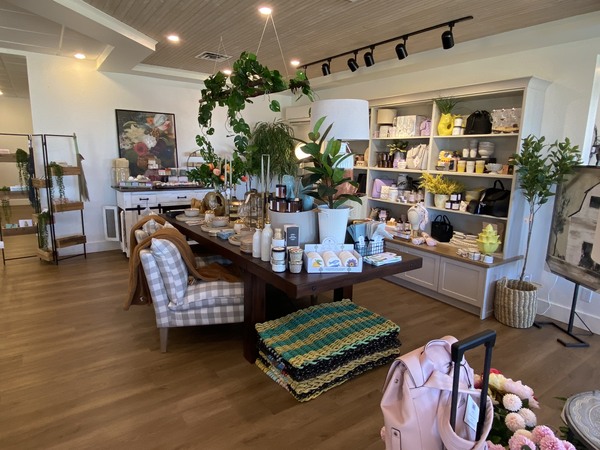
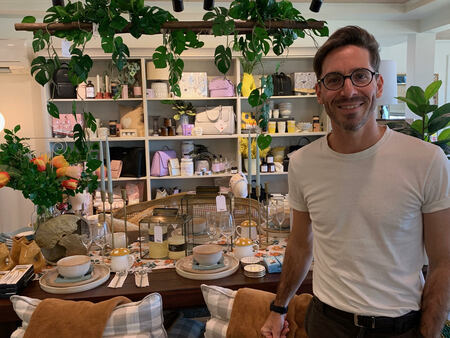
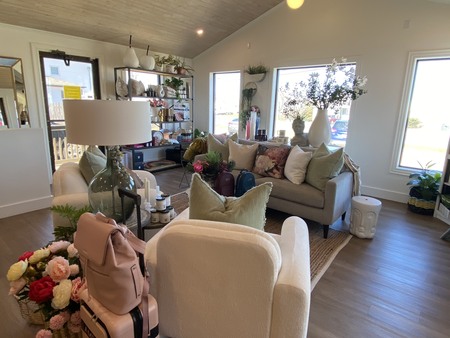
In its purest form, strolling is a creative act that engages both body and mind. While the idle onlooker merely passes by without touching or being touched, the flâneur walks in a state of constant awareness. This, more or less, is the origin of the name of this decor and gift shop in Caraquet, Acadie.


The shop’s creator and manager, Jérôme Godin, is originally from Paquetville, has worked as an interior designer for about 10 years and is also a trained cabinetmaker. He wanted to create a place where customers would enjoy lingering and taking their time to choose what they wanted. With the encouragement and support of the owner of the neighbouring Home Hardware, where he had worked for a few years as a display designer, he and his partner opened their own business in May 2021.

Flânerie
La Flânerie serves, in a sense, as the home-décor section of the Home Hardware, which needed to reclaim that space for appliance sales. Given all the necessary freedom and trust, Jérôme was able to arrange the shop according to his own concept, tastes and imagination, offering customers original and popular products and ideas.

Flânerie Flânerie Flânerie 
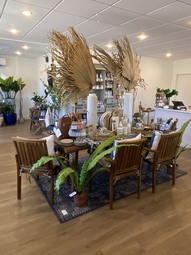
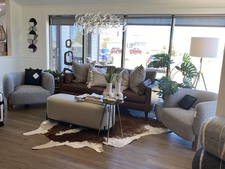
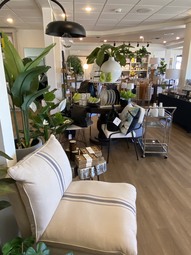
The shop carries a wide range of items for indoor and outdoor décor: soaps, candles, towels and aprons, tableware, jewellery by local artisans, canvases and wall prints, travel bags, lamps, accent furniture, cushions, fashion accessories, original gifts and much more. Fusion Mineral Paint is also available in a variety of colours for refinishing furniture and older objects. Fans of original Christmas decorations will find plenty to choose from.

 Flânerie Flânerie Flânerie
Jérôme constantly works to find and offer exclusive products by seeking out new suppliers. In short, La Flânerie – Décor et Art de vivre is unmatched in Caraquet.

 
Also, Jérôme and his partner Cédric Moreau run another store in Percé, in Gaspésie. Côté Mer shares premises with a café in the centre of the village and offers a range of trendy decor items, gifts and souvenirs.

Flânerie

La Flânerie - Décor et Art de vivre
36, boul. St-Pierre est
Caraquet, NB
506 727-3132
facebook.com/laflaneriecaraquet

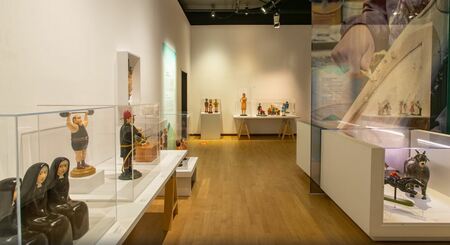
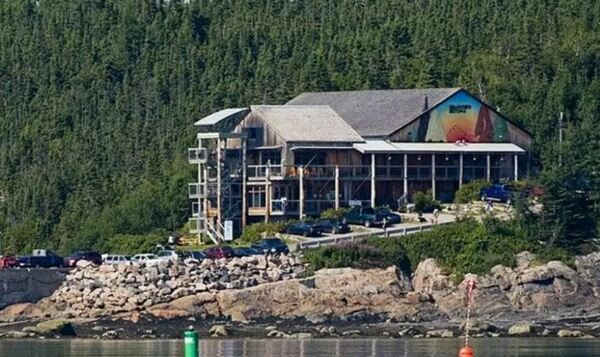
With a panoramic view of the tidal flats and Pointe Sauvage, Centre Archéo Topo in Les Bergeronnes enjoys an idyllic setting. It offers an encounter with the archaeology and history of the Côte-Nord.

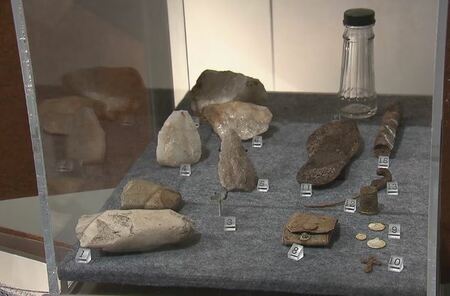
In the 1950s, Louis Gagnon, a hermit from Les Bergeronnes known as Ti-Louis, found objects and sent them to archaeologists. His passion proved contagious. The region’s exceptional heritage came to light.

Archéo Topo
A few decades later, 1,500 sites were uncovered along the 1,300-kilometre stretch from Tadoussac to Blanc-Sablon. Most are Amerindian sites, and some date back 8,000 years.

How did these peoples live here? Why did they settle in the region? Who were these travellers, traders and explorers? How did they use plants such as pumpkins, beans and serviceberries?

Archéo Topo
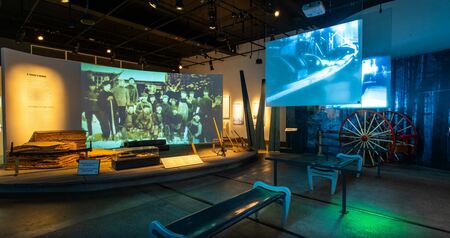
The centre’s new exhibition, Tours de force, presents archaeology through a human lens, drawing on 25 of the most representative sites in Haute-Côte-Nord, Moyenne-Côte-Nord and Basse-Côte-Nord. In Les Bergeronnes, Anse-à-la-Cave revealed a Basque presence; Cap-de-Bon-Désir holds 8,125 years of Amerindian history; and the Lavoie site records more than 5,000 years. Pépechipissinagan, with its fragile rock paintings, is kept top secret.

In the 19th century, 400 people lived around a foundry at the mouth of the Moisie. Near Blanc-Sablon, Basques settled at Middle Bay to hunt whales. It is archaeology brought to life through avant-garde, playful exhibition design.

Archéo Topo

Archéo Topo
archeotopo.com

(581) 475-0387
498, Rue de la Mer
Grandes-Bergeronnes, QC G0T 1G0