Destination

coucher du soleil

In the Monts-Valin, in Saint-David-de-Falardeau, the winter sports resort isn't the only thing that shines far and wide and makes its mark even elsewhere in Québec. There's also a distillery founded in 2016 that produces spirits there, the very first micro-distillery in the Saguenay-Lac-St-Jean region.

Distillerie du Fjord
Distillerie du Fjord is first and foremost a passion passed down through generations, a project that began with brothers Jean-Philippe and Benoît and their father Serge Bouchard. It reflects the history and experience of five generations of gin lovers.


"When our father brought out our grandfather's old still, we suspected it must be in our blood!" says Jean-Philippe.


The project began with a simple idea: to craft unique spirits that would offer an experience of pleasure and discovery. "We draw all our inspiration from the richness of the environment around us, whether it's the purity of the water flowing from the Monts-Valin, the vastness of the Fjord du Saguenay, or even diving into the heart of the boreal forest," he adds.

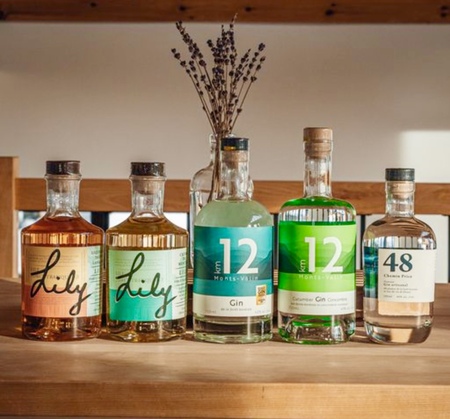
For example, the ingredients of their flagship product, KM12 (balsam fir bud, dune pepper, pinewood spikenard, wild raspberry leaf and sweet gale), are hand-picked in the distillery's own environment. An organic juniper berry is added to this flavourful blend, giving km12 gin a beautiful complexity.
Distillerie du Fjord
The distillery's other products also have their specific qualities:
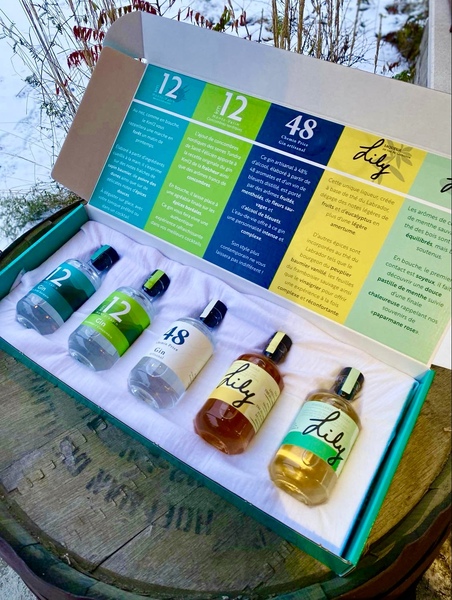
- The KM12 with northern cucumbers has the same base ingredients as its sibling, enhanced by the pleasant freshness of northern cucumber from the Toundra greenhouses in Saint-Félicien, Lac-Saint-Jean.
- 48 Chemin Price is a gin with characteristics unique in the world, offering the ultimate aromatic experience of the boreal forest. Thanks to the fermentation of regional blueberry must, 48 plants and flowers hand-picked north of the 48th parallel are incorporated into this eau-de-vie, giving this contemporary gin an intense and complex character.
- La Liqueur Lily crème de menthe is a classic digestif reinvented in the style of Distillerie du Fjord. Made from wintergreen and wild mint harvested from the heart of the boreal forest, the liqueur has a natural golden colour that brings out the true character of its blended ingredients.

- La Liqueur Lily thé du Labrador is a unique digestif offering an experience that leaves no one indifferent. Made from Labrador tea, a signature plant of the boreal forest and a prized infusion ingredient, it offers subtle fruit and eucalyptus notes with a hint of bitterness. The blend also includes vanilla-scented balsam poplar buds, wild raspberry leaves, and sumac, creating an experience that is both complex and comforting.
- Finally, a few "ready-to-drink" products round out the selection: Gin fizz aux bleuets, Lilymonade, Cosmo, and Smash, available only in the boutique.


Distillery products are available at the SAQ, with select items also sold online.


Sustainable development: a major issue
The Bouchard family is dedicated to applying sustainable development principles across most aspects of their business, including a building constructed to high energy standards, electric production equipment, responsible harvesting, and waste recovery.


Distillerie du Fjord employs 8 permanent staff, plus 6 casual workers during the plant harvest.
Three mornings a week, reservation-only guided tours feature the distillery's spirits. The tours take visitors on a discovery journey through the production process, the interpretation of boreal forest ingredients, and a tasting.


Distillerie du Fjord is a family-run entrepreneurial adventure driven by passion and quality, with a single goal: to give lovers of these original products a unique experience.
Summer can't come soon enough for the cocktail terrace


In an interview with marketing manager Frédérique Folly, we learn that visitors will be able to enjoy a terrace next to the distillery starting in summer 2023. The retail space is too limited to offer this pleasant service. Cocktails made from the distillery's products can be tasted there.


The website features several cocktail recipes for those looking to experiment and discover new flavours.

Distillerie du Fjord
distilleriedufjord.com
48, chemin de Price
Saint-David-de-Falardeau
Québec G0V 1C0
418 673-1012
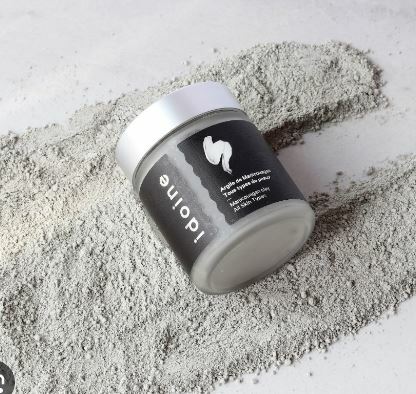
At the entrance to the Manicouagan Peninsula, near the beginning of chemin Principal in Pointe-aux-Outardes, visit the Argile Eau Mer cosmetics shop. It showcases sensitive marine clay extracted beneath a peat bog beside the Saint-Laurent, a product found nowhere else in the world that helps maintain healthy skin.

Manicouagan
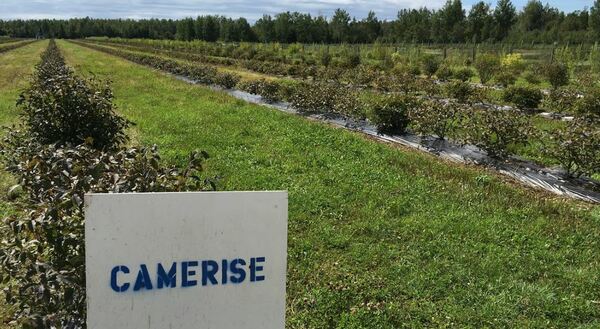
In Pointe-Lebel, make a stop at the improbable Ferme Manicouagan. Unexpected in the middle of the boreal forest, this farm is an emerging leader in camerise (haskap berry) production. Because the crop is well suited to the uncertainties of northern climates, Côte-Nord farmland is ideal for growing it; the cooler temperatures produce sweeter fruit. You must try the camerise mousse, a genuine delight. The farm also specializes in strawberries, raspberries and corn. Its farm stand offers abundant freshly picked vegetables, a wide range of prepared products and pick-your-own produce.

In Hauterive, Boucherie les trois p’tits cochons offers high-quality products, and its tartare bar is a must in the region. For a quick meal, customers can choose from a whole range of ready-to-eat items: salads, sushi made fresh daily, house-smoked products and jerky. Several varieties of fresh sausage and many other products prepared on site will also satisfy the appetite. The butcher’s products are available at Marché des Dunes near Parc Nature de Pointe-aux-Outardes.

Manicouagan
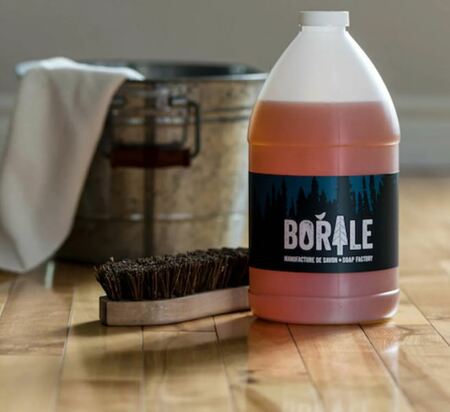
On reaching central Baie-Comeau, visit the Manufacture de savon Borale shop and discover refined soaps and beauty products carefully made by its master soapmaker. Evoking the character of the boreal forest, the soaps are produced through a traditional full-boil process in a vat followed by washing of the soap paste, yielding a superior-quality product.

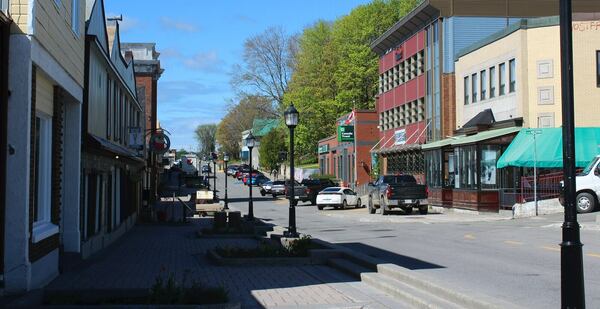
Over the past decade, downtown Gaspé’s popular, lively rue de la Reine has been transformed a few times, as new businesses have opened and others have changed hands. One of the notable features of the area’s changing economic landscape in 2024 is the increasingly prominent presence of women entrepreneurs and business leaders.

Here are a few examples.

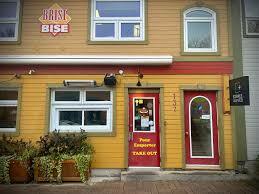
Le Brise-Bise: It was a woman, Claudine Roy, who founded the popular resto-bar more than 30 years ago. Originally from Cloridorme, she was deeply involved in business in Gaspé and the surrounding region. She handed the reins to Simon Poirier in 2015. She was made a Knight of the Ordre national du Québec in 2010 and appointed a Member of the Order of Canada in 2018. In 2026, ownership returned to women with Sara Di Zazzo, who already heads La Sarcelle à la Marina. Together with her partners, she intends to carry on the mission of this institution as it marks its 40th anniversary.

Rue de la Reine


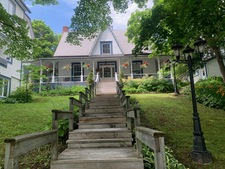
L’Auberge sous les arbres: Claudine Roy also owned this property from 2015 to 2023, when she transferred it to another woman, Gaspé native Stéphanie Lachance, whom she had hired as manager two years earlier. Together with her partner, Diego Valdes, Lachance, who trained in payroll administration and hotel management, has committed to passionately carrying forward the building’s mission of comfort, hospitality and showcasing heritage.

Rue de la Reine


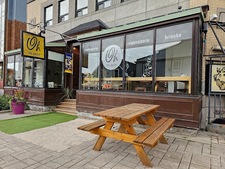
Oh! les pains: The bakery opened in downtown Gaspé in 2020, in the midst of the pandemic. Its owner, Gaspésie native Elsa Houde, embarked on the venture after about 20 years in communications. The bakery grew from a dual desire to offer quality products and create a warm, authentic gathering place. It quickly became the go-to spot for lovers of good bread, fine viennoiseries and puff-pastry pizzas. A different soup is featured each lunchtime, along with a freshly prepared lunch menu.

Rue de la Reine

Paquebot Café Gaspé:
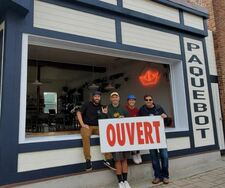
One of the area’s newer arrivals, this original and surprising café took shape in 2021 when Isabelle Huard, after two years managing Paquebot Mont-Royal, wanted to open a café in her hometown of Gaspé. Following several months of work more than 900 kilometres from the first Paquebot, Paquebot Gaspé opened on September 1, 2021, with Isabelle as co-owner. Paquebot operates three other cafés in Montréal.

Rue de la Reine

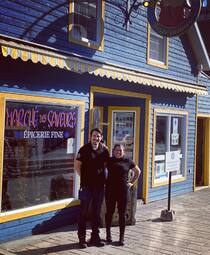
Marché des saveurs gaspésiennes: One of the oldest businesses of its kind in Gaspé, it was founded nearly 25 years ago as a gourmet food shop. In 2022, the founder decided to sell and entrusted the business to Claudia Romero, an employee of a few years. Romero and her partner, Ricardo Granja, are both originally from South America and came to Québec 15 years ago. Together they are carrying on a business with a loyal clientele. That same year, Claudia secured the contract to operate Parcs Canada’s seasonal restaurant and grocery store, Les Délices de Forillon.

Rue de la Reine

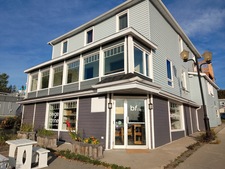
Beige Farine: Sandrine Bourbonnais first came to Gaspésie in 2019 as communications manager for a cultural organization in Gaspé. It was love at first sight. After completing her law degree in Sherbrooke in 2021, she decided to build her life in Gaspé. Beige Farine, a bulk store selling food, household and personal-care products, grew from her desire to help people make a positive environmental difference every day. She acquired one of the city’s oldest buildings, at 3, rue Adams on the corner of rue de la Reine, and transformed it into the shop that opened in June 2022.

Rue de la Reine

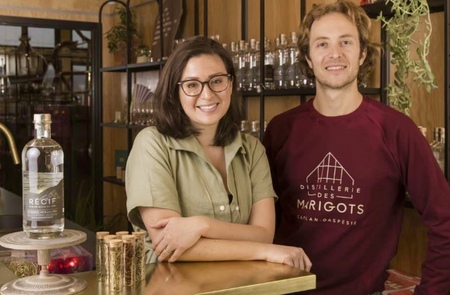
Difficult times often create an opportunity to take stock and change direction. That is what happened to Joseph St-Denis-Boulanger, a Caplinois, and his partner, Laurie-Anne Cloutier, a Montréalaise, who sought refuge in Gaspésie to heal after the painful loss of their daughter at birth in 2018.

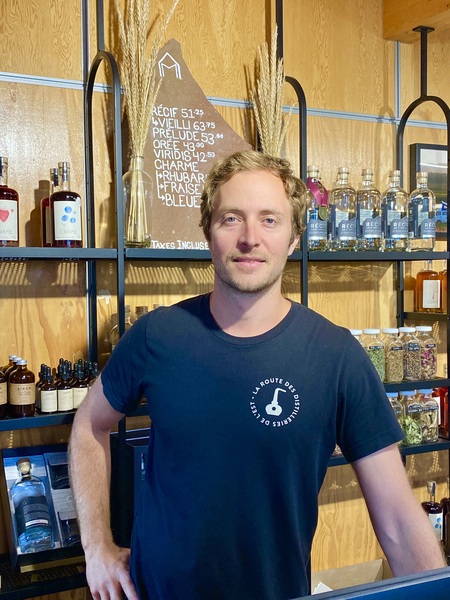
Building a distillery between Route 132 and the sea in Caplan and opening it to the public was the ambitious project undertaken by this new entrepreneurial couple. Distillerie des Marigots began producing whisky and gin in 2020.

This Gaspésie native and his Montréal-born partner, who fell in love with the region, both realized that it was now or never to pursue their dream: settling in Caplan and launching a craft distillery that showcased the flavours of the terroir.
Marigots
The name chosen for the venture also invites residents and tourists to enjoy life. The expression “courir ou aller au marigot” refers to fishermen who play hooky and retreat to a secluded cove to take it easy.
Joseph further developed his expertise through training at Seattle’s Copperworks distillery, enabling him to create a product that would appeal to the public while also earning recognition from connoisseurs. The result was Récif, a coastal gin. A whisky made from malted barley is currently ageing for release in 2025.
Distillerie des Marigots
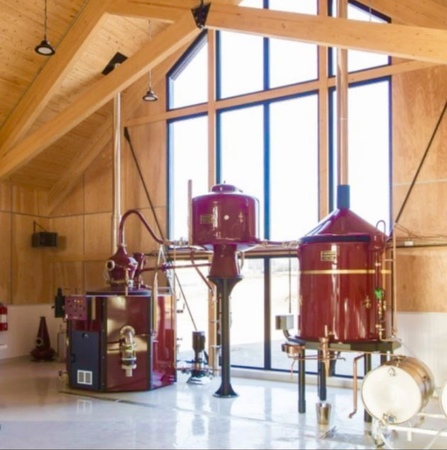
A Charentais still is the centrepiece of production for these new Gaspésie spirits. “My aim was to focus on aroma and complexity of flavour in both my gin and my whisky. I wanted them to be rich, long on the finish and very distinctive, so I sought out the perfect equipment for that,” explains Mr. St-Denis-Boulanger.

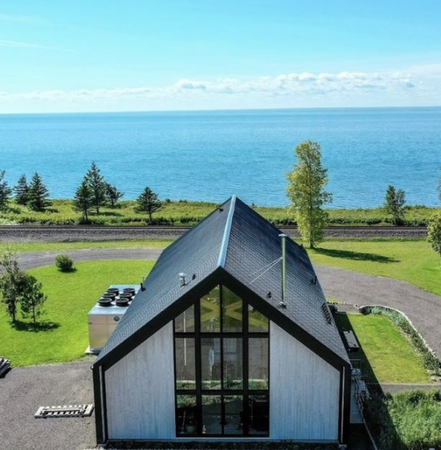
From the outset, the couple had an idea of the building they wanted for the distillery, with the beauty and nobility of wood at the heart of their vision. “My partner and I are really into architecture, and we already knew we loved this kind of building: clean design and geometric lines made warm through the use of wood,” Joseph explains. By the owner’s own account, wood was the only option ever considered.
Distillerie des Marigots
The extensively glazed façade, the building’s signature feature, sits at the heart of the company logo and has also become the brand’s emblem. “The idea is that wherever you are in the distillery, you can see Baie-des-Chaleurs on one side and the still on the other,” says the owner, who is not a little proud of his building perched on a cliff overlooking the sea.

The master distiller at Distillerie des Marigots draws inspiration for his spirits from the Gaspésie landscape and strives to showcase the exceptional quality of its local ingredients. His approach brings to the fore the aromas and fragrances offered by his surroundings and by Gaspésie’s agricultural expertise. Alongside its two flagship products, Récif gin and whisky, the distillery also enjoys creating small experimental batches, including eaux-de-vie, herbal liqueurs and limited-edition gins.


Distillerie des Marigots
300, Boul. Perron Est
Caplan, QC
distilleriedesmarigots.com
(418) 388-2008

The Manicouagan region and its main city, Baie-Comeau, have developed a food scene that delights even the most discerning. You don’t need to go to Montréal or Québec to treat your taste buds.

The only four-star hotel east of Tadoussac and a renowned address, Manoir de Baie-Comeau is a popular stop on the Côte-Nord, just minutes from parc des Pionniers and plage Champlain. Built on a headland overlooking the Saint-Laurent, the hotel commands sweeping views of the river and bay. Bistro La Marée haute makes the most of the setting, particularly from its spacious summer terrace. For a meal in exceptional surroundings, it is an ideal choice. Chef Carl Beaulieu, who ran L’Orange bleue in the Hauterive sector for around 12 years, is now at the helm.

Carl Beaulieu has also expanded his food offering by operating two food trucks under the La Poutinerie name. The menu includes poutines and fries, burgers, hot dogs, pogos and other specialities. For the past four summers, one truck has been stationed from Tuesday to Sunday in the parking area beside the hotel, near parc des Pionniers. Customers can eat at the few picnic tables set up in a corner or take their food away. The other truck is mobile: it operates in the downtown Mingan sector and travels to various events and festivals throughout the summer. It serves the same menu as the truck at Manoir de Baie-Comeau.

Directly opposite église Sainte-Amélie and a few hundred metres from Manoir de Baie-Comeau, La Cache d’Amélie is a landmark of Côte-Nord gastronomy. It offers refined dining centred on fine regional cuisine, available as a table d’hôte or à la carte. Its carefully curated wine list includes a selection of private imports.

Nearby Place Lasalle is the city centre’s main nightlife hub and comes alive in summer with its terraces. It is also an opportunity to visit microbrasserie St-Pancrace and discover the region’s best beers. As the first microbrewery on the Côte-Nord, it brews and serves craft beers with local flavours alongside a menu based on regional products and a wide selection of Québec whiskies and spirits. Visitors can also sample the beers at the brewery and take a tour.

On the shore of the Saint-Laurent near the ferry terminal, Restaurant Saint-James au bar de l’eau has a terrace with a splendid view of the surroundings, and sometimes even of whales. It offers various daily menus, table d’hôte menus and a selection of competitively priced wines. The menu includes delicious seafood, fish and fresh crab in season, as well as popular pasta dishes, pizzas, salads, sandwiches and grilled fare.

Born from a holistic vision and a love of the region, Baie-Comeau’s Distillerie Vent du Nord is focused on its community. Supported by partners and local producers, its artisans continue to create products that showcase the expertise and solidarity of the region’s people. Its spirits and ready-to-drink beverages draw inspiration from the Côte-Nord: its terroir, ancestral traditions, local botanicals, landscapes and the bright future we wish for it.

Gérard Pourcel

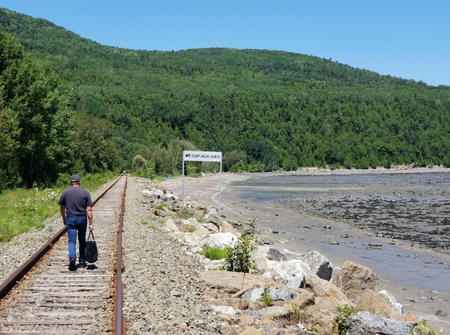
The beach is reached from a turnoff on Route 362 between Saint-Irénée and Les Éboulements. The descent along a narrow, winding road is quite steep. At the foot of the slope, a second, very narrow road on the left is marked “Plage.” Continue for a few hundred metres to a parking area facing the shore, bounded by the tracks of the Charlevoix tourist train. The municipality has installed a dry toilet, a welcome amenity. Especially on fine summer days, the parking area may be full, and drivers will need some ingenuity to find a small space along the edge of the narrow road. Even though getting around is a little complicated, I have never seen an inconsiderate motorist block a private entrance or the road itself.

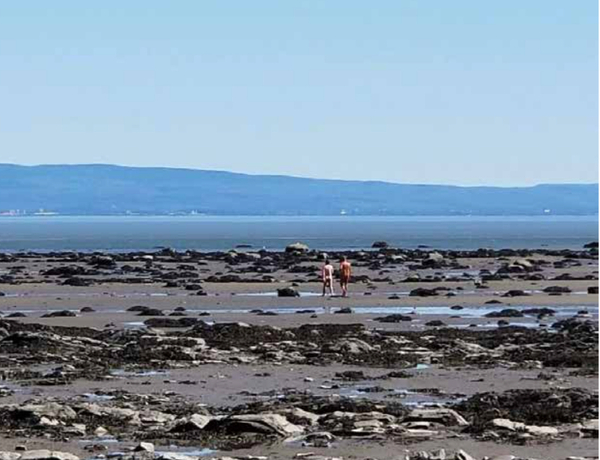
This is paradise before Adam and Eve, although their story predates Catholic iconography by a considerable margin. According to Michel Onfray, the three monotheistic religions share the story of Adam and Eve’s lost paradise, itself derived from the Greek myth of Pandora. At the northeast end of plage de Cap-aux-Oies, Eden is restored, without a vine leaf in sight. Onfray also notes that a vine leaf would be climatically implausible and that a fig leaf makes more sense. Either way, at plage de Cap-aux-Oies, no one cares whether the leaf is vine or fig.


Cap aux Oies
In practice, the beach is loosely divided into three sections, without this causing any difficulty. The first, near the stairs, is heterosexual and clothed. Farther to the left is a heterosexual section where clothed and nude mix, followed by a naturist area populated chiefly by “Adams.” And should anyone partake of the forbidden fruit, which is by no means required, it will not fulfil the biblical injunction: “Be fruitful and multiply; fill the earth…”

Cap aux Oies 2
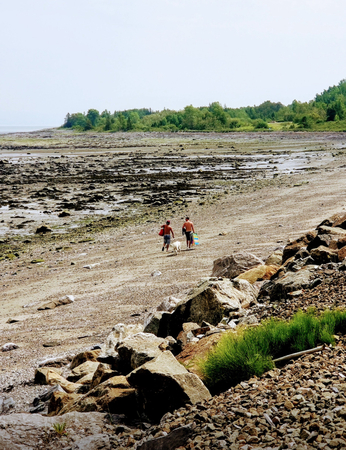
The beach itself is a very beautiful broad cove backed by the mountain, with many secluded and shady spots, but it is the sense of freedom that takes hold fairly quickly. Having visited several times, I have never felt uncomfortable there. There is no harassment. Sunbathers range from young people with sculpted bodies to much older people marked by the years: tall and short, heavy and thin. In late August 2024, I even saw a naturist walking with a cane. My impression is that everyone feels comfortable and free of self-consciousness. The beach is very clean; I have never seen greasy wrappers, old soft-drink cans or other litter. Farther northeast is another small, more secluded cove of fine sand, accessible only by walking a few hundred metres alongside the railway track.

I wish you paradise not at the end of your days, but the next time you pass through Charlevoix in summer.

Reference: Michel Onfray, Traité d’athéologie, Livre de poche/Éditions Grasset, 2005.

Acadie has several charming destinations in Nouveau-Brunswick, and the Lobster Capital of the World is a particular favourite with tourists and locals alike.

Located 25 kilometres from Moncton, Shédiac is the most popular seaside destination on the Côte acadienne. The provincial park at plage Parlee is very popular in summer. It was here, in this corner of Acadie on the edge of Moncton and the Nouvelle-Écosse border (where French faces strong competition from English), that shiac was born. This Acadian dialect, which blends Acadian French and English, takes its name from a contraction of Shédiac and is heard far less often in the north of the province.

About twenty kilometres farther south, the Plage de l’Aboiteau in Cap-Pelé, vast, deep and still largely in its natural state, is one of the finest warm-water ocean beaches in Nouveau-Brunswick.

Shédiac has declared itself the Lobster Capital of the World. The town is internationally known for lobster fishing and, in early July at the end of the fishing season, holds the Festival du homard, which marked its 75th anniversary in 2024. For lobster lovers, then, it's a must-visit destination. Since 1989, to underline its title, the town has boasted a monument that delights the thousands of visitors passing through the region: a giant lobster that presides over the middle of town, where people love to have their picture taken.

The town has several charming inns and good restaurants. For a gay-friendly stay, the Gite Le Griffon on the main street welcomes you into a grand heritage home. The plunge into the Alice in Wonderland universe that inspired the hosts continues at Moque-Tortue, a playful bistro just a few steps away, where lively evenings spill onto the terrace in summer. This wonderland now also includes the chocolaterie and bistro Adorable Chocolat across the street, and the Morse & Marteaux food counters at Plage Parlee and the ciné-parc Neptune, run by the same entrepreneurs with the same magic. 

When exploring Lac Saint-Jean, certain places are not to be missed because of their relevance and their cultural and human interest. Between Alma, the gateway to the journey, and Péribonka, some of them deserve a longer stop.

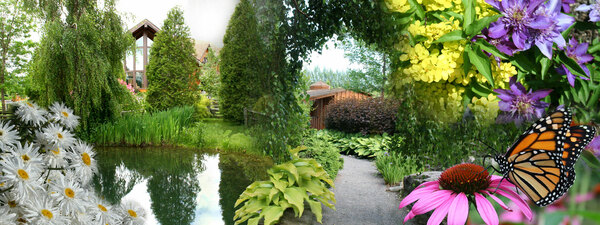
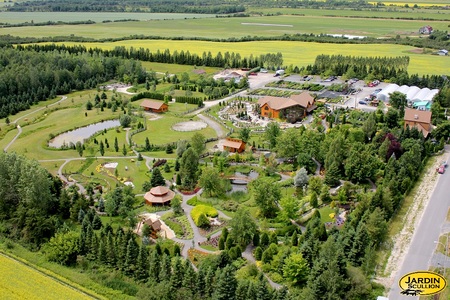
In L’Ascension, Jardin Scullion, one of Québec’s most beautiful gardens, contains more than 2,000 plant species from around the world, all well adapted to the distinctive climate of Lac-Saint-Jean. It also has a small farm, children’s play areas and three kilometres of walking trails with interpretive panels in three languages.

Alma-Péribonka

Jardins Scullion
1975, Rang 7 Ouest
L'Ascension-de-Notre-Seigneur, QC G0W 1Y0
jardinscullion.com
(418) 347-3377

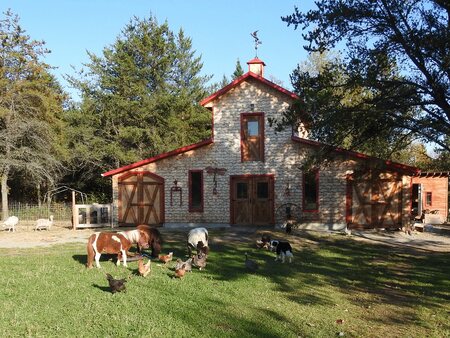
In Péribonka, Dany welcomes visitors to Ferme Dan Nature to meet more than 30 species of farm animals and exotic birds, from alpacas to peacocks and pheasants. A beautiful water garden filled with lotus flowers invites visitors to explore the two-kilometre interpretive trail.

At this gay-friendly venue, tours are led by the host and visitors can pick their own blueberries and raspberries. Guests can also stay in a beautiful log cabin.

Alma-Péribonka

Ferme Dan Nature
650 Rang St Michel,
Péribonka, QC G0W 2G0
Facebook page
(418) 719-1343

A visit to the Shippagan region would not be complete without trying its restaurants. Some celebrate local traditions and regional culture, while others offer different and exciting culinary adventures.

In Shippagan, near the bridge to the islands of Lamèque and Miscou, Pinokkio – Pizzeria Resto-Bar offers panoramic views of the surrounding area. Its wood-fired white- and rosé-sauce pizzas, starters, salads, pasta, seafood and steaks delight diners. The menu combines international and regional cuisine. The moules marinières in a creamy white-wine sauce are particularly delicious, and the seasonal outdoor terrace is popular.

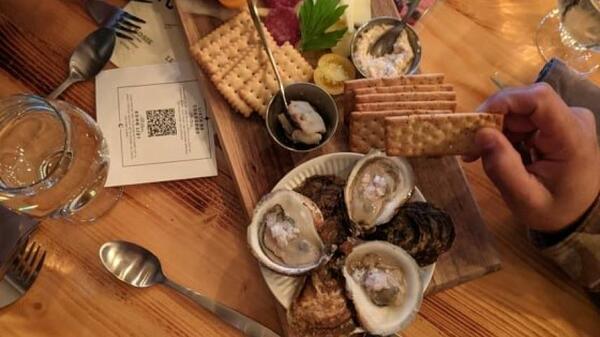
On the Haut-Shippagan side, on the Cielo Glamping site, the Hub chez Cielo has developed a different dining concept that offers a unique culinary and creative experience. The chef has made it his mission to introduce you to the region’s products through the Planches Cielo concept: you build your own meal from the shop’s offerings. The Perles et huîtres package is also popular. You can also enjoy coffee from the roastery or savour one of the famous cocktails, their famous wines and local beers.

On the island of Lamèque, there is no shortage of interesting places. Café boutique Aloha on rue Principale, for example, has Hawaiian-inspired décor and an exotic menu featuring homemade carrot-and-turnip soup, corn chowder, poke bowls, filled paninis, bagels and baguettes, a tempting Aloha salad and its famous Crookies, baked fresh daily. It also serves smoothies. A pretty terrace at the rear welcomes guests in season, and the gift shop is filled with all sorts of practical and playful things.

Nearby, Restaurant du Malia Spa et Villégiature offers a varied menu centred on seafood, along with tempting breakfasts. Its Taco Wednesdays are especially popular.

When a restaurant takes its name from a great wine, diners can expect superior-quality food made with fresh ingredients. A quintessential family restaurant, Kabernet Gourmet-pub serves a wide range of starters, chef’s selections, burgers, meats and fish, as well as an extensive dessert menu. Its wine and spirits list offers remarkable variety and choice. Tables can be reserved from Thursday to Sunday.

On the island of Miscou, Vieille école de Miscou serves breakfast to overnight guests and welcomes passers-by for
coffee or a light meal from a menu that changes through the season. Do not miss the Festival du thon in August and its festive menu for
the occasion.

  In December 2010 in Natashquan, Minganie, representatives of socioeconomic, tourism, municipal, government and business organizations gathered for a forum. They concluded that a cooperative approach would allow the community to coordinate more effectively and develop a tourism offering beneficial to visitors and the region itself.


Jacques Lachance, one of the people who initiated this process of reflection and coordination among local and regional forces, arrived in Natashquan in the early 1970s with his sheep, after spending time as an antiques dealer and horse-drawn-carriage driver in Vieux-Québec. A lover of heritage, the Saint-Laurent and nature, he had travelled widely and worked in many fields before settling where his heart drew him.

Voyages Coste Voyages Coste

Now a consultant, producer and project lead in tourism development and promotion, he says the Coopérative de solidarité en tourisme équitable (CoSte) serves as a catalyst for political and socioeconomic stakeholders throughout Minganie and even across Côte-Nord, thanks to its original, energetic approach to showcasing the region and its attractions.

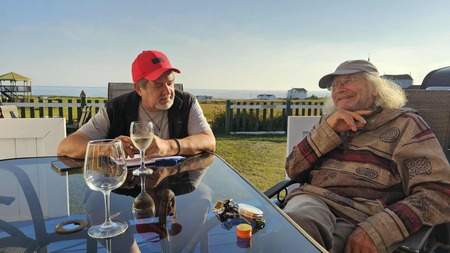
During our meeting on the terrace behind CoSte’s head office, he described with energy and conviction what led him to join an undertaking of which he is now very proud. He lives in Rivière-au-Tonnerre and remains regularly involved in the agency’s tourism activities, notably as a guide accompanying groups to destinations across Minganie.

 Voyages Coste Voyages Coste
Since 2006, the Agence coopérative de solidarité en tourisme équitable, or CoSte, has organized and marketed tourism experiences in Minganie and Basse-Côte-Nord. It showcases the natural environment and local people, gives travellers lively, dynamic, authentic and memorable experiences, and maximizes positive benefits for communities.

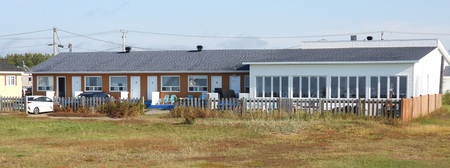
The travel agency has a visitor reception office and offers accommodation at L’Escale Lam-Air in Rivière-au-Tonnerre. Its packages and tourism services cover Côte-Nord, particularly Minganie, Anticosti Island and Basse-Côte-Nord. ‘CoSte contributes to the growth of local communities by encouraging sustainable, responsible and equitable tourism,’ Lachance says. It offers a wide range of services: flight reservations, cruises in the golfe du Saint-Laurent, tailor-made packages and à-la-carte products.


Minganie 

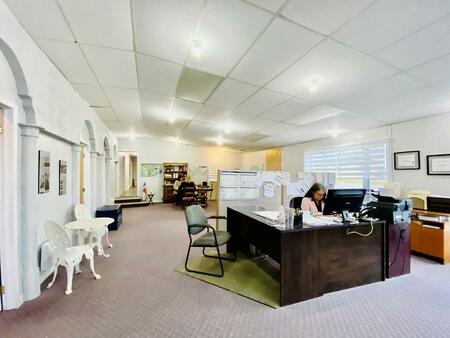
Initially housed in a small building near the church, the cooperative received an unexpected ‘gift’ in 2013. The owners of the motel in the centre of the village were retiring and, recognizing the importance of CoSte’s work and achievements, donated the property to the cooperative. The waterfront complex offered an ideal opportunity to expand its services and packages.

With Alberte Marcoux arriving as the new executive director that same year, CoSte established its head office in the front section of the building and also took over management of L’Escale Lam-Air’s dining room and 13 guest rooms. The gift certainly acted as a wonderful boost for the organization and its members.

 Voyages Coste Anticosti Anticosti

‘Voyages CoSte received start-up funding, but the cooperative has been completely self-supporting since 2016,’ Jacques Lachance explains. ‘We have received no public operating funding for nearly 10 years. The assistance we do receive is essentially tied to specific development projects, such as purchasing a minibus or carrying out a collaborative digital transition with 40 member businesses.’ The collectively owned enterprise supports itself through sales and belongs to members based mainly in the MRC du Golfe du St-Laurent and MRC de la Minganie, including Anticosti Island.

CoSte has received support and encouragement from Tourisme Québec, the ministère du Développement économique, de l’Innovation et de l’Exportation, the Centres locaux de développement (CLD) in Minganie and Basse-Côte-Nord, the Conférence régionale des élus de la Côte-Nord and Emploi-Québec. These partners contributed in various ways to the start-up phase. The cooperative also works with other local and regional partners to deliver projects and its diverse range of tourism services.

They see this community-born initiative as an enterprise that could, over time, become a model of collective development and local empowerment for northern Québec communities.

Many Canadian agencies, meanwhile, believe CoSte opens a vast and little-known territory to travellers in an original and respectful way. Without it, the region would remain difficult to reach and offer relatively few options for trouble-free travel. CoSte places the experiential character of its packages at the forefront, matching the expectations of a new generation of travellers seeking experiences.

One thing is certain: CoSte occupies an increasingly important place in Minganie tourism. Guides GQ representatives saw this directly and used a few of its services and packages last August and September. (See ‘Eight Days Exploring Minganie.’)

Voyages Coste Voyages Coste

Voyages CoSte
voyagescoste.ca
454, Jacques-Cartier
Rivière-au-Tonnerre, QC G0G 2L0
1.877.573.2678 or 418 465-2002

Republished on March 20, 2026