By Pierre Perreault
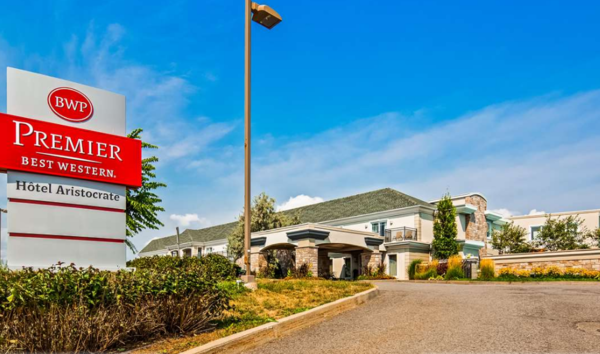
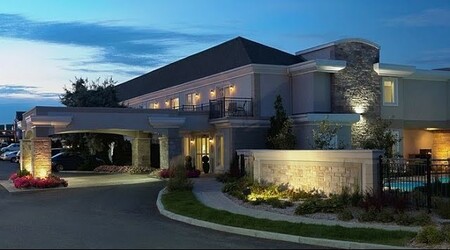
Built in Québec in 1963 by a construction contractor, Motel L’Aristocrate is now a family institution operated by the Nadeau family. Originally designed for a client who later withdrew, the property remained with the family and, a few years ago, evolved into the prestigious Hôtel Aristocrate under the Best Western Premier banner.
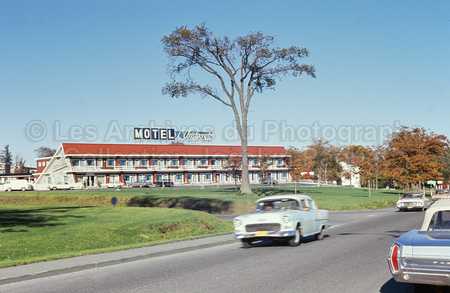 Motel L’Aristocrate in 1963
The hotel was founded by Georges Nadeau, grandfather of the family’s current generation, after the client for whom it was originally built withdrew from the project. The Nadeau family then took over operations, and members of the next generation, including the current leaders’ father and his brothers, joined the business over the years. Long the family’s only hotel, the property became the flagship of Nadeau Groupe Hôtelier, which later acquired other hotels in the same Tête des ponts district, including Hôtel Sépia and Holiday Inn Express Québec.
Best Western Premier Hôtel Aristocrate received Best Western’s prestigious M.K. Guertin Award in 2025. Named for Best Western’s founder, the award honours hotels demonstrating exceptional service, quality, value and commitment to the brand.
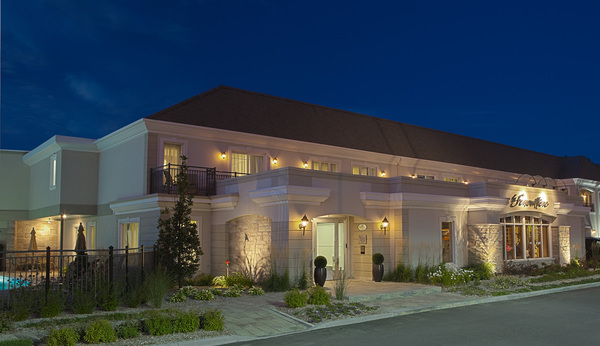
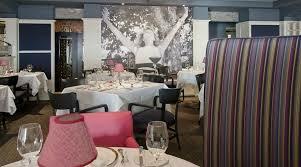
At the western gateway to the city, the hotel is known for its high-end service and La Fenouillière, its four-diamond restaurant, recognized as one of the region’s finest tables for 40 years. The restaurant offers local cuisine showcasing Québec terroir flavours.
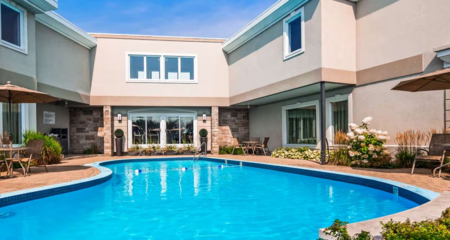
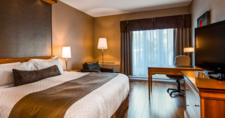
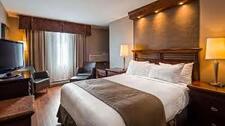
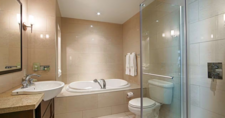
The hotel, which has undergone several major renovations in recent years, offers visitors, while upholding its commitments to quality and sustainability, 100 comfortable rooms across various categories, including a Grand Signature Suite, three meeting rooms, a gym, and a seasonal outdoor pool with terrace. EV charging stations are available. Guests can also make use of a self-service laundry service, and pets are welcome for a fee, subject to certain conditions.
For cravings at any time of day or night, Au Petit Magasin, open around the clock near reception, offers a full selection of snacks (chips, chocolate, biscuits, soups and drinks, frozen foods, etc.). A microwave is on hand, and the hotel also serves fresh coffee around the clock.
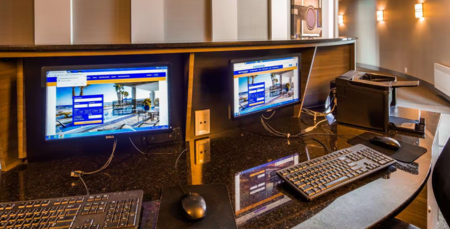
L’Aristocrate makes an ideal base for sports groups visiting the region for tournaments or competitions. Buses can park easily on site. Those coming to Québec for medical appointments also receive a personalized welcome. Free services include parking, high-speed Wi-Fi, business centre access, coffee and tea, and more.
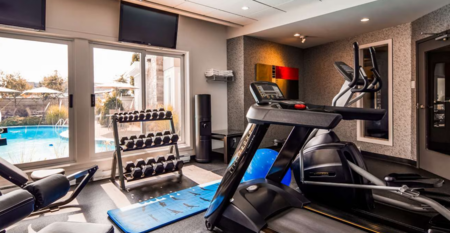
Cyclists receive the welcome they deserve. The hotel provides secure bicycle storage at no charge, and the nearby Corridor du Littoral and Parcours des Anses cycling routes are easily accessible.
Hôtel Aristocrate is an enduring example of successful family-owned hospitality in Québec. Current president Daniel Nadeau and his daughter, Chantal, lead the hotel group, which was formally incorporated as Nadeau Groupe Hôtelier in 2021. It now comprises three hotels, 287 rooms and approximately 100 employees.
Hôtel Aristocrate
Best Western Premier
hotelaristocrate.com
3100, Chemin Saint-Louis
Québec (Qc) G1W 1R8
418 653-2841
By Pierre Perreault
Québec has a long-established tradition of gastronomy and great tables. Several establishments are found not only in historic Vieux-Québec and the central neighbourhoods but also in outlying districts such as Beauport, Sillery, Sainte-Foy and Charlesbourg.
La Fenouillière is one example: this year, 2026, it marks 40 years inside Hôtel Aristocrate near the bridges, on chemin Saint-Louis in Sainte-Foy. At a lunchtime meeting in late March 2026, food and beverage director Caroline Baldit and hotel marketing director Annie Rivard outlined the renowned restaurant’s history and plans for its 40th anniversary.
For those who enjoy a good story, here is the condensed version. In 1986, two chef friends from Bas-du-Fleuve, Yvon Godbout and Martin Gosselin, recognized an opportunity. Both had restaurant experience and taught cooking part-time in Québec; they had met in 1972 at Montréal’s Institut de tourisme et d’hôtellerie du Québec (ITHQ). They met David, André and Normand Nadeau, brothers who owned Motel l’Aristocrate and entrusted them with the future of its hotel restaurant, Aux Entrecôtes, which had no patronage, was losing money and had a demoralized staff.
Six years later, in 1992, Godbout and Gosselin took over the restaurant under lease. From that point, La Fenouillière set new standards and won numerous awards, becoming the most renowned restaurant in the Capitale-Nationale region. Its owners were among the pioneers in cooking with Québec terroir products. As producers diversified their offerings, restaurateurs were able to renew their menus.
La Fenouillière changed hands in 2017, and the new owner continued its tradition. Unfortunately, after the COVID-19 pandemic and the disruption caused by a major, still-ongoing MTQ project at the nearby Pont de Québec approach, he had to give up the business in August 2025. Nadeau Groupe Hôtelier then decided to acquire the restaurant located inside the hotel it already owned.
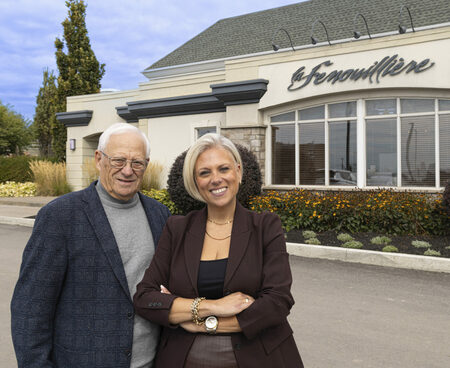 Daniel and Chantal Nadeau, of the Groupe hôtelier Nadeau
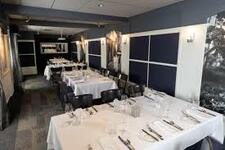
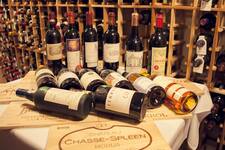
Meeting rooms and a private dining room are also available for business groups, families and other gatherings. Breakfast, served daily, is popular. On weekday lunchtimes and every evening, La Fenouillière presents the original menus and fine-dining experiences on which its reputation rests.
In 2026, the restaurant plans to refresh both the dining room and the menu while respecting La Fenouillière’s DNA, preserving what made it renowned while bringing new energy to the experience.
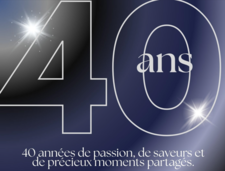
In May, a major event will bring together several regional socioeconomic players, business partners of La Fenouillière and representatives of the Nadeau family to celebrate the four-diamond restaurant’s 40th anniversary. Other special activities will take place throughout the year to thank loyal patrons and attract new guests. The owners say the celebrations also form part of the revitalization of the Tête des ponts district, a beautiful neighbourhood that will shine and become a sought-after area of Québec in the coming years.
The anniversary also confirms Nadeau Groupe Hôtelier’s ‘commitment to supporting and showcasing local institutions that contribute to the region’s appeal, while continuing its mission of offering memorable experiences to guests,’ says Chantal Nadeau, vice-president and general manager.
The third-generation family business operates three respected properties in the Québec region, all near Tête des ponts: Best Western Premier Hôtel Aristocrate, Hôtel Sépia and Holiday Inn Express Québec.

Restaurant La Fenouillière
fenouilliere.com
3100 ch. Saint-Louis
Québec, QC G1W 1R8
418 653-3886
Difficult times often create an opportunity to take stock and change direction. That is what happened to Joseph St-Denis-Boulanger, a Caplinois, and his partner, Laurie-Anne Cloutier, a Montréalaise, who sought refuge in Gaspésie to heal after the painful loss of their daughter at birth in 2018.
Building a distillery between Route 132 and the sea in Caplan and opening it to the public was the ambitious project undertaken by this new entrepreneurial couple. Distillerie des Marigots began producing whisky and gin in 2020.
This Gaspésie native and his Montréal-born partner, who fell in love with the region, both realized that it was now or never to pursue their dream: settling in Caplan and launching a craft distillery that showcased the flavours of the terroir.
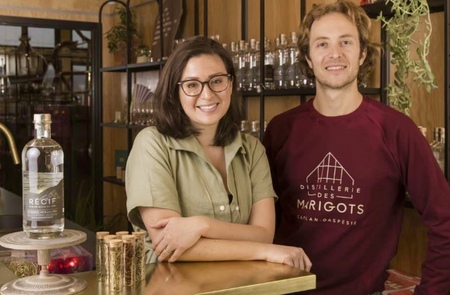
The name chosen for the venture also invites residents and tourists to enjoy life. The expression “courir ou aller au marigot” refers to fishermen who play hooky and retreat to a secluded cove to take it easy.
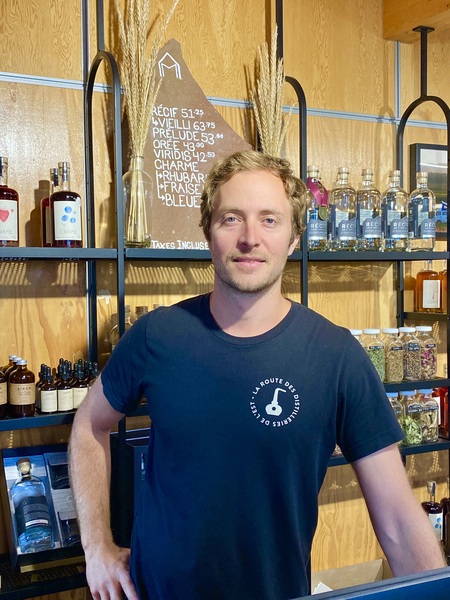
Joseph further developed his expertise through training at Seattle’s Copperworks distillery, enabling him to create a product that would appeal to the public while also earning recognition from connoisseurs. The result was Récif, a coastal gin. A whisky made from malted barley is currently ageing for release in 2025.
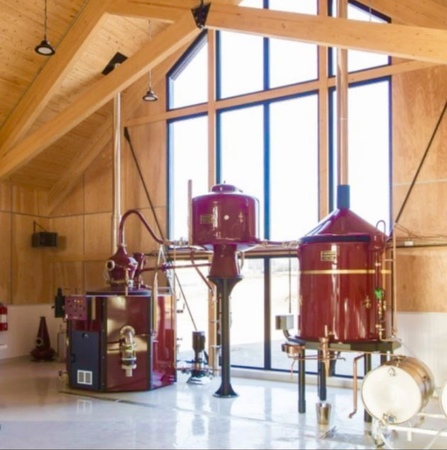
A Charentais still is the centrepiece of production for these new Gaspésie spirits. “My aim was to focus on aroma and complexity of flavour in both my gin and my whisky. I wanted them to be rich, long on the finish and very distinctive, so I sought out the perfect equipment for that,” explains Mr. St-Denis-Boulanger.
From the outset, the couple had an idea of the building they wanted for the distillery, with the beauty and nobility of wood at the heart of their vision. “My partner and I are really into architecture, and we already knew we loved this kind of building: clean design and geometric lines made warm through the use of wood,” Joseph explains. By the owner’s own account, wood was the only option ever considered.
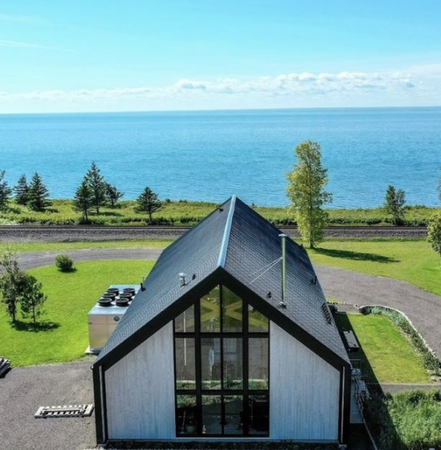
The extensively glazed façade, the building’s signature feature, sits at the heart of the company logo and has also become the brand’s emblem. “The idea is that wherever you are in the distillery, you can see Baie-des-Chaleurs on one side and the still on the other,” says the owner, who is not a little proud of his building perched on a cliff overlooking the sea.
The master distiller at Distillerie des Marigots draws inspiration for his spirits from the Gaspésie landscape and strives to showcase the exceptional quality of its local ingredients. His approach brings to the fore the aromas and fragrances offered by his surroundings and by Gaspésie’s agricultural expertise. Alongside its two flagship products, Récif gin and whisky, the distillery also enjoys creating small experimental batches, including eaux-de-vie, herbal liqueurs and limited-edition gins.
Distillerie des Marigots
300, Boul. Perron Est
Caplan, QC
distilleriedesmarigots.com
(418) 388-2008
The Manicouagan region and its main city, Baie-Comeau, have developed a food scene that delights even the most discerning. You don’t need to go to Montréal or Québec to treat your taste buds.
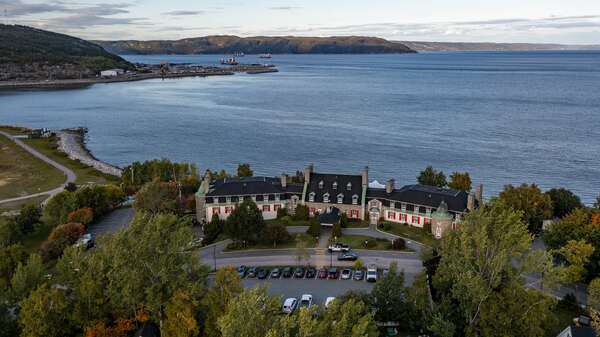
The only four-star hotel east of Tadoussac and a renowned address, Manoir de Baie-Comeau is a popular stop on the Côte-Nord, just minutes from parc des Pionniers and plage Champlain. Built on a headland overlooking the Saint-Laurent, the hotel commands sweeping views of the river and bay. Bistro La Marée haute makes the most of the setting, particularly from its spacious summer terrace. For a meal in exceptional surroundings, it is an ideal choice. Chef Carl Beaulieu, who ran L’Orange bleue in the Hauterive sector for around 12 years, is now at the helm.
Carl Beaulieu has also expanded his food offering by operating two food trucks under the La Poutinerie name. The menu includes poutines and fries, burgers, hot dogs, pogos and other specialities. For the past four summers, one truck has been stationed from Tuesday to Sunday in the parking area beside the hotel, near parc des Pionniers. Customers can eat at the few picnic tables set up in a corner or take their food away. The other truck is mobile: it operates in the downtown Mingan sector and travels to various events and festivals throughout the summer. It serves the same menu as the truck at Manoir de Baie-Comeau.
Directly opposite église Sainte-Amélie and a few hundred metres from Manoir de Baie-Comeau, La Cache d’Amélie is a landmark of Côte-Nord gastronomy. It offers refined dining centred on fine regional cuisine, available as a table d’hôte or à la carte. Its carefully curated wine list includes a selection of private imports.
Nearby Place Lasalle is the city centre’s main nightlife hub and
comes alive in summer with its terraces. It is also an opportunity to visit
microbrasserie St-Pancrace and discover the region’s best beers.
As the first microbrewery on the Côte-Nord, it brews and serves
craft beers with local flavours alongside a menu based on regional products and
a wide selection of Québec whiskies and spirits. Visitors can
also sample the beers at the brewery and take a tour.
On the shore of the Saint-Laurent near the ferry terminal, Restaurant Saint-James au bar de l’eau has a terrace with a splendid view of the surroundings, and sometimes even of whales. It offers various daily menus, table d’hôte menus and a selection of competitively priced wines. The menu includes delicious seafood, fish and fresh crab in season, as well as popular pasta dishes, pizzas, salads, sandwiches and grilled fare.
Born from a holistic vision and a love of the region, Baie-Comeau’s Distillerie Vent du Nord is focused on its community. Supported by partners and local producers, its artisans continue to create products that showcase the expertise and solidarity of the region’s people. Its spirits and ready-to-drink beverages draw inspiration from the Côte-Nord: its terroir, ancestral traditions, local botanicals, landscapes and the bright future we wish for it.
With more than a century of history, La Pulperie de Chicoutimi is now considered one of the major historic sites in Saguenay–Lac-Saint-Jean. It features an extensive collection of 26,000 objects documenting the region’s history and heritage; six exhibition galleries, two built to the technical standards of leading Canadian museums and able to host internationally renowned exhibitions; the Maison du peintre Arthur Villeneuve; meeting rooms; a documentation centre; a substantial collections storage facility; interpretive trails; and a gift shop offering regional products.
In 1896, the founders of the Compagnie de pulpe de Chicoutimi laid the first stone of what quickly became a true empire. More than a century later, the former facilities gave way to another major undertaking: La Pulperie de Chicoutimi / Musée régional.
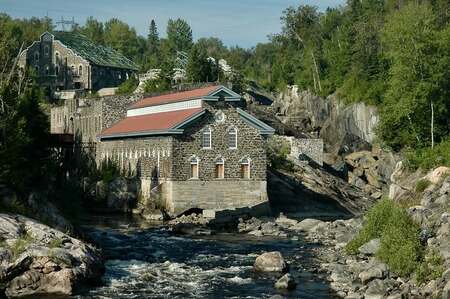
After its glory days and flourishing business, conditions began to worsen in 1921. The market had changed, and prices fell drastically. All its expansion projects had left the company in debt. In March 1924, the Compagnie de pulpe de Chicoutimi liquidated all its assets. Despite a major restructuring, falling orders and prices led to the mills’ permanent closure in 1930.
Saved from demolition in the late 1970s, the old buildings were gradually restored and now contribute to the site’s tourism and cultural role.
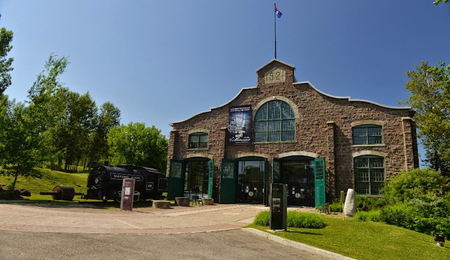
Unfortunately, on Thursday, July 18, 1996, a major low-pressure system formed over the Great Lakes. Over 48 hours, Saguenay–Lac-Saint-Jean received 150 to 280 mm of rain, compared with a normal monthly average of about 125 mm. The downpour came on top of the 120.5 mm already recorded since the beginning of July, which had saturated the ground, filled reservoirs and increased the flow of several rivers. All the conditions had converged for a catastrophic flood, a true deluge.
The raging water destroyed century-old stone walls, landscaping, interpretive installations and service infrastructure. Within hours, years of restoration work at La Pulperie de Chicoutimi were undone; only the walls and red roof remained. The damage was severe and required major reconstruction.
Thanks to the determination of local and regional leaders, support from several levels of government and, above all, a deep commitment to reviving this remnant of the region’s industrial and historic past, La Pulperie de Chicoutimi reopened in June 2002.
Danny Cloutier, who has been the Musée régional’s communications director for 15 years, recalls that the effort to preserve painter Arthur Villeneuve’s house was the catalyst for the project. The merger of two organizations promoting the Saguenay region led to the creation of the Musée régional La Pulperie de Chicoutimi. In November 1994, after years of negotiations, the painter-barber’s house left its foundations on rue Taché and made its way to La Pulperie de Chicoutimi.
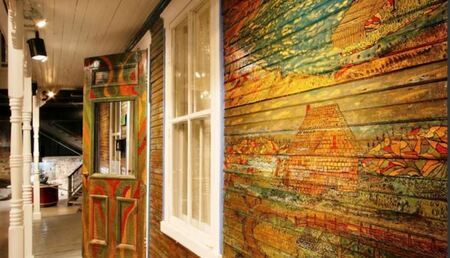
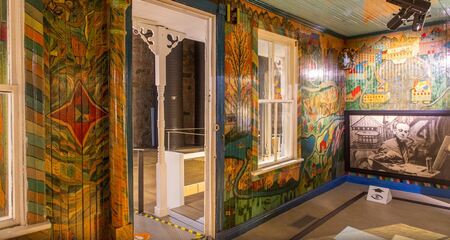
The spectacular move stirred passions across Saguenay–Lac-Saint-Jean, with some calling it a scandal and others a stroke of genius. Moving the house 1.4 kilometres was a major challenge intended to protect Villeneuve’s work: in the late 1950s, he had covered every wall with singular frescoes portraying his city, his region and his vision of the world. The Musée des beaux-arts de Montréal devoted a retrospective to him in 1974, and in 1993 the Canadian government recognized his house as a national treasure.
Today, La Pulperie de Chicoutimi has become an essential visitor attraction in the regional tourism sector and even in Québec. No wonder its promotional slogan is ‘More than a museum: a site, a park!’ In the heart of downtown Chicoutimi, now part of the city of Saguenay, the historic visitor complex occupies a vast park beside the rivière Chicoutimi, crossed by walking and interpretive trails.
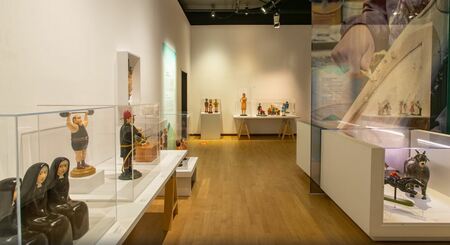
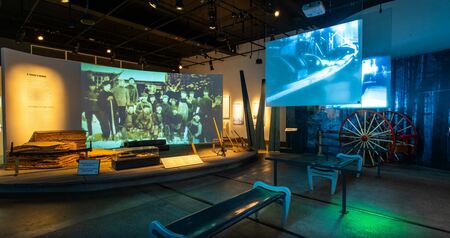
La Pulperie and its museum are open year-round. They welcome groups and can host special events or children’s parties in rooms with a variety of settings.
Finally, the foundation supports, in various ways, the protection, preservation, development, marketing and promotion of the Corporation du Musée du Saguenay–Lac-Saint-Jean’s sites, including La Pulperie and the Poste de traite de Chicoutimi. It also helps enrich the museum’s collections and acquire artefacts from the old pulp mill.
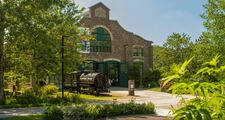
La Pulperie de Chicoutimi – Musée régional
pulperie.com
300, rue Dubuc
Chicoutimi (Québec) G7J 4M1
418 698-3100
Gérard Pourcel
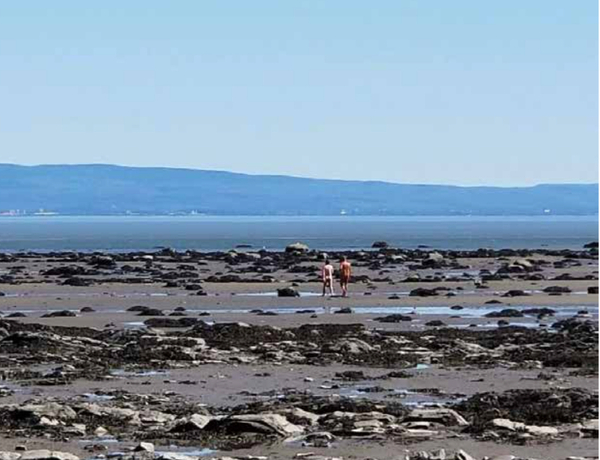
The beach is reached from a turnoff on Route 362 between Saint-Irénée and Les Éboulements. The descent along a narrow, winding road is quite steep. At the foot of the slope, a second, very narrow road on the left is marked “Plage.” Continue for a few hundred metres to a parking area facing the shore, bounded by the tracks of the Charlevoix tourist train. The municipality has installed a dry toilet, a welcome amenity. Especially on fine summer days, the parking area may be full, and drivers will need some ingenuity to find a small space along the edge of the narrow road. Even though getting around is a little complicated, I have never seen an inconsiderate motorist block a private entrance or the road itself.
This is paradise before Adam and Eve, although their story predates Catholic iconography by a considerable margin. According to Michel Onfray, the three monotheistic religions share the story of Adam and Eve’s lost paradise, itself derived from the Greek myth of Pandora. At the northeast end of plage de Cap-aux-Oies, Eden is restored, without a vine leaf in sight. Onfray also notes that a vine leaf would be climatically implausible and that a fig leaf makes more sense. Either way, at plage de Cap-aux-Oies, no one cares whether the leaf is vine or fig.
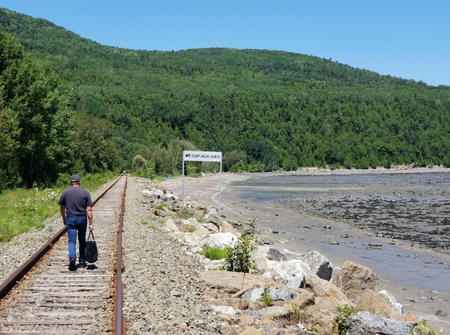
In practice, the beach is loosely divided into three sections, without this causing any difficulty. The first, near the stairs, is heterosexual and clothed. Farther to the left is a heterosexual section where clothed and nude mix, followed by a naturist area populated chiefly by “Adams.” And should anyone partake of the forbidden fruit, which is by no means required, it will not fulfil the biblical injunction: “Be fruitful and multiply; fill the earth…”
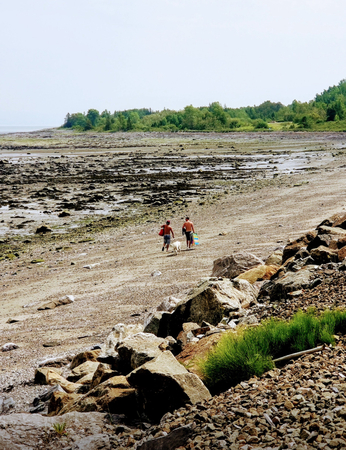
The beach itself is a very beautiful broad cove backed by the mountain, with many secluded and shady spots, but it is the sense of freedom that takes hold fairly quickly. Having visited several times, I have never felt uncomfortable there. There is no harassment. Sunbathers range from young people with sculpted bodies to much older people marked by the years: tall and short, heavy and thin. In late August 2024, I even saw a naturist walking with a cane. My impression is that everyone feels comfortable and free of self-consciousness. The beach is very clean; I have never seen greasy wrappers, old soft-drink cans or other litter. Farther northeast is another small, more secluded cove of fine sand, accessible only by walking a few hundred metres alongside the railway track.
I wish you paradise not at the end of your days, but the next time you pass through Charlevoix in summer.
Reference: Michel Onfray, Traité d’athéologie, Livre de poche/Éditions Grasset, 2005.
Acadie has several charming destinations in Nouveau-Brunswick, and the Lobster Capital of the World is a particular favourite with tourists and locals alike.
Located 25 kilometres from Moncton,
Shédiac
is the most popular seaside destination on the Côte acadienne. The provincial park at plage Parlee is very popular in summer. It was here, in this corner of Acadie on the edge of Moncton and the Nouvelle-Écosse border (where French faces strong competition from English), that shiac was born. This Acadian dialect, which blends Acadian French and English, takes its name from a contraction of Shédiac and is heard far less often in the north of the province.
About twenty kilometres farther south, the Plage de l’Aboiteau in Cap-Pelé, vast, deep and still largely in its natural state, is one of the finest warm-water ocean beaches in Nouveau-Brunswick.
Shédiac has declared itself the Lobster Capital of the World. The town is internationally known for lobster fishing and, in early July at the end of the fishing season, holds the Festival du homard, which marked its 75th anniversary in 2024. For lobster lovers, then, it's a must-visit destination. Since 1989, to underline its title, the town has boasted a monument that delights the thousands of visitors passing through the region: a giant lobster that presides over the middle of town, where people love to have their picture taken.
The town has several charming inns and good restaurants. For a gay-friendly stay, the Gite Le Griffon on the main street welcomes you into a grand heritage home. The plunge into the Alice in Wonderland universe that inspired the hosts continues at Moque-Tortue, a playful bistro just a few steps away, where lively evenings spill onto the terrace in summer. This wonderland now also includes the chocolaterie and bistro Adorable Chocolat across the street, and the Morse & Marteaux food counters at Plage Parlee and the ciné-parc Neptune, run by the same entrepreneurs with the same magic.
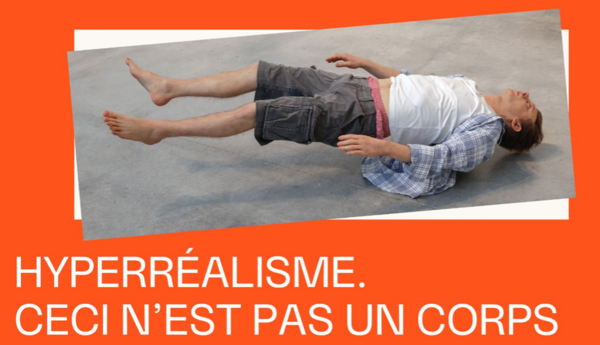
The Musée national des beaux-arts du Québec (MNBAQ) is presenting Hyperrealism. This is not a body from February 26 to October 12, 2026. The first Canadian stop on an international tour that has travelled to 17 cities, from Bilbao to Québec, this major exhibition brings together a representative selection of hyperrealist sculpture from Canada and around the world.
Through some 40 works of breathtaking realism by 35 artists from here and abroad, it traces the evolution of the human figure in sculpture from the 1970s to the present. A break with abstraction, hyperrealism emerged in the United States in the 1960s. Painters and sculptors sought a new form of realism connected to contemporary society. Sometimes drawing on cinematic special effects, they used then-unusual materials such as silicone, polyester resin and fibreglass to reproduce the appearance and textures of the human body in minute detail.
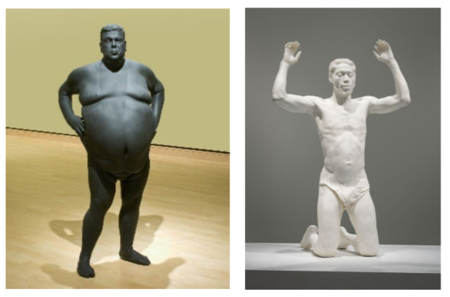
These pioneers and the generations who followed achieved such technical precision that their works seem to emerge from reality itself. Through an original exhibition design, the show brings together sculptures by those pioneers and other renowned artists. The MNBAQ presentation is further enriched by work from Québec and Canadian artists who belong to this artistic movement at the boundary of the real: Alain Benoit, Stanley Février, Louis Fortier, Milutin Gubash, Karine Payette and Mark Prent.
Their works, true mirrors of the human condition, stage the transformations of society and of our relationship with the body over the past 50 years. The artists’ illusionistic methods give physical form to reflections on human experience. Their creations address universal subjects: childhood, old age, solitude, one’s relationship with oneself, the passage of time and death, while taking a critical position on the contemporary world that reaches well beyond the simple challenge of resemblance.
Their three-dimensional works blur the line between art and science and explore the themes of the simulacrum, genetic manipulation and self-awareness. The title echoes René Magritte’s famous painting bearing the words ‘Ceci n’est pas une pipe,’ which questions the relationship between art and reality.
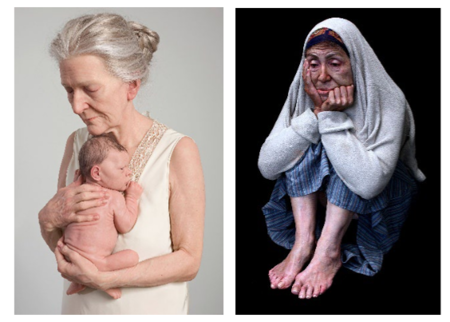
‘A gallery of figures more lifelike than life awaits visitors at the Musée national des beaux-arts du Québec. These works by the greatest names in hyperrealism from here and abroad prompt essential reflection on our relationship with the body, in private and in society. It is a profoundly moving exhibition, an experience on a human scale that will leave no one indifferent,’ says MNBAQ director general Jean-Luc Murray.
‘The exhibition offers a striking view of hyperrealism’s vitality and relevance today. The boundary between the real and the virtual is narrowing just as artificial intelligence undermines our ability to distinguish the genuine from the false. We now consider the meaning of our lives and our humanity from new perspectives. Hyperrealist artists accompany us on this great journey, sometimes pointing toward less-travelled paths,’ adds Caroline Lantagne, MNBAQ exhibition curator and curator of the Québec presentation.
Featuring works by Québec and Canadian artists, the Québec presentation gives pride of place to several pieces from the MNBAQ collection and includes loans from the Musée des beaux-arts du Canada, the Musée d’art contemporain de Montréal, the Musée des beaux-arts de Montréal, Collection Giverny Capital and artist Karine Payette, represented by Galerie Art Mûr.
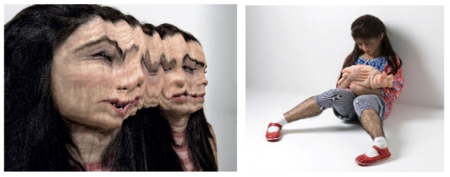
Presented on the ground floor of Pavillon Pierre Lassonde, the exhibition is arranged in six sections illustrating the broad range of possibilities explored by hyperrealist artists. Each section centres on a formal concept and provides interpretive tools for understanding the works. The selection of sculptures offers an overview of hyperrealist practice and shows that representations of the human body continue to evolve. Along the route, videos reveal some of the artists’ own production techniques and secrets.
Hyperrealism. This is not a body.
At the MNBAQ, Pavillon Pierre Lassonde
179, Grande Allée Ouest, Québec (Qc)
Until October 12, 2026
Schedule and tickets: mnbaq.org
Information: 418 643-2150