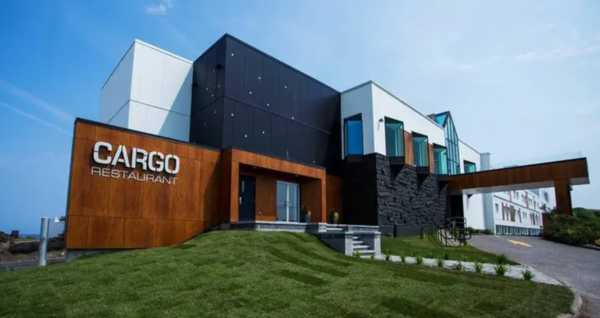
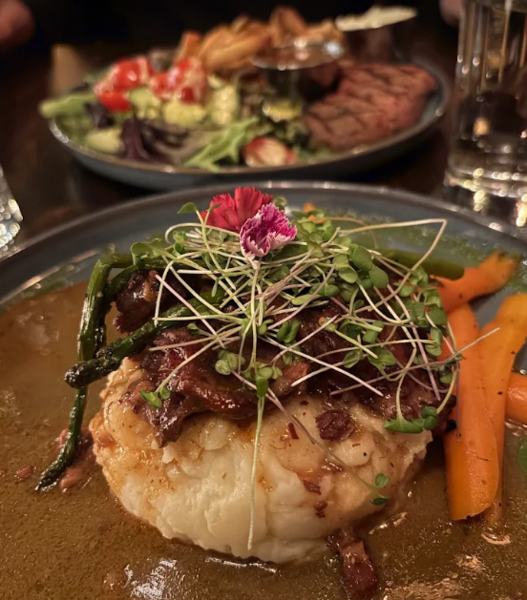
The flagship of the Riôtel Hospitalité group in Gaspésie, Riôtel-Matane was also the first property to bear the name, replacing the former Hôtel des Gouverneurs after Groupe Rioux acquired it in 1984. In addition to an original accommodation experience, distinctive comfort, modern amenities and breathtaking views, the property is also well known for CARGO, its restaurant, bar and lounge. Popular with locals and travellers alike, CARGO offers urban bistro cuisine inspired by Gaspésie flavours, a seaside terrace and spectacular sunsets.
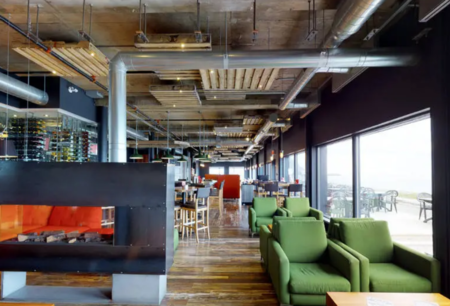
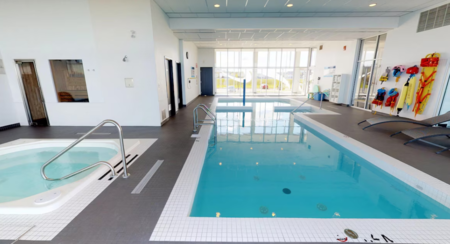
In the years after the acquisition, the hotel was renovated and a convention centre added. Then, in 1995, growing demand for accommodation led to the construction of a new building next to the hotel in Matane, now known as Pavillon sur Mer. Major renovations and expansion of Riôtel-Matane’s main building in 2014 and 2015, including an indoor pool, gym, sauna and the CARGO restaurant, completed an $8 million investment plan that gave Matane an international-calibre hotel.
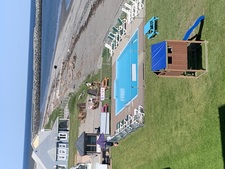
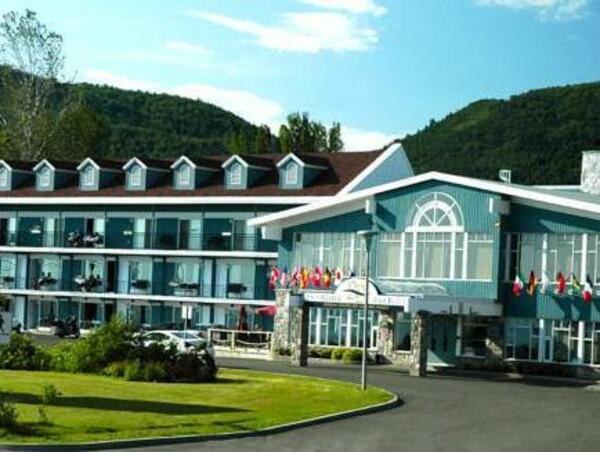
The complex alone creates a maritime atmosphere from the moment visitors leave Route 132–avenue du Phare, just beyond the bridge over the rivière Matane, and approach the striking modern main building. The marina at the river mouth, where it meets the Saint-Laurent, forms a unique backdrop for Pavillon-sur-Mer above it and for nearby Riôtel-Matane, which stands almost directly on the beach.
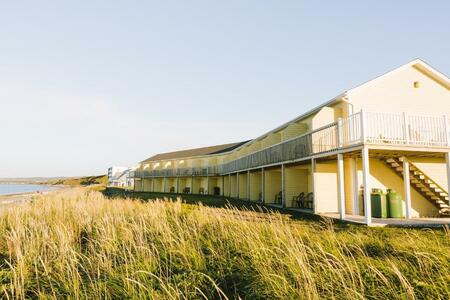
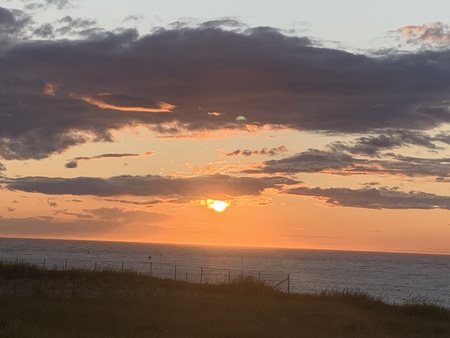
Needless to say, in summer, when vacationers fill the area, the atmosphere is at its liveliest. The heated outdoor pool beside the sea lets guests of both properties enjoy the day, until the sun drops into the distance and disappears below the water, an endlessly compelling spectacle. Guests also receive complimentary electric-vehicle charging.
Riôtel-Matane offers several categories of rooms year-round, including superior rooms in the stepped section at one end of the building, with either sea or city views. Pavillon-sur-Mer, with its unobstructed outlook, offers 24 simpler, comfortable rooms at a lower price and strikes the right balance between service and budget. Preferential rates are also available for stays of seven days or more.
Riôtel-Matane’s rooms include everything needed for optimal comfort: comfortable beds; convenient, well-organized workspaces; multi-socket outlets for electronic devices; high-speed internet; air conditioning; a mini-fridge, microwave and coffee maker; a smart television; private balconies in many rooms; and numerous other amenities that make the stay thoroughly pleasant.
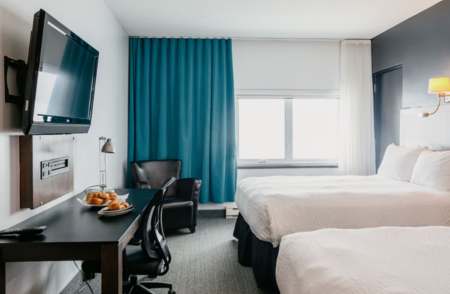
In all, the hotel has 68 rooms facing either the Saint-Laurent or the city, all accessible by elevator. Options include Comfort rooms with river-view balconies, family rooms sleeping up to six, rooms with foldaway beds and rooms with direct access to the parking lot.
Finally, another important asset for business travellers and event and party organizers is Riôtel-Matane’s spacious, modern convention centre. Its fully equipped, multipurpose rooms, several overlooking the sea, can accommodate 10 to 450 people in various configurations. Conventions, business meetings, weddings, press conferences, training sessions, workshops, cocktail receptions, 5 à 7 gatherings, holiday celebrations and office parties can all be accommodated.
Riôtel-Carleton has another major year-round convention centre, while Riôtel-Percé and Riôtel-Bonaventure can host smaller events in a meeting room or restaurant during their summer operating season.
With four properties in Gaspésie, the Riôtel chain plays a major role in business and leisure accommodation, higher-end dining and event hosting through its two convention centres. Groupe Riôtel Hospitalité was created in 1997 and is chaired by François Rioux, the founder’s son, who has led the business since 1990. Since then, the Gaspésie hotel group has grown remarkably and developed a concept and service signature that make Riôtel-Matane a model of its kind for accommodation and hotel services in Gaspésie.

riotel.com/fr/hotels/matane
1 888 427 7374
250, avenue du Phare Est
Matane (Québec) G4W 3N4
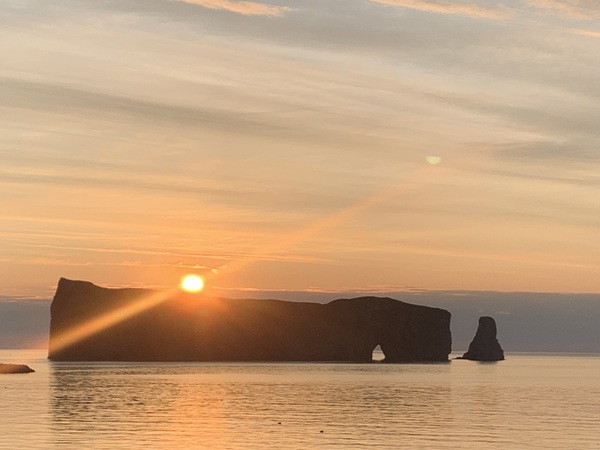
Promotional material and the description on the Riôtel group’s website may prepare visitors for what awaits, but the view revealed on entering the dining room of the Paqbo restaurant at RIÔTEL-PERCÉ is still utterly spectacular. The fascination Rocher Percé exerts on everyone, even after several visits, is undeniable.
Set just below Côte Surprise on Route 132, a few steps from the beach and commanding a majestic view of the area’s great landmark, Rocher Percé, the hotel formerly known as Bonaventure sur Mer became the group’s third acquisition in 2003 and has operated as Riôtel-Percé ever since.
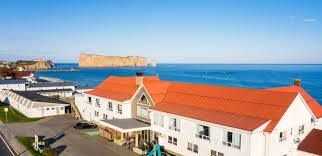
In addition to the main building, which houses reception and the Paqbo restaurant, the hotel complex has two accommodation pavilions: Île Bonaventure and Rocher Percé. Many rooms naturally look directly onto these two defining features of the local landscape, while several balconies and a large outdoor terrace allow guests to enjoy the panorama at any time.
Locals know that daylight contributes greatly to the atmosphere. From sunrise directly behind the rock to the moment it disappears behind the mountains to the west, bathing the landscape in golden light, every moment of the day is unforgettable. As a seasonal hotel, Riôtel-Percé is open from late spring to mid-autumn, the best time to enjoy all it has to offer.
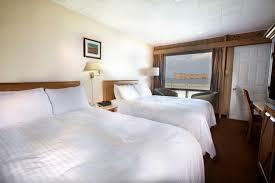
The hotel offers several room categories, from Classic and Superior rooms to suites, rooms with kitchenettes and family accommodation. Most look directly over baie de Percé. Renovations carried out in several parts of the hotel between 2013 and 2019 moved the property upmarket and ensure an optimal quality of stay.
Direct beach access makes it easy to take long walks to nearby shops, cafés, art galleries, bars and restaurants while enjoying a panorama that never grows old. Cruises to Rocher Percé and Île Bonaventure, both essential experiences, also depart conveniently close to the hotel.
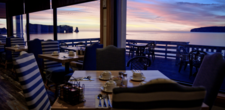
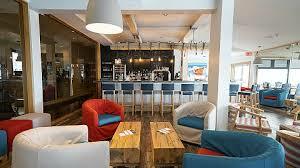
Gourmets and food lovers will be glad to sit down at the Paqbo restaurant for a Riôtel-style breakfast or return at the end of the day for dinner in the dining room or on the outdoor terrace. The restaurant is also a place for an aperitif or simply a cocktail with friends or family. Paqbo’s menu follows the broad approach used at the group’s other Gaspésie hotels, with variations that showcase local specialities. From starter to dessert, the culinary experience is remarkable: contemporary, sea-inspired and approachable food. Treat yourself to the seafood coquille, maple-glazed ribs and lime tart, among others.
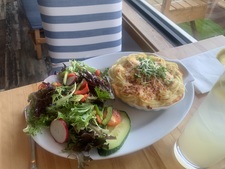
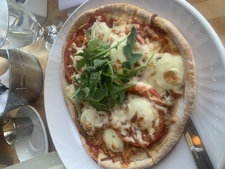
In the evening, guests can enjoy the day’s final light or the beauty of a star-filled sky, the salt air and the sound of the waves around a campfire near the beach, either alone or with other visitors.

Riôtel-Percé
riotel.com/fr/hotels/perce
261 QC-132 W
Percé, QC G0C 2L0
1 800-463-4212
Looking for a bite before or after a show or a shopping trip? The rue Saint-Joseph corridor offers a wide range of excellent restaurants. Le 101 Restaurant provides a fine-dining experience built around seasonal French cuisine, refined menus and exceptional wines. Unless you have a soft spot for the bistro at Le Clocher Penché? It is always a real pleasure to sit down at this indomitable bistro, whose craft centres on products from local artisans.
A few steps away, Torii Izakaya offers shareable plates and a regular menu worthy of modern bistronomy, a perfect blend of Japanese and French cooking in an elegant Japanese-style wine bar. At Hôtel Royal William on boulevard Charest, Mila celebrates Italy with a bold Québec accent.
Nearby, anyone with a sweet tooth can stop at Champagne Chocolatier, where master chocolatier Natalie Déchène and her passionate team have offered high-end chocolate, pastry and marzipan creations for more than 20 years.
Craft-beer enthusiasts will want to quench their thirst at microbrasserie La Barberie, which has become a neighbourhood institution over nearly three decades, or try the newer Korrigane Brasserie Artisanale on rue Dorchester.
On rue Saint-Vallier, Les Salons d’Edgar combines comfort food, carefully made cocktails, an eclectic atmosphere and a large, welcoming space. Across its two rooms each evening, the venue offers pool tables, a small stage, dance events and even two bars, one at the front and one at the back, creating distinct atmospheres. Visitors may encounter Robert Lepage, a regular at this emblematic Québec nightlife venue.
The newest member of the RIÔTEL family is by no means the least. In 2024, Hostellerie Baie-Bleue in Carleton-sur-Mer, which had operated under that name for about 30 years, was rebranded as Riôtel-Carleton. The hotel complex spans several buildings and includes not only accommodation but also a very popular restaurant and a convention centre serving the entire region.
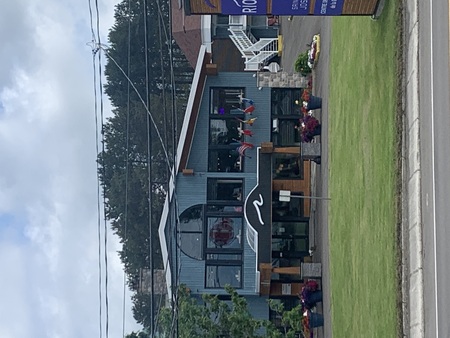
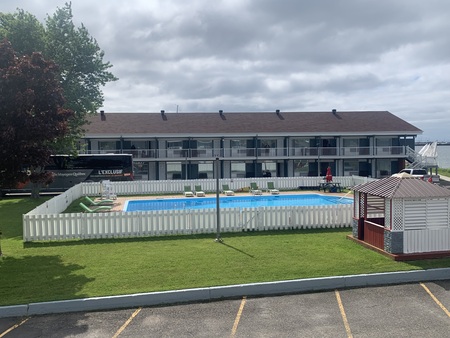
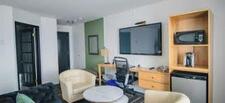
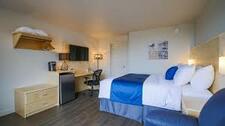
Proudly facing the sea on Baie des Chaleurs, Riôtel-Carleton offers 105 rooms and suites in several categories across roughly five pavilions, as well as four lofts and one fully equipped chalet sleeping 16. A heated outdoor pool a few dozen metres from the beach welcomes guests every day in season when weather permits. The tastefully decorated rooms often have private balconies and include all the amenities needed for a pleasant stay.
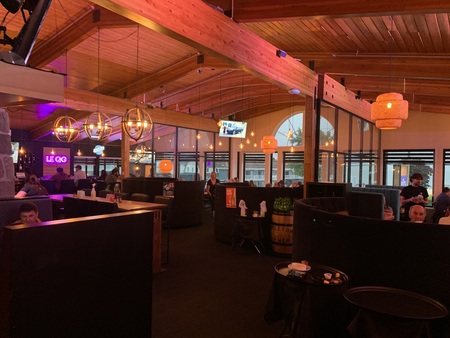
The main pavilion houses reception and, on the second floor, Resto-pub Saint-Joseph, a lively, popular year-round venue seating as many as 250 people, in addition to a covered outdoor terrace. For many years, its family-style menu and relaxed sports-bar atmosphere have brought generations together. On July 8, the restaurant introduced the Riôtel menu already offered at the group’s three other Gaspésie hotels. As at those properties, local culinary specialities have been added to the regular breakfast and dinner selections. Takeout is also available. The new menu, described as contemporary, maritime and approachable, will certainly bring fresh energy to Pub Saint-Joseph.
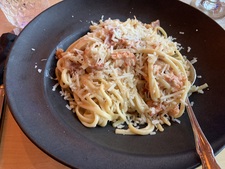
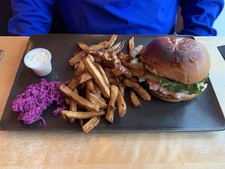
On the ground floor of the same pavilion, Churros & Crème Glacée offers handmade churros and a surprising selection of frozen treats from Thursday to Sunday during the season.
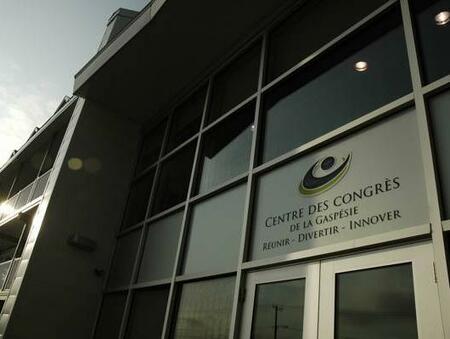
Riôtel-Carleton also houses the Centre des congrès de la Gaspésie, which has welcomed events and meetings year-round since 2009. Organizations have access to multipurpose rooms, state-of-the-art equipment and qualified staff who support event promoters and organizers. Riôtel-Carleton’s accommodation and food services are a major asset for the convention centre.
Direct beach access and the many nearby water activities provide further reasons to stay at the property.
Riôtel-Carleton
riotel.com/fr/hotels/carleton
482, Bd Perron
Carleton-sur-Mer, QC G0C 1J0
418.364.3355
Mélissa Spénard-Lefebvre and Louis-Charles Tremblay became the new owners of Chez Temporel in 2021, right in the middle of the pandemic. Taking over a place this loved wasn’t something they did on a whim. They wanted to keep what made it special, so they put their energy into giving the café a fresh start while staying true to its roots.
Louis-Charles brought a mix of skills to the table, real estate experience, business know-how, and an engineering background, plus a degree in civil engineering. In 2023, he also bought the Auberge de la Paix next door, a youth hostel that’s been a Vieux-Québec staple since 1972.
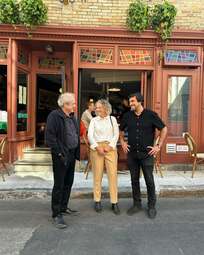
Louis-Charles Tremblay (right) with the district’s city councillor and Jean Boissonnault, who co-founded Temporel, at the café’s 50th-anniversary party in 2024.
Since 1974, Chez Temporel has sat on rue Couillard in the heart of Vieux-Québec, right inside the old city walls. It’s the kind of place where students, locals, artists, and visitors from Europe and beyond still come to hang out, create, and connect.
For a whole generation of writers and artists, Temporel was more than just a café. “Vieux-Québec was where you felt the French side of Québec,” says author Martin Têtu, who grew up in the neighborhood and wrote the novel *Félix au Café Temporel*. “People discovered café allongés, croissants, and French music here.”
At a 2024 event celebrating the café’s 50th anniversary, speakers talked about how important neighborhood spots like Temporel are for keeping Vieux-Québec’s culture alive. When the café opened, the area was still a working-class neighborhood. Over the years, it became a creative hub for artists like Gaston Miron, Chrystine Brouillet, Lucien Francoeur, and Monique Proulx. Their visits helped shape Québec’s cultural scene in the 1980s and gave Temporel its legendary reputation. For some regulars, it was even where they tried their first allongé or croissant.
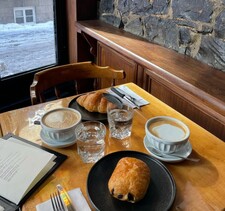
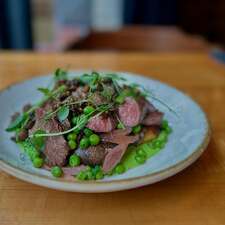
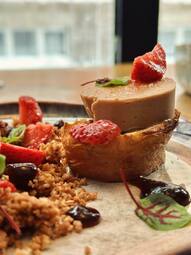
These days, Chez Temporel has a bistro vibe. Since taking over in 2021, Mélissa and Louis-Charles have updated the menu but kept the café’s bohemian heart. The classic croque-monsieur is still there, and art is everywhere. You’ll find traditional and modern dishes, all made with local ingredients, served day or night. The drinks menu has something for everyone, cocktails, wine, and ready-to-drink options. The owners are committed to preserving the café’s soul while bringing back some of its old magic.
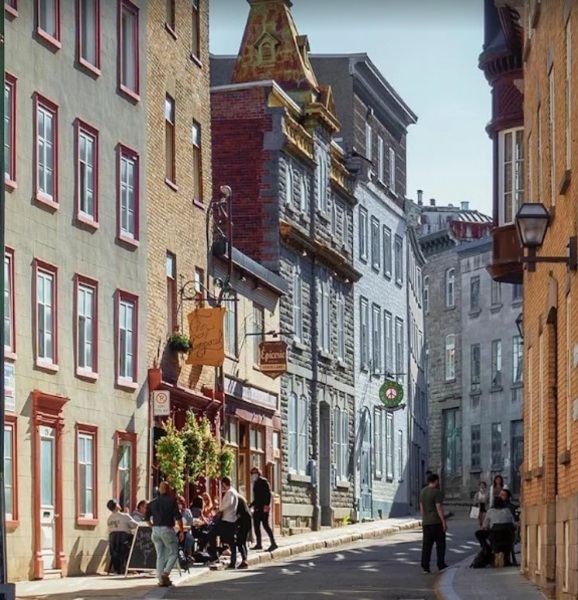
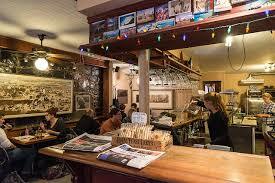
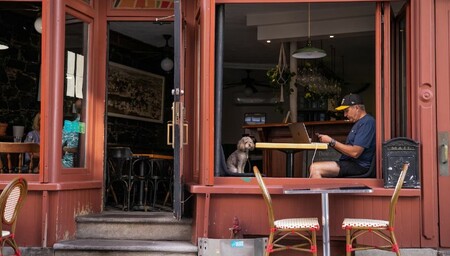
With its stone walls, open kitchen in the back, big front windows, counter stools, and a staircase leading to a cozy upstairs room, Chez Temporel feels like stepping into another time. It’s the kind of place where people used to sit for hours, talking, dreaming, and reinventing the world over coffee or a drink.
As a restaurateur, Louis-Charles is also passionate about fairness. He’s spoken out about how tips are usually split unevenly between front-of-house and kitchen staff. He’s pushing for the government to let restaurants manage tip distribution themselves, so everyone gets a fair share. It’s a cause he’s taken public to bring more attention to the issue.

Chez Temporel
cheztemporel.com
25, rue Couillard
Québec, QC G1R 3T3
(418) 694-1813
The two hotels are not among the most striking from the outside, as they sit slightly removed from the area’s commercial and tourist activity at the entrance to the Village. Their distinctive qualities become apparent only after guests step through the doors and experience the rooms, suites and amenities.

The “rebirth” of these two establishments is thanks to the Charron family, entrepreneurs and investors in Montréal real estate for more than 40 years. The founder’s children now run them.
The hotels’ greatest strength is their location: just steps from the Quartier Latin and Vieux-Montréal, at the entrance to the Village and its restaurants and bars, and a few hundred metres from Berri-UQAM station, served by three metro lines. They are also beside the UQÀM campus and the CHUM hospital complex and research centre. The wonderful Quartier des spectacles is less than a 10-minute walk away.

Le Roberval, at the corner of René-Lévesque and Berri, comprises two connected buildings dating from the 1920s. The family acquired it in the late 1990s. Les Suites Labelle, on the short street of the same name, is a more recent building and has belonged to the Charron family since the early 2000s, explains sales and marketing director Charlene Richard.
Each hotel has distinctive features designed to appeal to different guests. Le Roberval underwent major renovations in 2019: floors were redone, bedding replaced, and kitchen counters and bathrooms renovated. It has 75 rooms and suites: 26 studios with one queen-size bed, 11 studios with two queen-size beds, 15 one-bedroom suites with a sofa bed, 17 one-bedroom suites with a wall bed and six two-bedroom suites, including two in the basement. It offers exceptional comfort and a family atmosphere, whatever the length of stay. Workers, students and researchers visiting Montréal for short or extended periods find it a highly appreciated temporary home.
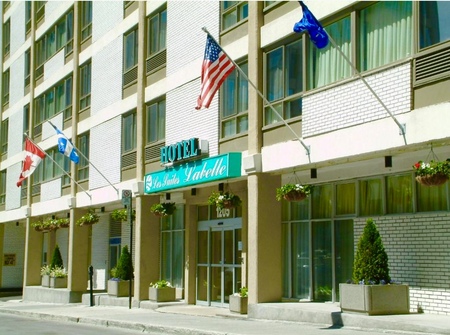
The neighbouring Hôtel Labelle has also undergone major renovations. Its flooring, bedding and curtains were replaced, and new mattresses were installed in rooms on four of its eight floors in 2022 and 2023. Work on the rest of the building will continue over the coming months. The hotel has 97 rooms: 84 standard studios with one or two queen-size beds, 10 superior studios with one or two queen-size beds, two junior suites and one executive suite. It regularly accommodates guests travelling with tour operators.

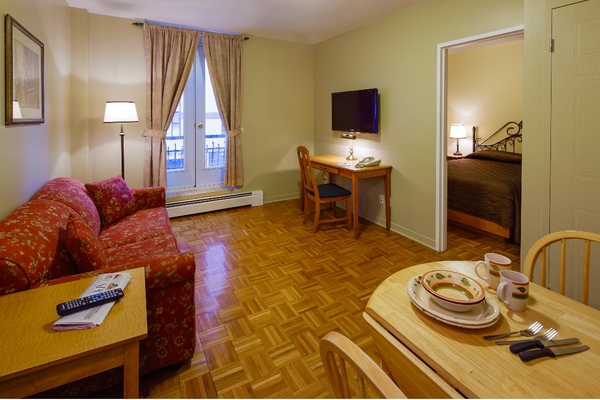
At both establishments, rooms and suites include a kitchenette, refrigerator, microwave, air conditioning, free Wi-Fi and many other amenities. Both hotels have spacious, welcoming breakfast rooms, and breakfast is included in the stay. Guests also have access to indoor parking.
The attentive staff are trained to uphold the principles of inclusion and diversity for all guests. LGBTQ guests can therefore count on respect and safety.
The Charron family, conscious of the importance of community involvement, has also welcomed immigrant workers from Ukraine for several years. Around 40 legally admitted Ukrainian newcomers currently work at the hotels, and management is proud of its contribution to their integration.
Hôtel et Suites Labelle
hotellabelle.com
120, rue Labelle
Montréal, QC H2L 4C1
514 840-1151
Hôtel Le Roberval
leroberval.com
505, Bd. René-Lévesque Est
Montréal, QC H2L 5B6
514 286 2992
By Pierre Perreault
When Jean-François Quesnel founded the troupe Ensemble – collectif théâtral LGBT in 2018, he was pursuing a taste for the performing arts that had inspired him since childhood, growing up in an artistic family. Today, with three productions to its name, the initially amateur troupe has evolved into Les productions Jean-François Quesnel, a personal venture devoted to producing professional-calibre theatre.
He describes it as a queer+ and ally-inclusive company whose mission is to bring together people from diverse backgrounds who share a passion for theatre. “We are counting on audiences’ open-mindedness to bring people together around difference and diversity,” he explains.
The troupe’s latest production, Michel Tremblay’s Hosanna, took it to a higher level, thanks to seasoned actors and a production that the playwright himself praised after attending a performance at the Comédie de Montréal in spring 2021.
“At first, I produced and acted in the plays, while professionals directed them. For Hosanna, I took the gamble of bringing together my good ideas and my motivation to direct this theatrical masterpiece, first staged in 1973,” says Quesnel.
The COVID-19 pandemic had seriously disrupted another play scheduled for 2021. After two postponements and for several reasons, the troupe had to abandon that large-cast project and move on, despite the time and energy invested in preparing it. That was when Hosanna entered the picture.
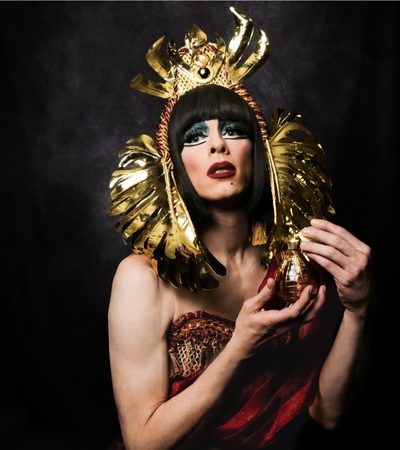
“It was my mother, the painter Dolores Desbiens, who steered me toward this play. I was lying in a hammock by the water in Longueuil in early summer 2021, wondering what I could do to revive the troupe, when she suggested taking on Tremblay. There is little LGBTQ+-themed theatre, so it became interesting for us,” Jean-François explains.
Hosanna resonates with members of the community in part because it depicts a toxic relationship that still happens today. Tremblay’s way of presenting and exploring it makes the play all the more compelling to theatre lovers and audiences. Once the performance rights had been secured, Michel Tremblay was invited to a performance and immediately accepted. “It would be a lie to say it did not cause me great stress. But seeing his immediate reaction after the performance, his emotion and his respect, was a gift beyond words and an enormous relief, both for the entire troupe and for me. It took the project into another dimension. Mr. Tremblay showed his support and interest even after attending,” says Quesnel.
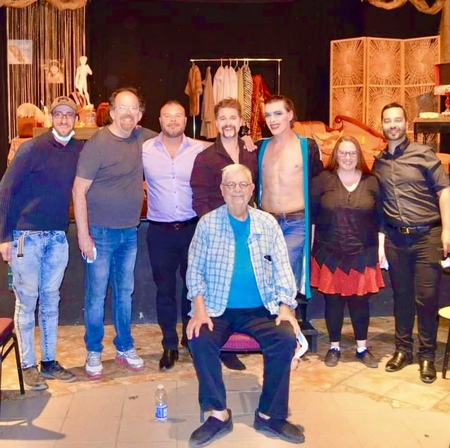 Michel Tremblay with the 2021 cast and crew of Hosanna
Photo: Martine Poulin
By billing Marc-André Leclair (the famous Tracy Trash from Cabaret Mado) alongside a talented actor for the role of Cuirette, one could expect an explosive mix. It drew large crowds for the eight or so performances last fall. The play will tour with a new actor, Florent Deschênes, as Cuirette, to Lanaudière, to Val d’Or for Pride, to Lévis, and back to Montréal in August as part of the Festival Fierté Montréal.
The “Tremblay” effect will continue in 2022–23 as Jean-François Quesnel prepares to stage and produce “La Duchesse de Langeais”, with Luc Arsenault in the lead role. One should expect a recreated and reimagined version of the duchess, far removed from the one imposed by the late actor Claude Gay, who portrayed her in André Brassard’s 1974 film “Il était une fois dans l’est”. The project is now entering its creation and planning phase, before rehearsals begin.
What else drives and excites Jean-François Quesnel? He recently became casting director for two Québec film productions. First, Sophie Dupuis’s Drag, currently wrapping up filming, in which Marc-André Leclair has a key role. More than 200 members of the LGBT community were auditioned for this production. He then served as casting director for the film “Pour ceux qui errent seuls dans le noir”, which is expected to begin production later this year.
It was chance that led him to casting. “Sophie Dupuis, the director of Drag, came to see Hosanna. She then wrote to me about her upcoming project. My experience in directing actors and staging proved valuable in casting the identified roles for this shoot. As a passionate, structured, and well-organized professional, I could confidently take on this new experience,” concludes Jean-François.
Working with actors who will be able to live the projects, not just perform them, and above all touching people: that is the very essence of what drives Jean-François Quesnel’s company. Developing a casting director role for film is also in his plans. With film shoots constantly increasing in Montréal and producers increasingly wanting to work with local resources, it is a safe bet that this will happen.
More recently, Ensemble has presented other productions, including Un coeur normal (2023), Michel Tremblay’s Les anciennes odeurs (2024), Michel-Marc Bouchard’s Tom à la ferme (2024), Bent – Le triangle rose (2025) and Souvenirs de Brokeback Mountain (2025), as well as a Québec tour of its revival of Hosanna in 2023–24.
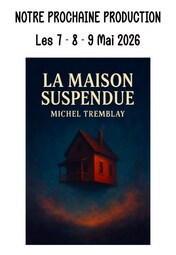
In spring 2026, Michel Tremblay returned to the programme with La Maison suspendue, a play less familiar to the general public but every bit as rich in interesting characters and plotlines. It is said to be his most significant work, presenting scenes from three eras and three generations in Tremblay’s world: 1910, 1950 and 1990. All three May 2026 performances were sold out two months in advance.
Photo credit JF Quesnel: Benjamin Allain-Vaillant
Good ideas often take time to come to fruition, because visionaries want to give their projects every possible chance of success. Steve Horman, his partner Véronique Piché and their associate Mathieu Fleurent, a building contractor, understood this well: they spent more than 15 years imagining their ready-to-camp retreats in Les Éboulements, Charlevoix.

In 2020, in the middle of the global pandemic, they decided to make their dream a reality. Originally from the Laurentides, they settled on the Charlevoix region: the river, the mountains and vast open spaces stretching as far as the eye can see. In the village of Les Éboulements, they found “a place that reflects who we are, a welcoming village with a tight-knit community. It was love at first sight,” explains Steve Horman, who has lived there for two years with his partner and their three children.
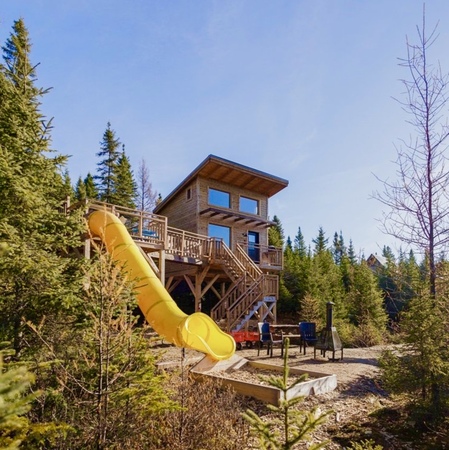
Hauts Refuges is intended as a gathering place where people can live in the moment, have fun and reconnect with nature. Construction of the first three retreats began in spring 2022. Made entirely of cedar inside and out, they were acquired from Cédréco in the neighbouring municipality of Saint-Aimé-des-Lacs. Within a few months, La Luciole, La Forestine and La Canopée rose in the middle of the forest. The retreats were designed to be practical, comfortable and welcoming for families who want to travel without too much hassle.
The partners received funding through Tourisme Québec’s EPRTNT programme to implement the project. The programme aims to renew and enhance regional tourism by developing attractive, distinctive offerings, showcasing innovation and opening new niches for tourism businesses. They also received support from the Fonds d’aide au tourisme of Développement économique du Canada (DEC) pour le Québec. This made it possible to complete the fourth retreat, La Chouette, in recent months.

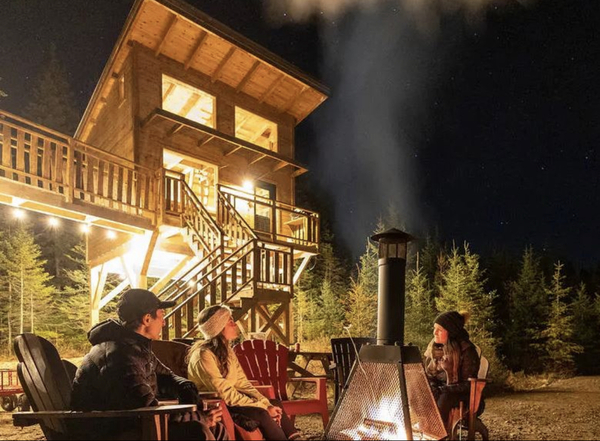
What, exactly, is Hauts Refuges? It is a four-season ecotourism property with several retreats perched among the treetops and accessible only by walking trails. These ready-to-camp units can accommodate one to six people and are designed for families. Guests can light the wood stove, read by the fire, play cards or cook with friends, an inspiring prospect. Every unit has several comfortable beds and everything needed to prepare meals.
Some even have an outdoor slide running from the balcony, enough to fascinate children and even their parents. Steve Horman explains that the slides came from former indoor play areas at McDonald’s restaurants, recognizable by their bright colours.
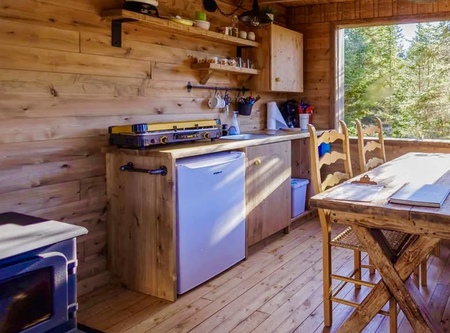
For now, the retreats stand at different heights above the ground and each has its own features. They have electricity and a refrigerator, but no indoor toilet or running water; a comfortable chemical toilet is located at the foot of each unit. In future phases, the owners hope to add a shared gathering area, a large communal kitchen, a park, a campfire space, a garden, washroom facilities and more.
Hauts Refuges – Prêt-à-camper
hautsrefuges.com
760, rang Sainte-Catherine
Les Éboulements (Qc) G0A 2M0
(418) 635-2329
Following a successful first edition that attracted about 500 people, the second Fierté aux Îles de la Madeleine, organized by the Vent de Fierté committee, will take place on August 22 and 23. For the first time, a Pride March will be held on Sunday, August 23. It will leave Cap-aux-Meules town hall and follow local streets for one kilometre to Place des Gens de Mer.
The preceding day, Saturday, August 22, the Marché Queer at Anse-aux-Baleiniers will bring together about 15 artists and craftspeople from 12:30 to 4:30 p.m. Representatives of Coalition des familles LGBT+ will also travel to the Îles especially for the event. Founded in 1998, the coalition advocates for legal and social recognition of LGBT+ families and provides a network in which lesbian, gay, bisexual and trans parents and prospective parents share information and activities.
A barbecue is planned, while DJs Beausir and Le Spiz of La Plage électronique will create a festive atmosphere. Usually based at Parc de Gros Cap, the DJ collective founded by Le Spiz and Beausir will once again energize the site with a moment of sharing, dancing and letting go. Drawing on their passion for house and electronic music, they will perform a set designed to celebrate our community.
Fantasy face painting will be available, and participants will make signs for the Pride March.
A multidisciplinary artist born in Saint-Siméon, Gabrielle Boulianne-Tremblay published her first poetry collection, Le Ventre des volcans, in 2015 and a second, Les secrets de l’origami, in 2018. In 2021, she released her first autofiction novel, La fille d’elle-même, which she finally ‘gave birth to’ after beginning it at age 15. It is a coming-of-age account of a child’s experience of trans identity in a Québec that is both cruel and full of life. Set amid Charlevoix’s bucolic landscapes and the majestic Saint-Laurent, the novel changed her life and offered Québec a more intimate view of a reality that is still often little known.
La fille d’elle-même is to be adapted for television, and the following year the novel received the Prix des libraires du Québec. It is the first French-language autofiction novel written by a trans woman in Québec. In 2025, Boulianne-Tremblay published La fille de la foudre, a sequel exploring life after transition through the experience of a woman with borderline personality disorder.
After earlier appearances in several documentaries and short films, she made her feature-film debut in 2016 in Mathieu Denis’s Ceux qui font les révolutions à moitié n’ont fait que se creuser un tombeau. Her performance as Klas Batalo earned a best supporting actress nomination at the Prix Écrans canadiens, making her the first trans woman nominated as an actress by those awards.
A trans-rights activist, she served in 2023 as spokesperson for the first Fierté Charlevoix.
In 2026, she wrote François.e, a comedy in which François, a declining cisgender male screenwriter, poses as a trans woman to obtain financing for a television series. The film was very well received by critics.