By Pierre Perreault
-----------------------
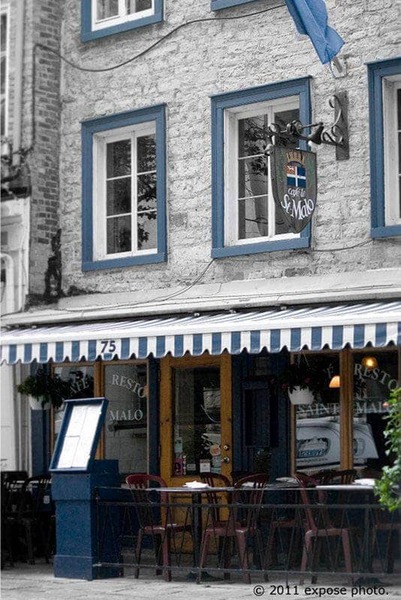
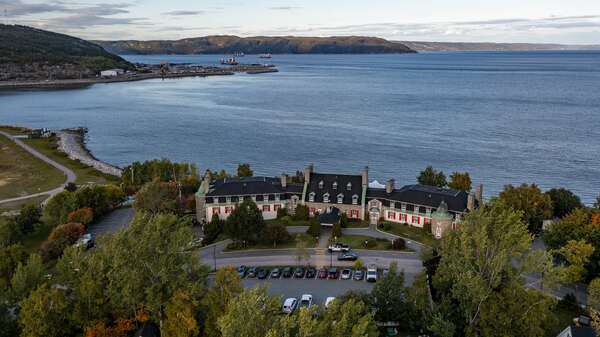
Standing proudly in this history-rich setting since 1984, when the first Transat Québec–St-Malo was held, the restaurant quickly built its reputation and earned its credentials among tourists and local residents alike. The Québec government had invested substantially in the district to welcome the influx expected for that international sailing event. The famous, picturesque rue Sous-le-Cap immediately behind the bistro was also refreshed at the time.
Founded as Café St-Malo, today’s Bistro St-Malo on rue Saint-Paul recreates the atmosphere of a true French bistro: a place where guests are welcomed as family, as friends and, in short, as one of the most valued people in the eyes of its team.
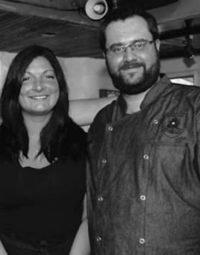
Ten years ago, the founders passed the torch to the couple Philippe Racine and Émy Carrier (pictured) who rose to the challenge and made this essential dining institution in Québec their own.
Philippe Racine happily and enthusiastically leads his brigade. Though self-taught, he was quickly recognized by his peers. He got his start working at his aunt's snack bar, where the Québec cruise terminal now stands. Trained by traditional French chefs as well as by young Quebecers, he worked his way up tirelessly before becoming the owner of the Bistro St-Malo.
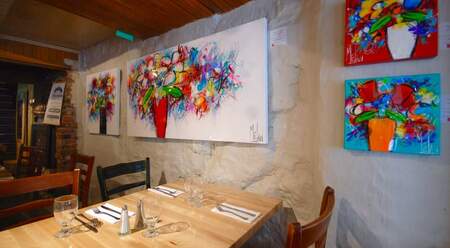
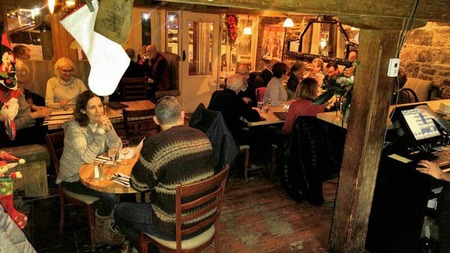
With passion, creativity and rigour, Racine creates a daily menu worthy of the finest bistros in France. By combining Québec terroir products with ingredients from other countries, he brings flavours and textures together in exemplary harmony. Philippe and Émy work in the kitchen every day on a refreshed yet consistently flavourful menu rooted in the French bistro tradition and extending toward the Mediterranean.
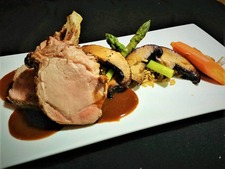
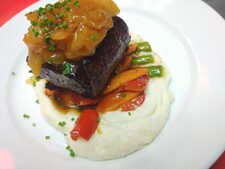
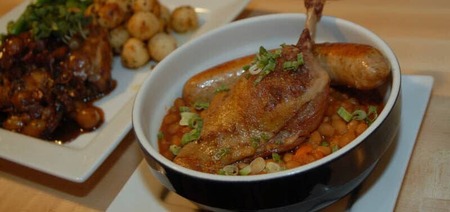
This ‘bistronomy’ naturally depends on superb terroir products, selected with care and delivered fresh each day.
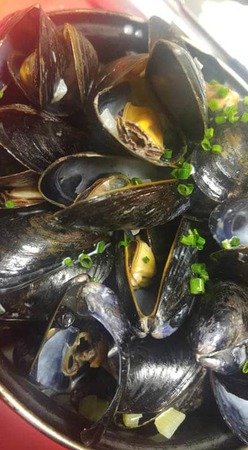
A good meal begins with a warm welcome and outstanding service, so the dining-room team does everything possible to give guests the best possible time. Whether guests come for Moulescredis (unlimited mussels from 5 p.m.), for Jeudi-Cieux and its four courses paired with wine or beer, or for the terrace in fine weather, whatever the occasion and at any time of year, the team gladly shares its knowledge of the menu’s flavours and helps choose wines and spirits, always with a smile.
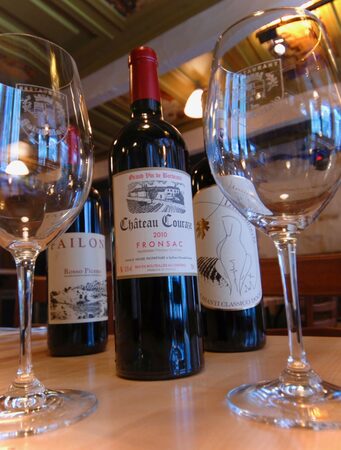
New since 2025, La Cambuse is a private event room in premises beside the bistro, offering a convivial experience designed for groups that enjoy celebrating over a good game or a cocktail reception. Whether sharing refined bites, following the excitement of a sporting event or simply enjoying a warm private setting, guests can expect attentive service and an unforgettable atmosphere.
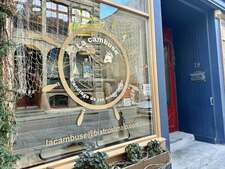
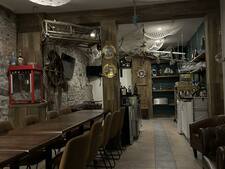
Whether you're solo, a couple, with family, or with friends, Bistro St-Malo serves up delicious meals in a warm atmosphere where simplicity and passion go hand in hand.
Bistro St-Malo
bistrostmalo.com
75, rue Saint-Paul
Vieux-Port, Québec (Qc)
(418) 692-2004
By Pierre Perreault
--------------------------
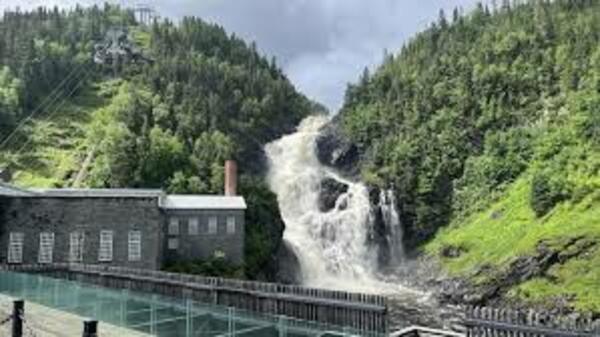
At Village historique de Val-Jalbert in Chambord, Lac Saint-Jean, the new season highlights the site’s railway heritage with two wooden railcars resembling those once used to carry pulp to major centres.
This is an opportunity to bring new life to the rich railway history of this emblematic place, shaped in the first half of the 20th century by a major industrial undertaking: the Val-Jalbert pulp mill and the company village created around it. Inside the cars, a pulp-themed maze and activities for children aged six to 12 offer a playful introduction to the transport and processing of wood pulp. For grandparents, the experience provides a wonderful opportunity to share part of industrial history with a younger generation.
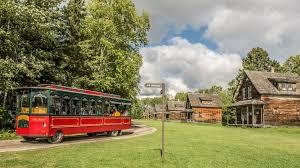

The renowned regular activities at Village historique de Val-Jalbert will also return from May 16 to October 12. At Val-Jalbert, the 1920s never ended. Feel the soul of the Village through more than 40 preserved historic buildings, including workers’ homes, the general store, post office and convent school.
The immersive production « Du cœur à l’ouvrage » is presented within the industrial fabric of the pulp mill itself, transporting audiences to the workers’ workplace of the period and revealing the true stories of all the people who lived in this company town.
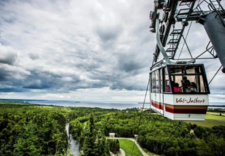
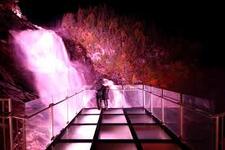
Enhance your experience with a cable-car ascent to the lookouts, with exceptional views of the powerful chute Ouiatchouan.
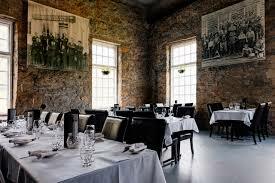
Several special events run throughout the summer and even into autumn. A range of accommodation options lets visitors extend their stay. The Moulin restaurant serves lunch and dinner, with a gourmet dinner featuring the region's rich terroir, while the Magasin général sells snacks and souvenirs to take home.
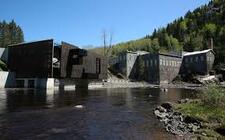
Designated a classified heritage site in 1996, Val-Jalbert now contains more than 90 buildings and remains, including 42 surviving structures, as well as an associated archaeological site covering the entire property. It is therefore a major place for transmitting Québec’s collective memory.
In 2009, Corporation du Parc régional obtained approval from the ministère de la Culture, des Communications et de la Condition féminine (MCCF), Développement économique Canada and the Municipalité régionale de comté du Domaine-du-Roy, the site’s current owner, to finance a $19.7 million project fully revitalizing Village historique de Val-Jalbert. The work covered infrastructure, historical interpretation and the visitor experience.
Annual passports have been available since April and include several benefits, among them a partnership with Zoo sauvage de Saint-Félicien that gives access to two distinct and incredible regional experiences, restaurant discounts and other advantages. Individual and family passports provide unlimited access to the site and many seasonal activities, whether for a full day or simply an evening walk. They are valid from the date of purchase through April 30, 2027, with different prices in low and high season.
Further details are available at valjalbert.com.

Village historique Val-Jalbert
valjalbert.com
95, rue Saint-Georges
Chambord (Québec) G0W 1G0
418 275-3132
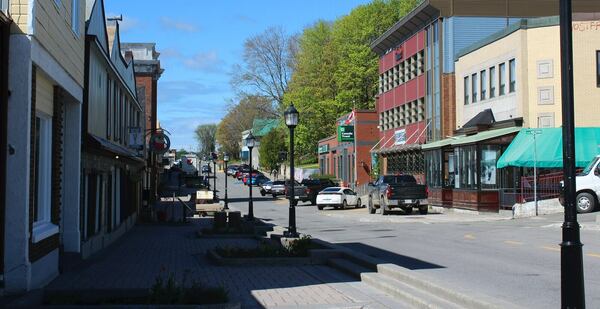
Over the past decade, downtown Gaspé’s popular, lively rue de la Reine has been transformed a few times, as new businesses have opened and others have changed hands. One of the notable features of the area’s changing economic landscape in 2024 is the increasingly prominent presence of women entrepreneurs and business leaders.
Here are a few examples.
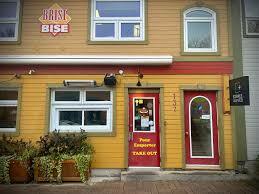
Le Brise-Bise: It was a woman, Claudine Roy, who founded the popular resto-bar more than 30 years ago. Originally from Cloridorme, she was deeply involved in business in Gaspé and the surrounding region. She handed the reins to Simon Poirier in 2015. She was made a Knight of the Ordre national du Québec in 2010 and appointed a Member of the Order of Canada in 2018. In 2026, ownership returned to women with Sara Di Zazzo, who already heads La Sarcelle à la Marina. Together with her partners, she intends to carry on the mission of this institution as it marks its 40th anniversary.
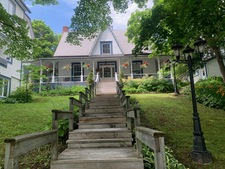
L’Auberge sous les arbres: Claudine Roy also owned this property from 2015 to 2023, when she transferred it to another woman, Gaspé native Stéphanie Lachance, whom she had hired as manager two years earlier. Together with her partner, Diego Valdes, Lachance, who trained in payroll administration and hotel management, has committed to passionately carrying forward the building’s mission of comfort, hospitality and showcasing heritage.
Oh! les pains: The bakery opened in downtown Gaspé in 2020, in the midst of the pandemic. Its owner, Gaspésie native Elsa Houde, embarked on the venture after about 20 years in communications. The bakery grew from a dual desire to offer quality products and create a warm, authentic gathering place. It quickly became the go-to spot for lovers of good bread, fine viennoiseries and puff-pastry pizzas. A different soup is featured each lunchtime, along with a freshly prepared lunch menu.
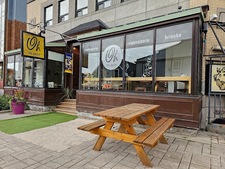
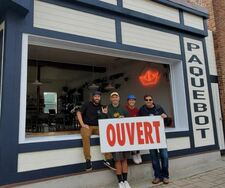
Paquebot Café Gaspé: One of the area’s newer arrivals, this original and surprising café took shape in 2021 when Isabelle Huard, after two years managing Paquebot Mont-Royal, wanted to open a café in her hometown of Gaspé. Following several months of work more than 900 kilometres from the first Paquebot, Paquebot Gaspé opened on September 1, 2021, with Isabelle as co-owner. Paquebot operates three other cafés in Montréal.
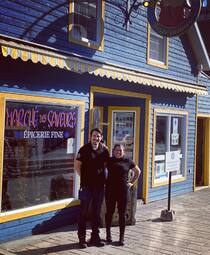
Marché des saveurs gaspésiennes: One of the oldest businesses of its kind in Gaspé, it was founded nearly 25 years ago as a gourmet food shop. In 2022, the founder decided to sell and entrusted the business to Claudia Romero, an employee of a few years. Romero and her partner, Ricardo Granja, are both originally from South America and came to Québec 15 years ago. Together they are carrying on a business with a loyal clientele. That same year, Claudia secured the contract to operate Parcs Canada’s seasonal restaurant and grocery store, Les Délices de Forillon.
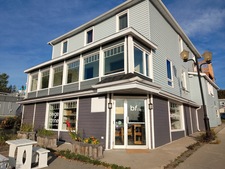
Beige Farine: Sandrine Bourbonnais first came to Gaspésie in 2019 as communications manager for a cultural organization in Gaspé. It was love at first sight. After completing her law degree in Sherbrooke in 2021, she decided to build her life in Gaspé. Beige Farine, a bulk store selling food, household and personal-care products, grew from her desire to help people make a positive environmental difference every day. She acquired one of the city’s oldest buildings, at 3, rue Adams on the corner of rue de la Reine, and transformed it into the shop that opened in June 2022.
The Pointe-au-Père Maritime Historic Site in Rimouski is unusual in that it takes visitors from ground level to the heights and then down into the ocean depths. Parcs Canada manages and operates the site, which offers visitors curiosities and thrills.
Martin Debolfe, the historic site’s marketing coordinator, explains that everything is in place to surprise and educate visitors through three distinct attractions:

• The Onondaga submarine, the first submarine in Canada opened to the public, offers a glimpse into the daily lives of the 70 crew members once confined aboard this 90-metre vessel. In summer, visitors can spend an evening and a night on board as part of an interactive experience.
• The lighthouse and its associated buildings. Built in 1909, it is the second-tallest lighthouse in Québec and one of the few that still has its prism. The keeper’s house contains an exhibition on the lighthouses of the Saint-Laurent.
• The Empress of Ireland Museum. Although the sinking of the Titanic is well known, fewer people know the story of this ocean liner, which sank off Rimouski in 14 minutes in 1914. The exhibition is impressive and moving, and its video presentation is surprising.
The museum opened in 2000, was expanded in 2017 and now features a completely redesigned exhibition. Digital technology allows for captivating interaction with visitors. A video simulation lets them relive the collision between the two ships and then watch the liner sink, which leaves no one indifferent, especially knowing that 1,102 people lost their lives in the disaster.
Pointe-au-Père Maritime Historic Site (SHMP)
shmp.qc.ca
1000, rue du Phare
Rimouski, QC G5M 1L8
418.724.6214
Born in Drummondville in 1954, Claude Bibeau pursued a career as a painter for more than 20 years. In 1973, he gained recognition by founding the Mouvement Bonbon with fellow painter Colin Chabot.
Whether labelled hyperrealist, naïve or surrealist, Bibeau’s paintings above all reveal a singular artistic personality and a sharp, original view of society. With his great command of drawing and colour, Bibeau left behind a rich, mature and, sadly, unfinished body of work. Two of his major paintings, “Figure de tragédie” and “Sébastien,” are part of the permanent collection of the Musée national des beaux-arts du Québec.
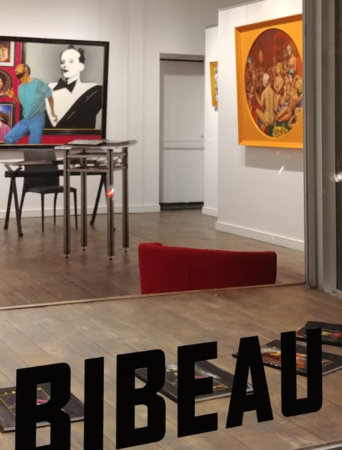
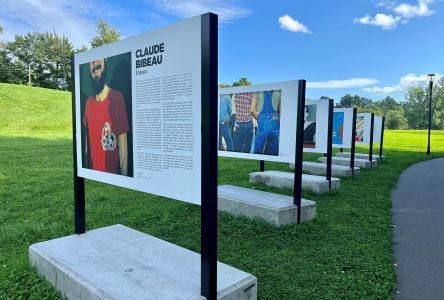
He explored the themes of naïve art, stylizing landscapes, objects and figures. His influences included pop art, of which he was one of the only exponents in Québec, as well as psychedelic imagery, hyperrealism and surrealism. His work was exhibited in France, Mexico and Canada, and most of it is held in private collections in Europe and North America.
Sadly, Claude Bibeau was diagnosed as HIV-positive in the early 1990s, and his health began to decline after 1996. He made a few trips to Europe with Uwe von Harpe, his partner of 17 years. In 1997, however, his partner’s sudden death and his own worsening health forced him to give up painting. On July 30, 1999, after several months battling AIDS, he died surrounded by his closest friends.
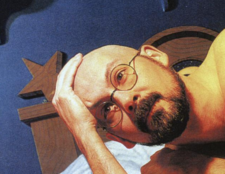
You can discover this unique artist by visiting L’Espace Claude Bibeau at www.galeriecb.com, which is managed by Christian Bédard.
By Pierre Perreault
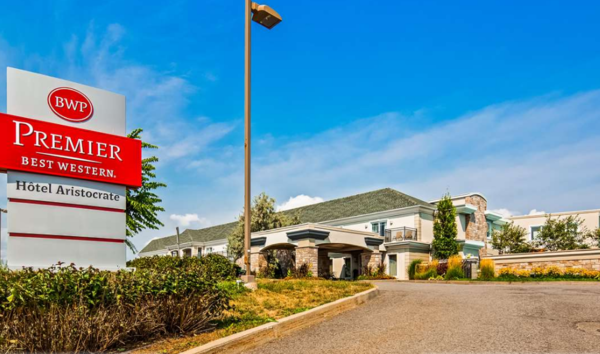
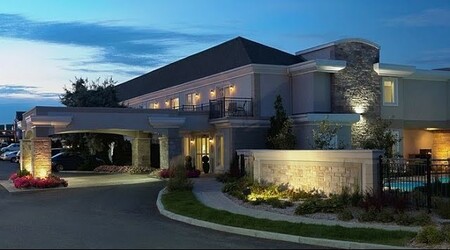
Built in Québec in 1963 by a construction contractor, Motel L’Aristocrate is now a family institution operated by the Nadeau family. Originally designed for a client who later withdrew, the property remained with the family and, a few years ago, evolved into the prestigious Hôtel Aristocrate under the Best Western Premier banner.
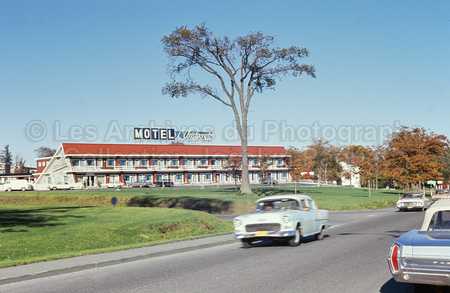 Motel L’Aristocrate in 1963
The hotel was founded by Georges Nadeau, grandfather of the family’s current generation, after the client for whom it was originally built withdrew from the project. The Nadeau family then took over operations, and members of the next generation, including the current leaders’ father and his brothers, joined the business over the years. Long the family’s only hotel, the property became the flagship of Nadeau Groupe Hôtelier, which later acquired other hotels in the same Tête des ponts district, including Hôtel Sépia and Holiday Inn Express Québec.
Best Western Premier Hôtel Aristocrate received Best Western’s prestigious M.K. Guertin Award in 2025. Named for Best Western’s founder, the award honours hotels demonstrating exceptional service, quality, value and commitment to the brand.
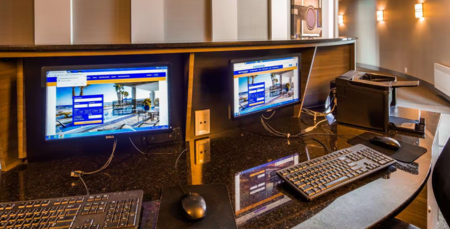
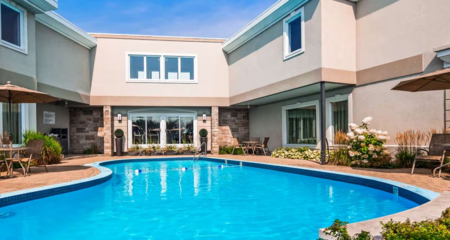
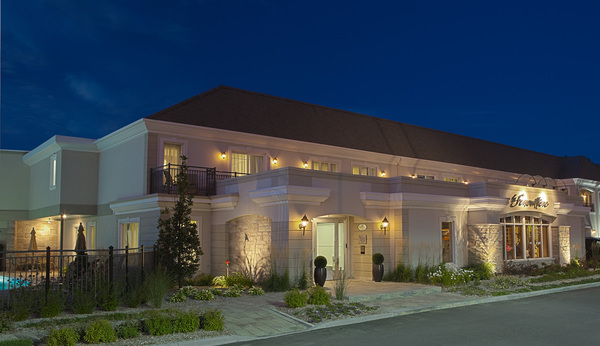
At the western gateway to the city, the hotel is known for its high-end service and La Fenouillière, its four-diamond restaurant, recognized as one of the region’s finest tables for 40 years. The restaurant offers local cuisine showcasing Québec terroir flavours.
The hotel, which has undergone several major renovations in recent years, offers visitors, while upholding its commitments to quality and sustainability, 100 comfortable rooms across various categories, including a Grand Signature Suite, three meeting rooms, a gym, and a seasonal outdoor pool with terrace. EV charging stations are available. Guests can also make use of a self-service laundry service, and pets are welcome for a fee, subject to certain conditions.
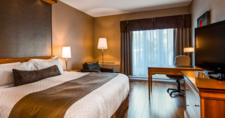
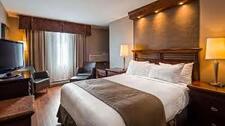
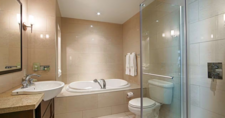
For cravings at any time of day or night, Au Petit Magasin, open around the clock near reception, offers a full selection of snacks (chips, chocolate, biscuits, soups and drinks, frozen foods, etc.). A microwave is on hand, and the hotel also serves fresh coffee around the clock.
L’Aristocrate makes an ideal base for sports groups visiting the region for tournaments or competitions. Buses can park easily on site. Those coming to Québec for medical appointments also receive a personalized welcome. Free services include parking, high-speed Wi-Fi, business centre access, coffee and tea, and more.
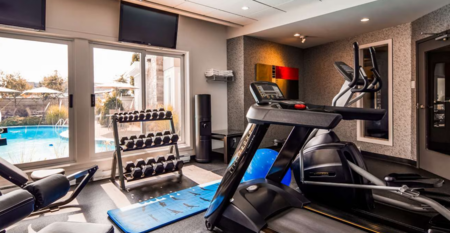
Cyclists receive the welcome they deserve. The hotel provides secure bicycle storage at no charge, and the nearby Corridor du Littoral and Parcours des Anses cycling routes are easily accessible.
Hôtel Aristocrate is an enduring example of successful family-owned hospitality in Québec. Current president Daniel Nadeau and his daughter, Chantal, lead the hotel group, which was formally incorporated as Nadeau Groupe Hôtelier in 2021. It now comprises three hotels, 287 rooms and approximately 100 employees.
Hôtel Aristocrate
Best Western Premier
hotelaristocrate.com
3100, Chemin Saint-Louis
Québec (Qc) G1W 1R8
418 653-2841
By Pierre Perreault
Québec has a long-established tradition of gastronomy and great tables. Several establishments are found not only in historic Vieux-Québec and the central neighbourhoods but also in outlying districts such as Beauport, Sillery, Sainte-Foy and Charlesbourg.
La Fenouillière is one example: this year, 2026, it marks 40 years inside Hôtel Aristocrate near the bridges, on chemin Saint-Louis in Sainte-Foy. At a lunchtime meeting in late March 2026, food and beverage director Caroline Baldit and hotel marketing director Annie Rivard outlined the renowned restaurant’s history and plans for its 40th anniversary.
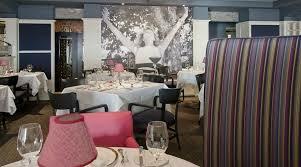
For those who enjoy a good story, here is the condensed version. In 1986, two chef friends from Bas-du-Fleuve, Yvon Godbout and Martin Gosselin, recognized an opportunity. Both had restaurant experience and taught cooking part-time in Québec; they had met in 1972 at Montréal’s Institut de tourisme et d’hôtellerie du Québec (ITHQ). They met David, André and Normand Nadeau, brothers who owned Motel l’Aristocrate and entrusted them with the future of its hotel restaurant, Aux Entrecôtes, which had no patronage, was losing money and had a demoralized staff.
Six years later, in 1992, Godbout and Gosselin took over the restaurant under lease. From that point, La Fenouillière set new standards and won numerous awards, becoming the most renowned restaurant in the Capitale-Nationale region. Its owners were among the pioneers in cooking with Québec terroir products. As producers diversified their offerings, restaurateurs were able to renew their menus.
La Fenouillière changed hands in 2017, and the new owner continued its tradition. Unfortunately, after the COVID-19 pandemic and the disruption caused by a major, still-ongoing MTQ project at the nearby Pont de Québec approach, he had to give up the business in August 2025. Nadeau Groupe Hôtelier then decided to acquire the restaurant located inside the hotel it already owned.
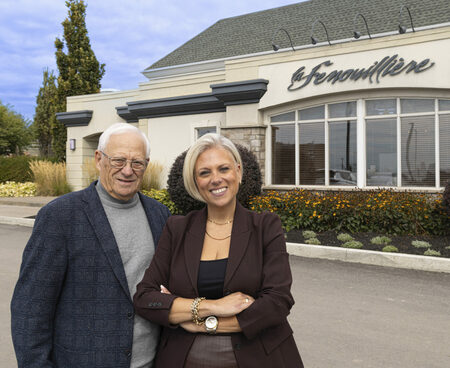 Daniel and Chantal Nadeau, of the Groupe hôtelier Nadeau
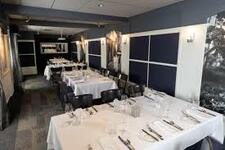
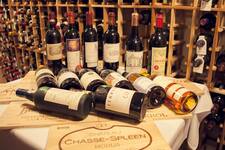
Meeting rooms and a private dining room are also available for business groups, families and other gatherings. Breakfast, served daily, is popular. On weekday lunchtimes and every evening, La Fenouillière presents the original menus and fine-dining experiences on which its reputation rests.
In 2026, the restaurant plans to refresh both the dining room and the menu while respecting La Fenouillière’s DNA, preserving what made it renowned while bringing new energy to the experience.

In May, a major event will bring together several regional socioeconomic players, business partners of La Fenouillière and representatives of the Nadeau family to celebrate the four-diamond restaurant’s 40th anniversary. Other special activities will take place throughout the year to thank loyal patrons and attract new guests. The owners say the celebrations also form part of the revitalization of the Tête des ponts district, a beautiful neighbourhood that will shine and become a sought-after area of Québec in the coming years.
The anniversary also confirms Nadeau Groupe Hôtelier’s ‘commitment to supporting and showcasing local institutions that contribute to the region’s appeal, while continuing its mission of offering memorable experiences to guests,’ says Chantal Nadeau, vice-president and general manager.
The third-generation family business operates three respected properties in the Québec region, all near Tête des ponts: Best Western Premier Hôtel Aristocrate, Hôtel Sépia and Holiday Inn Express Québec.

Restaurant La Fenouillière
fenouilliere.com
3100 ch. Saint-Louis
Québec, QC G1W 1R8
418 653-3886
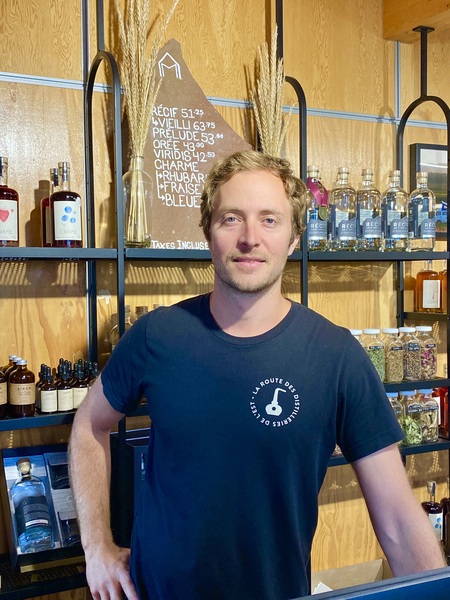
Difficult times often create an opportunity to take stock and change direction. That is what happened to Joseph St-Denis-Boulanger, a Caplinois, and his partner, Laurie-Anne Cloutier, a Montréalaise, who sought refuge in Gaspésie to heal after the painful loss of their daughter at birth in 2018.
Building a distillery between Route 132 and the sea in Caplan and opening it to the public was the ambitious project undertaken by this new entrepreneurial couple. Distillerie des Marigots began producing whisky and gin in 2020.
This Gaspésie native and his Montréal-born partner, who fell in love with the region, both realized that it was now or never to pursue their dream: settling in Caplan and launching a craft distillery that showcased the flavours of the terroir.
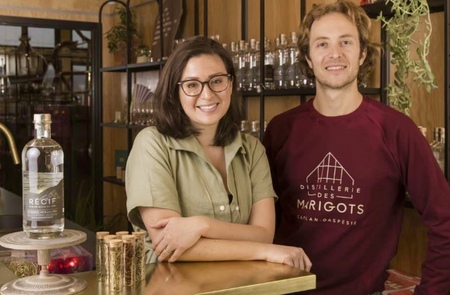
The name chosen for the venture also invites residents and tourists to enjoy life. The expression “courir ou aller au marigot” refers to fishermen who play hooky and retreat to a secluded cove to take it easy.
Joseph further developed his expertise through training at Seattle’s Copperworks distillery, enabling him to create a product that would appeal to the public while also earning recognition from connoisseurs. The result was Récif, a coastal gin. A whisky made from malted barley is currently ageing for release in 2025.
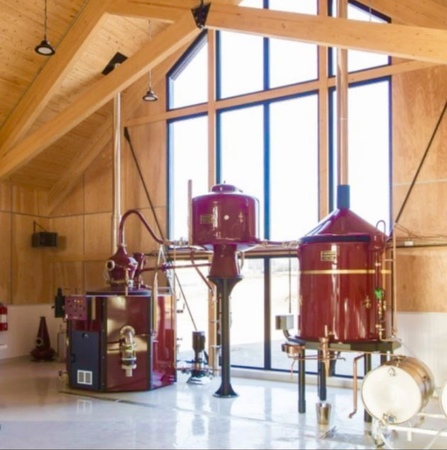
A Charentais still is the centrepiece of production for these new Gaspésie spirits. “My aim was to focus on aroma and complexity of flavour in both my gin and my whisky. I wanted them to be rich, long on the finish and very distinctive, so I sought out the perfect equipment for that,” explains Mr. St-Denis-Boulanger.
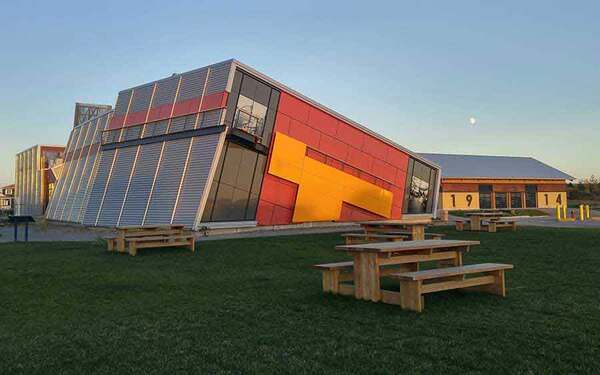
From the outset, the couple had an idea of the building they wanted for the distillery, with the beauty and nobility of wood at the heart of their vision. “My partner and I are really into architecture, and we already knew we loved this kind of building: clean design and geometric lines made warm through the use of wood,” Joseph explains. By the owner’s own account, wood was the only option ever considered.
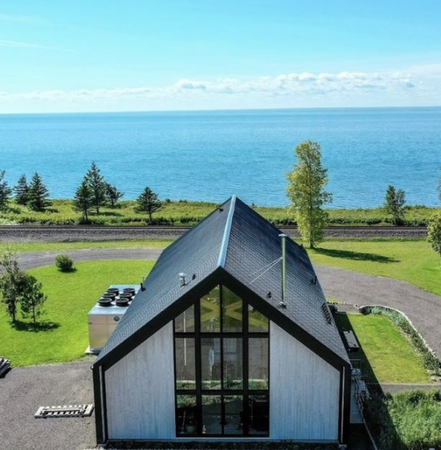
The extensively glazed façade, the building’s signature feature, sits at the heart of the company logo and has also become the brand’s emblem. “The idea is that wherever you are in the distillery, you can see Baie-des-Chaleurs on one side and the still on the other,” says the owner, who is not a little proud of his building perched on a cliff overlooking the sea.
The master distiller at Distillerie des Marigots draws inspiration for his spirits from the Gaspésie landscape and strives to showcase the exceptional quality of its local ingredients. His approach brings to the fore the aromas and fragrances offered by his surroundings and by Gaspésie’s agricultural expertise. Alongside its two flagship products, Récif gin and whisky, the distillery also enjoys creating small experimental batches, including eaux-de-vie, herbal liqueurs and limited-edition gins.
Distillerie des Marigots
300, Boul. Perron Est
Caplan, QC
distilleriedesmarigots.com
(418) 388-2008
The Manicouagan region and its main city, Baie-Comeau, have developed a food scene that delights even the most discerning. You don’t need to go to Montréal or Québec to treat your taste buds.
The only four-star hotel east of Tadoussac and a renowned address, Manoir de Baie-Comeau is a popular stop on the Côte-Nord, just minutes from parc des Pionniers and plage Champlain. Built on a headland overlooking the Saint-Laurent, the hotel commands sweeping views of the river and bay. Bistro La Marée haute makes the most of the setting, particularly from its spacious summer terrace. For a meal in exceptional surroundings, it is an ideal choice. Chef Carl Beaulieu, who ran L’Orange bleue in the Hauterive sector for around 12 years, is now at the helm.
Carl Beaulieu has also expanded his food offering by operating two food trucks under the La Poutinerie name. The menu includes poutines and fries, burgers, hot dogs, pogos and other specialities. For the past four summers, one truck has been stationed from Tuesday to Sunday in the parking area beside the hotel, near parc des Pionniers. Customers can eat at the few picnic tables set up in a corner or take their food away. The other truck is mobile: it operates in the downtown Mingan sector and travels to various events and festivals throughout the summer. It serves the same menu as the truck at Manoir de Baie-Comeau.
Directly opposite église Sainte-Amélie and a few hundred metres from Manoir de Baie-Comeau, La Cache d’Amélie is a landmark of Côte-Nord gastronomy. It offers refined dining centred on fine regional cuisine, available as a table d’hôte or à la carte. Its carefully curated wine list includes a selection of private imports.
Nearby Place Lasalle is the city centre’s main nightlife hub and
comes alive in summer with its terraces. It is also an opportunity to visit
microbrasserie St-Pancrace and discover the region’s best beers.
As the first microbrewery on the Côte-Nord, it brews and serves
craft beers with local flavours alongside a menu based on regional products and
a wide selection of Québec whiskies and spirits. Visitors can
also sample the beers at the brewery and take a tour.
On the shore of the Saint-Laurent near the ferry terminal, Restaurant Saint-James au bar de l’eau has a terrace with a splendid view of the surroundings, and sometimes even of whales. It offers various daily menus, table d’hôte menus and a selection of competitively priced wines. The menu includes delicious seafood, fish and fresh crab in season, as well as popular pasta dishes, pizzas, salads, sandwiches and grilled fare.
Born from a holistic vision and a love of the region, Baie-Comeau’s Distillerie Vent du Nord is focused on its community. Supported by partners and local producers, its artisans continue to create products that showcase the expertise and solidarity of the region’s people. Its spirits and ready-to-drink beverages draw inspiration from the Côte-Nord: its terroir, ancestral traditions, local botanicals, landscapes and the bright future we wish for it.
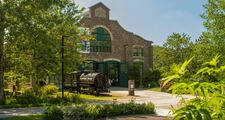
With more than a century of history, La Pulperie de Chicoutimi is now considered one of the major historic sites in Saguenay–Lac-Saint-Jean. It features an extensive collection of 26,000 objects documenting the region’s history and heritage; six exhibition galleries, two built to the technical standards of leading Canadian museums and able to host internationally renowned exhibitions; the Maison du peintre Arthur Villeneuve; meeting rooms; a documentation centre; a substantial collections storage facility; interpretive trails; and a gift shop offering regional products.
In 1896, the founders of the Compagnie de pulpe de Chicoutimi laid the first stone of what quickly became a true empire. More than a century later, the former facilities gave way to another major undertaking: La Pulperie de Chicoutimi / Musée régional.
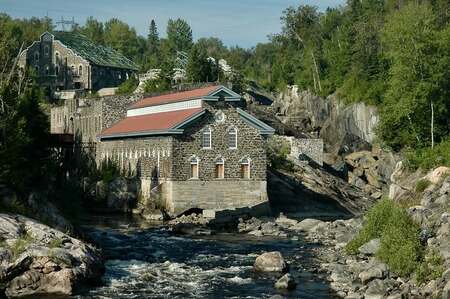
After its glory days and flourishing business, conditions began to worsen in 1921. The market had changed, and prices fell drastically. All its expansion projects had left the company in debt. In March 1924, the Compagnie de pulpe de Chicoutimi liquidated all its assets. Despite a major restructuring, falling orders and prices led to the mills’ permanent closure in 1930.
Saved from demolition in the late 1970s, the old buildings were gradually restored and now contribute to the site’s tourism and cultural role.
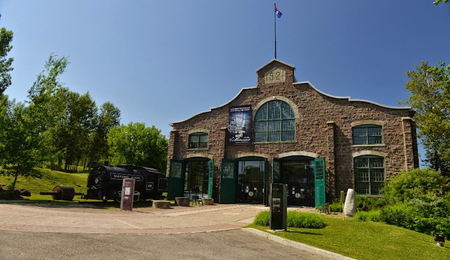
Unfortunately, on Thursday, July 18, 1996, a major low-pressure system formed over the Great Lakes. Over 48 hours, Saguenay–Lac-Saint-Jean received 150 to 280 mm of rain, compared with a normal monthly average of about 125 mm. The downpour came on top of the 120.5 mm already recorded since the beginning of July, which had saturated the ground, filled reservoirs and increased the flow of several rivers. All the conditions had converged for a catastrophic flood, a true deluge.
The raging water destroyed century-old stone walls, landscaping, interpretive installations and service infrastructure. Within hours, years of restoration work at La Pulperie de Chicoutimi were undone; only the walls and red roof remained. The damage was severe and required major reconstruction.
Thanks to the determination of local and regional leaders, support from several levels of government and, above all, a deep commitment to reviving this remnant of the region’s industrial and historic past, La Pulperie de Chicoutimi reopened in June 2002.
Danny Cloutier, who has been the Musée régional’s communications director for 15 years, recalls that the effort to preserve painter Arthur Villeneuve’s house was the catalyst for the project. The merger of two organizations promoting the Saguenay region led to the creation of the Musée régional La Pulperie de Chicoutimi. In November 1994, after years of negotiations, the painter-barber’s house left its foundations on rue Taché and made its way to La Pulperie de Chicoutimi.
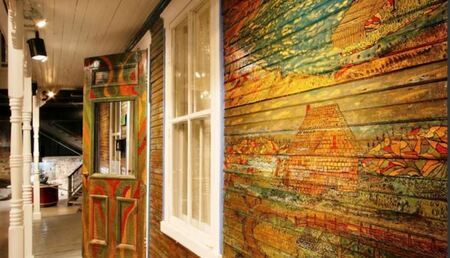
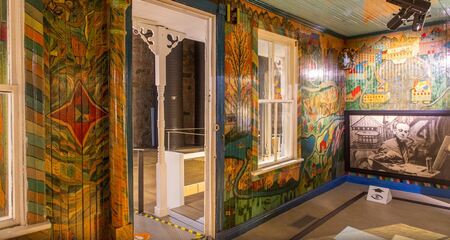
The spectacular move stirred passions across Saguenay–Lac-Saint-Jean, with some calling it a scandal and others a stroke of genius. Moving the house 1.4 kilometres was a major challenge intended to protect Villeneuve’s work: in the late 1950s, he had covered every wall with singular frescoes portraying his city, his region and his vision of the world. The Musée des beaux-arts de Montréal devoted a retrospective to him in 1974, and in 1993 the Canadian government recognized his house as a national treasure.
Today, La Pulperie de Chicoutimi has become an essential visitor attraction in the regional tourism sector and even in Québec. No wonder its promotional slogan is ‘More than a museum: a site, a park!’ In the heart of downtown Chicoutimi, now part of the city of Saguenay, the historic visitor complex occupies a vast park beside the rivière Chicoutimi, crossed by walking and interpretive trails.
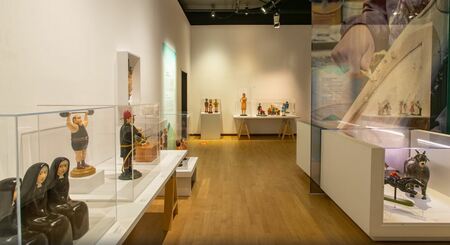
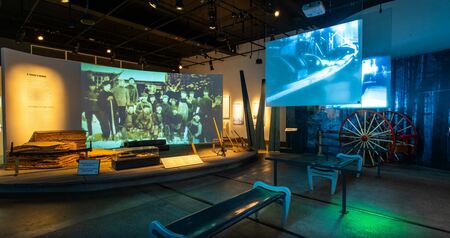
La Pulperie and its museum are open year-round. They welcome groups and can host special events or children’s parties in rooms with a variety of settings.
Finally, the foundation supports, in various ways, the protection, preservation, development, marketing and promotion of the Corporation du Musée du Saguenay–Lac-Saint-Jean’s sites, including La Pulperie and the Poste de traite de Chicoutimi. It also helps enrich the museum’s collections and acquire artefacts from the old pulp mill.
La Pulperie de Chicoutimi – Musée régional
pulperie.com
300, rue Dubuc
Chicoutimi (Québec) G7J 4M1
418 698-3100