Travel log

coucher du soleil

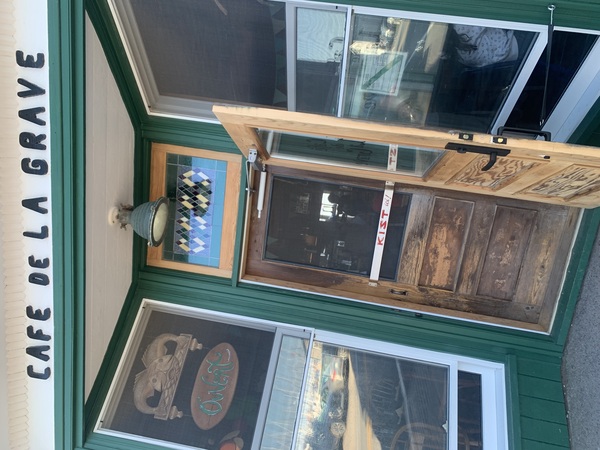
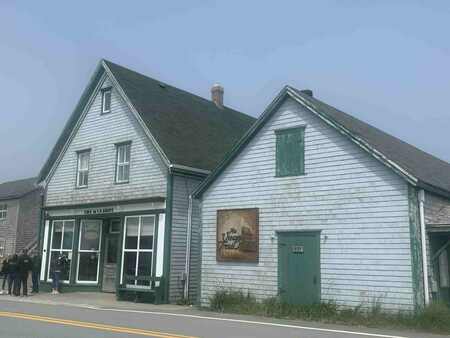
July 18, 1980. A group of dreamers named Jean-Marc, Claude, Henri and Fernand kept this place, already rich in history, alive and opened its doors to art and music. La Grave, after all, is a site that profoundly shaped the development of the Îles de la Madeleine.

I arrived in the archipelago on that same date 45 years later, after a night aboard the ferry from Souris, P.E.I., to Cap-aux-Meules, and discovered that the evening’s celebrations promised to be memorable.

Until the end of the 1950s, La Grave was the gateway to the Îles and the centre of commercial activity. The former general store played its own part in Madelinot history. Its first owner, Jersey native John Phillip Savage, settled in the Îles-de-la-Madeleine around 1865. People took the time to hear the news, whisper gossip, share worries and hopes, and speculate about the country’s future.

Within the walls of this storied place grew a strong sense of belonging, a deep attachment to local culture in all its forms and a festive spirit that has endured through every era since its founding. A new breeze swept through the café in 2007. Three dynamic entrepreneurs, Sonia, Francine and Denis, brought their vision and determination to carry the institution forward as its reputation spread far beyond the Îles. Café de La Grave was becoming an essential stop for anyone visiting the archipelago, with freshness and whimsy defining the new team.
La Grave 45 ans

In 2015, Marie-Claude Vigneault and her mother, Nathalie, took the reins and assembled a strong team to continue the institution’s work. Over the years, a history has grown around Café de La Grave, shaped in different ways by thousands of people.

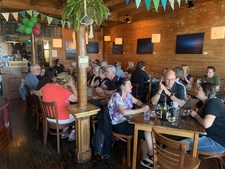
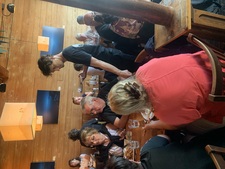
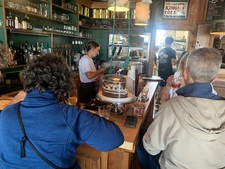
On July 18, 2025, dozens of long-time patrons, visitors, tourists, relatives and friends filled the café to take part in the anniversary. By 6:30 p.m., the dining room was alive with anticipation. Two former owners from the founding group made a special point of attending because memories are what keep history alive.

La Grave 45 ans La Grave 45 ans La Grave 45 ans

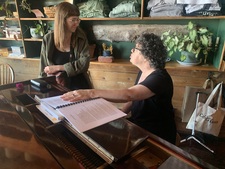
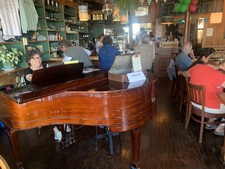
At the piano, Suzanne Richard evoked the period when music stood at the centre of café life. Many people still hold quite vivid memories of those animated evenings, a tradition that continues today.

La Grave 45 ans La Grave 45 ans

Alongside these inspiring ‘traditional’ nights, the café presents a wide range of visual-art exhibitions, performances and spontaneous jam sessions. It also sustains local culinary traditions while encouraging partnerships with food and agricultural businesses across the region. Café de La Grave’s menu rewards diners who enjoy unexpected ingredients and flavours: mussels, scallops, lamb, veal, poutine topped with pulled seal, cod and much more. There is something for everyone. At Café de La Grave, as one can see, nothing is ordinary.

La Grave 45 ans

At the time of writing, the celebrations were continuing. May the people behind the café and its entire team enjoy many more years carrying this wonderful, emblematic place in the Îles forward.

Café de La Grave
cafedelagrave.com
969, Chemin de la Grave,
Havre Aubert, Îles de la Madeleine (Qc) H4T 9C8
418-937-5765
.

On August 1st, 2016, writer and poet Anne Hébert would have turned 100. Her centenary was to be commemorated in 2017 in Kamouraska, the village where her novel Kamouraska is set. The book made her famous and put the village on the map. Adapted for the big screen by Claude Jutra, with music by André Gagnon, the film introduced her work to the general public.

Anne Hébert was born in Sainte-Catherine-de-la-Jacques-Cartier and spent her childhood in Québec. But as a descendant of the seigneurial family of Kamouraska, she spent several summers there, where she became familiar with the famous crime of passion involving her ancestor. After publishing various poetry collections from 1942 to 1953, in 1958 she published her first novel, Les Chambres de bois, with Éditions du Seuil, and in June 1960 was elected a member of the Royal Society of Canada.

In 1965, after her mother’s death, she moved to Paris. She finally achieved success with the publication of Kamouraska in 1970, which earned her the Prix des libraires de France. In 1975 she published Les enfants du sabbat, her third novel, followed in 1980 by a fourth, Héloïse. Her fifth novel, Les Fous de Bassan (1982), made her the fourth French-Canadian woman and the second Québécoise to win one of France’s major literary prizes: the Prix Femina. She was preceded only by Gabrielle Roy, also a Femina winner, Marie-Claire Blais, winner of the Médicis, and Antonine Maillet, winner of the Goncourt. Between 1969 and 1983, she received honorary doctorates from the University of Toronto (1969), the University of Guelph (1970), UQÀM (1979), McGill University (1980) and Université Laval (1983).

In 1988, her sixth novel, Le Premier Jardin, paid tribute to the women who founded Nouvelle-France. A seventh novel, L’Enfant chargé de songes, appeared in 1992. In 1995, at the age of 79, she published Aurélien, Clara, Mademoiselle et le Lieutenant anglais, a story midway between poetry and prose. Her fifth and final poetry collection, Poèmes pour la main gauche, was published two years later.

Early in 1998, after 32 years in Paris, she returned to Montréal. In 1999, her last novel, Un habit de lumière, was published, a few months before her death in Montréal in January 2000.

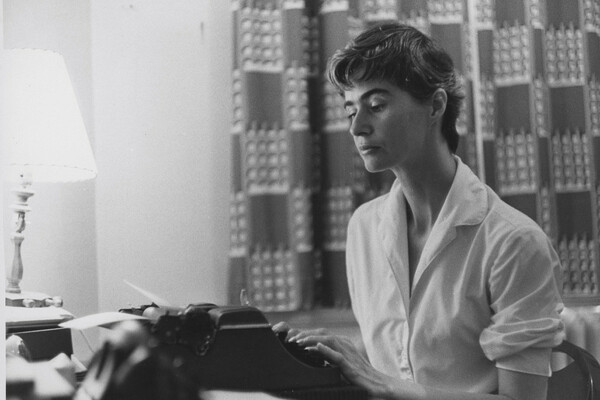
Anne Hébert always remained discreet about her private life; she never married or had children. Living in Paris, far from home, enabled her to keep her artistic and private lives separate, as it did for her friend Mavis Gallant, an English-speaking Montréal writer who had also moved to the City of Light and with whom Hébert shared a long friendship.

The Musée des beaux-arts de Mont-Saint-Hilaire has a mission that distinguishes it from most Québec museums. Correlieu retrouvé, an exhibition by painter and author Mathieu Laca that opened on June 20 and runs through September 27, strongly advances that mission. It is a rare opportunity to mount a show directly aligned with the museum’s mandate, which includes preserving and showcasing the cultural legacy of Mont-Saint-Hilaire’s three masters: Ozias Leduc (1864–1955), Paul-Émile Borduas (1905–1960) and Jordi Bonet (1932–1979).
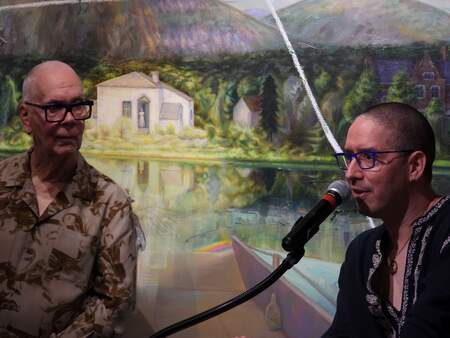
Correlieu retrouvé 2026Mathieu Laca and Jean Comeau at the opening.

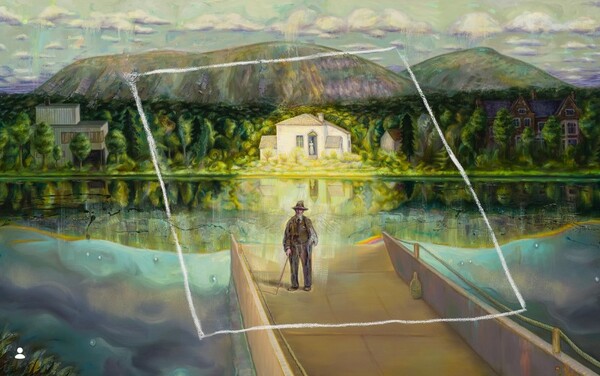
As part of the institution’s 30th-anniversary programme, painter Mathieu Laca’s exhibition brings these three major figures in Québec and Canadian history into dialogue. It draws on the legendary Correlieu studio, built by Ozias Leduc in 1890 and described as ‘a place where the heart is in everything’. The studio unfortunately disappeared in the 1980s after serving as a true meeting and exchange space for the artistic community from the late 19th century through the first half of the 20th. It also evokes the studio-homes of Bonet and Borduas through poetic scale models.

Together, the three artists lived in Mont-Saint-Hilaire across a span of 110 years. Leduc was born there and spent most of his life in the town. Borduas, also born there, became Leduc’s student as a teenager and later returned to build a house that still stands and is now part of the museum’s permanent collection. Among other works, he wrote Refus global there, denouncing the stifling narrow-mindedness of a Québec constrained at the time by traditional Catholic values. Jordi Bonet, born in Spain and established in Québec in the early 1950s, later fell in love with Manoir Rouville-Campbell and its Tudor Revival architecture beside the Richelieu. He acquired the badly deteriorated property in the early 1970s, lived there with his family and restored it room by room before having it classified as a historic monument in 1977.
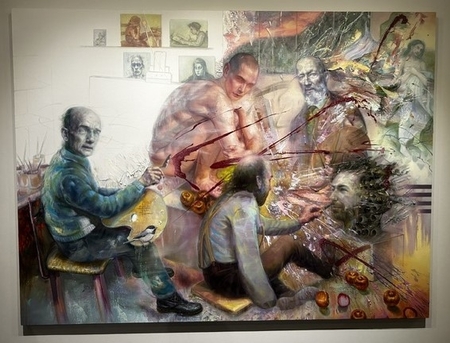
Correlieu retrouvé 2026

Following a 2024 dinner in Saint-Hilaire with Jordi Bonet’s children, Sonia and Laurent, Mathieu Laca and his partner, Jean, fell in love with what he describes as an almost hypnotic environment. ‘When I arrived in the town, I was also struck by place names that make it feel like an open-air museum. You cross pont Jordi-Bonet and travel along chemin Ozias-Leduc, rue Paul-Émile-Borduas and rue de l’Heure-Mauve. I then discovered that the property where Ozias Leduc (1864–1955) lived for almost his entire life was only a stone’s throw away,’ he explains, setting out the origins of the project that followed.

Through this original exhibition, Laca sought to offer a renewed perspective on the three artists and identify a defining theme in each body of work. Long, rigorous research allowed him to enter into their lived experiences and influences. In Leduc, he finds goodness, a quality that, according to the artist, might offer a path toward the divine. It seems to appear in the humility of Leduc’s subjects, including L’heure mauve, a half-snow-covered branch with dead leaves, as well as in his enveloping light and gentle brushwork. Borduas’s trajectory, in Laca’s view, was guided by a quest for freedom. Seeking release from the narrow morality embodied by religion, he continually pursued a pure, universal language through which to express the depths of his psyche and escape the constraints of figurative tradition. His work still resonates as a lesson in authenticity and sacrifice. Jordi Bonet’s life, meanwhile, was marked by profound tragedy: the Spanish Civil War, which ravaged his homeland from 1936 to 1939; the amputation of his right arm; and the death of his young son after he was struck by a car. Bonet developed part of his work as a way of transcending the limits of his condition, making visible what is hidden and what survives disappearance. Laca therefore assigns him the theme of mystery.
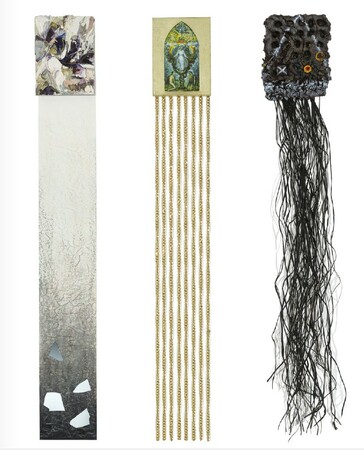
Correlieu retrouvé 2026

‘Through these three central themes, Mathieu Laca directs his work toward new interpretations and techniques while delving into art history to nourish his research, demonstrating the rich potential of a heritage that remains as significant as ever,’ says Etienne Ardaens, assistant curator at the Musée des beaux-arts de Mont-Saint-Hilaire.

An Unexpected Discovery
While conducting extensive research on Leduc, particularly in his archival fonds, Laca made a discovery that transformed his perception of the artist. Numerous clues tend to point to a forbidden love between Leduc and a young Saint-Hilaire poet named Guy Delahaye, a biographical possibility not previously addressed in books about the painter. Leduc’s marriage at age 43 to an older first cousin, abandoned by her husband and later widowed, had first raised his suspicions.
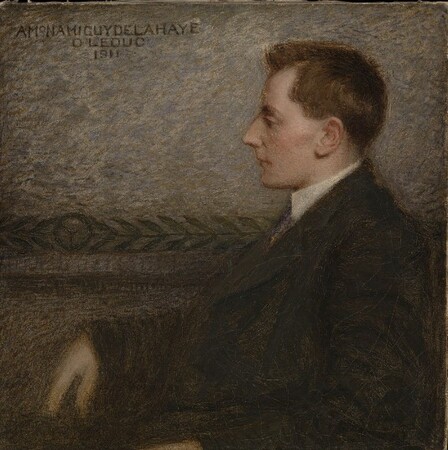
Correlieu retrouvé 2026Guy Delahaye, Leduc’s alleged lover, painted by the artist. (MBAM)

The absence of any portrait of Leduc’s wife from his work also led Laca to consider the marriage one of convenience. Alongside the exhibition, he began writing a book on the subject, knowing the information opens an entirely new interpretation of an oeuvre whose symbolism may be less mysterious than it appears.

The prohibitions of the period prevented any love between Leduc and Delahaye from being fully realized. In 1910, homosexuality was condemned by the Church, criminalized by law and characterized by psychiatry as a form of ‘mental illness.’ Despite that climate, Leduc painted superb portraits of Delahaye, with dedications inscribed directly on the canvases. Laca was overwhelmed on discovering the portrait held by the Musée des beaux-arts de Montréal, in which the young poet appears in profile like a medallion of Ovid, accompanied by Erato, muse of lyric and erotic poetry. To him, it resembles a barely concealed declaration of love.

Although the relationship developed into friendship, the two continued corresponding and meeting regularly throughout their lives to discuss art, philosophy and science. Leduc later produced imaginary landscapes expressing his inner states.
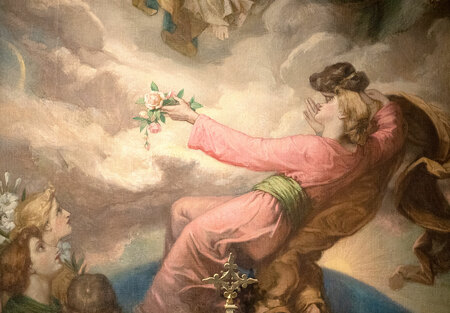
Correlieu retrouvé 2026 One of the religious frescoes painted in churches by Leduc

A Journey Toward the ‘Genius of the Mountain’
Having explored Québec art history in this way and translated it through the works shown at the museum, Mathieu Laca feels he has experienced it from within, through action rather than contemplation. He has absorbed its psychological forces and the inflections of its language. ‘My body retains the memory. The misunderstood symbolism of Ozias Leduc’s paintings now comes into new focus in light of the feelings he experienced for the poet Guy Delahaye. His painting appears as the sublimated expression of a forbidden love, something that resonates powerfully within me,’ he says. Paul-Émile Borduas, for his part, taught Laca the fierce desire to free oneself from everything that constrains creation. The underground stream whose gates he opened will not soon run dry. Jordi Bonet, that dazzling human poem, brought him into contact with the sacred. ‘Death has seemed less frightening to me since he tamed it,’ Laca concludes.
-------------

With this exhibition, Laca, a Laval native who still lives there, reaches another stage in his artistic vision. ‘I summarize my approach this way: portray people differently; write and paint simultaneously; paint portraits of writers and write about visual artists. This creative interweaving interests me profoundly because it carries new resonances. For me, the two arts operate as communicating vessels, allowing me to cross their respective boundaries freely by moving endlessly from one to the other.’

Curiously, the house Laca shares with his husband, Jean Comeau, faces a cemetery where a stone angel watches over the grave of Marc-Aurèle Fortin, another major Québec painter. ‘On misty days, I like to imagine the landscape artist on his bicycle, a canvas under his arm, searching for the ideal view of the great elms that have since disappeared.’
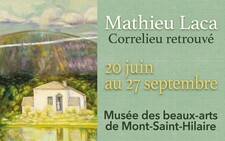
Correlieu retrouvé 2026

Correlieu retrouvé
Musée des beaux-arts de Mont-Saint-Hilaire
150, rue du Centre-Civique
Mont-Saint-Hilaire (Québec)
from June 20 to September 27, 2026

Artist-guided tours available:
Sunday, July 19, 2 p.m.;
Saturday, August 1, 1 p.m.;
Sunday, August 16, 2 p.m.;
Saturday, August 29, 1 p.m.;
Sunday, September 13, 2 p.m.; and
Sunday, September 27, 2 p.m.

Information: https://mbamsh.com/exposition/correlieu-retrouve/

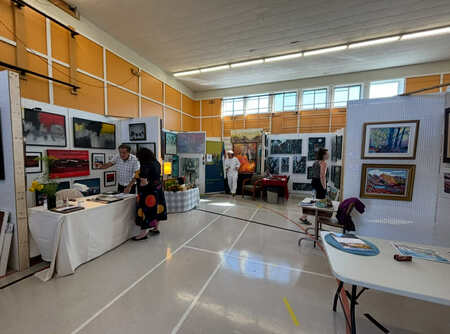
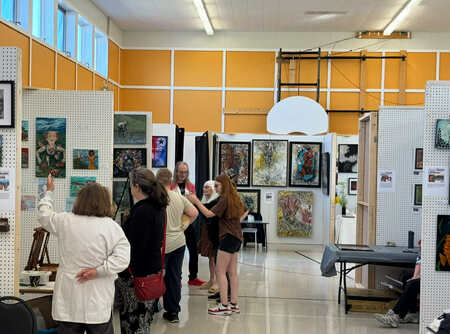
The team behind Clorid’Art just announced the symposium’s fifth edition will happen in Cloridorme, right in the l’Estran part of Gaspésie, on July 31, August 1, and 2, 2026. Everything takes place in the village school gym, a spot where the landscape, the people, and the art all seem to click. This year, the honorary president is Philippe Roy, an artist who grew up in Cloridorme.

Clorid'art 2025

It’s the first time they’ve picked someone who’s already taken part in three earlier editions. “We wanted to thank Philippe for everything he’s brought to the event,” says Marc-Alain Marticotte, one of the founders, “and also celebrate his 80th birthday in 2026.”

Artists from any discipline and any region had until June 14 to send in their applications. They were asked to talk about their own way of working and to let the place, its rhythm, its people, guide them.
The committee will reveal the chosen artists in early July. Last year, about twenty creators showed their work at Clorid’Art, and more than 125 visitors stopped by.

Clorid'art 2025

Want more details or the list of 2026 participants? Check the Clorid’Art Facebook page in the next few weeks. 

Since 2019, Val d’Or has hosted the Festival Fierté Val d’Or, a celebration of sexual and gender diversity in Abitibi. It’s the only LGBTQ+ festival in the Abitibi-Témiscamingue region.

The 7th edition runs from June 5 to 7, 2026. Expect comedy, live music, glitter, and three days of parties to honor sexual and gender diversity.


Fierté Val d’Or 2026

On Saturday, June 6, Fierté Montréal presents Community Day starting at 1 p.m. at Place Agnico-Eagle. It’s a chance to spend an afternoon together, festive, inclusive, and full of good vibes. Meet local organizations, learn about different experiences, and celebrate diversity in a relaxed, family-friendly setting.

Fierté Val d’Or 2026

For the eighth year running, the festival wraps up with the Diversity March, hosted by The KaraoKings. On Sunday at 11 a.m., LGBTQ+ folks and allies are invited to gather at Place Agnico-Eagle in their brightest rainbow gear. Together, they’ll march through Val d’Or’s streets to stand against homophobia, biphobia, and transphobia.

Fierté Val d’Or 2026 Fierté Val d’Or 2026

After the march, the Aqua-lition Family Picnic starts at 1 p.m. at Plage Lemoine. The event is put on by the Coalition des familles LGBT+. Plage Lemoine is a small, sandy, free beach on Lac Lemoine, just a few minutes from downtown Val d’Or. 

Fierté Val d’Or 2026

For the full schedule, check out the website of Fierté Val d’Or 
or their Facebook page .

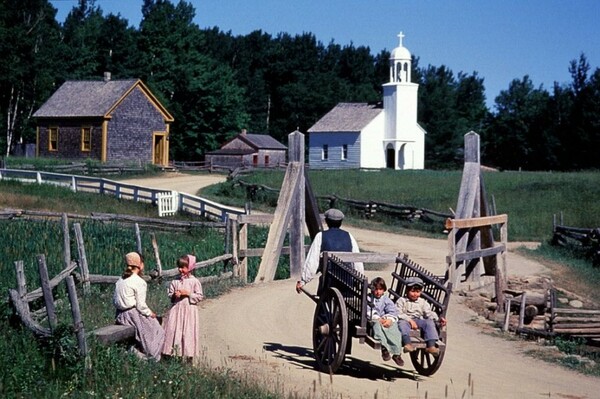
They say that a people or community's future depends on knowing its history. If that's true, a visit to the Acadian Historical Village in Blanchard, near Caraquet, is a must for anyone interested in the history of Acadia and its people.

Village historique Acadien
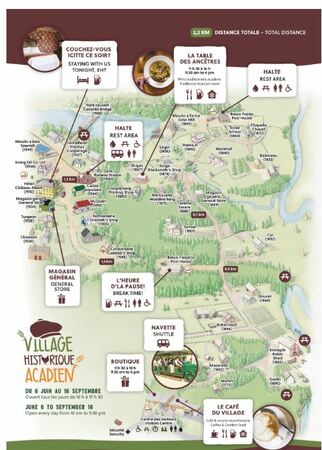
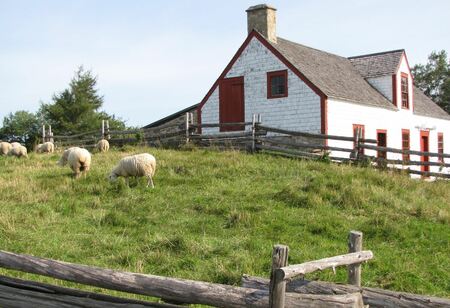
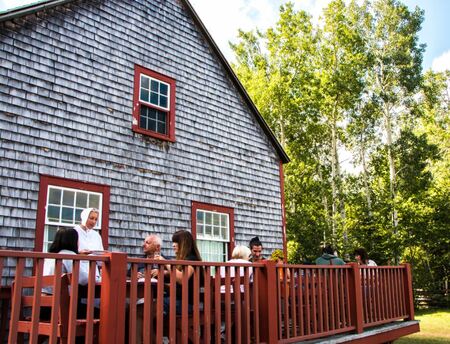
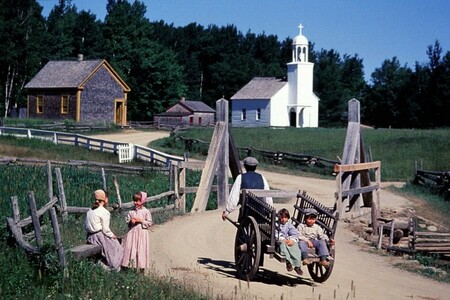
From June to September, the Village showcases the daily life of Acadians from 1770 to 1949, thanks to some forty historical buildings brought to life by costumed, bilingual interpreters. This vast open-air museum also offers a hotel and a restaurant, in addition to activities and entertainment.

Village historique Acadien Village historique Acadien

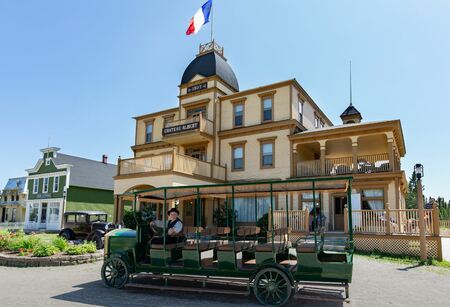
Located in the heart of the Village, the Château Albert Hotel offers 14 rooms and is a replica of the Château Albert, built in 1907 in Caraquet. The rooms respect the historic character, with a few minor details. Enjoy the tranquility of yesteryear in a modern setting. A buffet breakfast is offered to guests.

Village historique Acadien

During a visit to the Historical Village, you can also treat yourself to a snack or a delicious meal. The Village Café-Bistro is a 40-seat family restaurant with a terrace, near the Village entrance. It offers a menu of Acadian dishes and contemporary cuisine staples, as well as a selection of specialty coffees. Open from June 6 to September 16, 9:30 AM to 5:30 PM.
Village historique Acadien
La Table des Ancêtres is housed in the historic Dugas house. The 30-seat restaurant offers traditional Acadian dishes, in addition to the best sugar pie in the region. Discover the delights of yesteryear served with love, just like at Grandma's, from June 6 to September 16, 11:30 AM to 4:00 PM.

The 2024 season has started since June 6. Season passes are available for visits all summer long, for the whole family. The Acadian Historical Village identifies as LGBTQ+ friendly (homosympa).


Village historique Acadien


Acadian Historical Village
villagehistoriqueacadien.com

506.726.2600
5, rue du Pont
Bertrand, NB E1W 0E1


By Gaëtan Vaudry

During our brief stay of a few days in the city of Saguenay, we couldn’t help but stop at Café Cambio on Racine East Street four or five times. Firstly, to enjoy the atmosphere of this downtown Chicoutimi solidarity cooperative, and secondly, to savor affordable and healthy dishes that showcase products from various local producers.

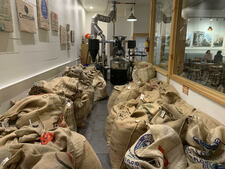
As soon as Virginie Simard-Dufour starts talking about the products available at this fair-trade and organic micro-roastery founded in March 2005, her eyes light up. She speaks passionately about the tireless teamwork of 32 members, including 10 worker-members: Under the label, we embody a vision of a better world—one where farmers and workers sit at the negotiating table as equals ,” proudly notes the service manager, restaurant coordinator, and barista.

Café Cambio, a key gathering spot for students from the Chicoutimi CEGEP and the Université du Québec à Chicoutimi (UQAC), is also a venue for showcasing young Saguenay artists. The establishment regularly hosts art openings and intimate acoustic concerts of emerging music.

Cambio2 Cambio3 Cambio5

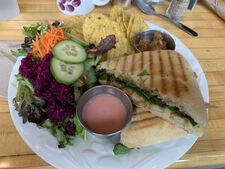
During my visit last November, I had the chance to enjoy some excellent dishes at this establishment, which was the brainchild of two young Montrealers and childhood friends, Guylaine Pelletier and Geneviève Demers. To start, I had a comforting mushroom soup, perfect for that time of year. I followed it with the spicy Bedi panini (Cajun-seasoned chicken, caramelized onions, spinach, mozzarella, and vegenaise), served with salad, corn chips, and salsa. For dessert, I enjoyed the daily special, all accompanied by one of their excellent fair-trade coffees. To my surprise, the bill for this delicious three-course meal was very affordable!

What also struck me during my first visit was their “Pay it Forward” concept, where customers can anonymously donate a soup or coffee to someone in need. Given the growing issue of homelessness in downtown Chicoutimi, this gesture of generosity is truly admirable and meaningful.

Café Cambio’s coffee and products are available at various points of sale across the Saguenay–Lac-Saint-Jean region, including Chicoutimi, Jonquière, La Baie, Saint-Ambroise/Saint-Honoré, MRC Lac-Saint-Jean-Est, MRC Domaine-du-Roy, Bas-Saguenay, Saint-Fulgence/Sainte-Rose-du-Sacré-Cœur, Tadoussac, Les Bergeronnes, Les Escoumins, and even the Côte-Nord!

Café Cambio
414, rue Racine Est, Chicoutimi
418 549-7830
cafecambio.ca

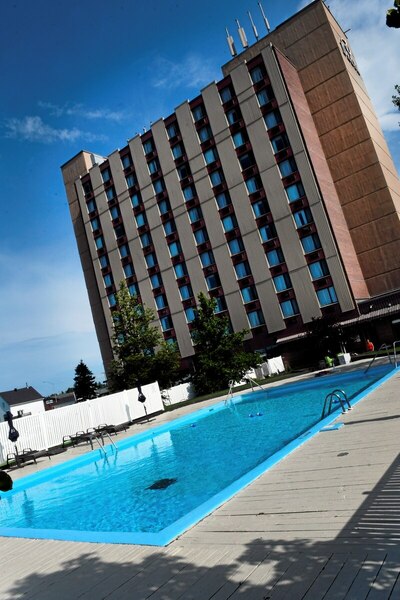
When arriving via Highway 170, which cuts through the entire city of Saguenay, the Delta Saguenay Hotel stands out with its impressive height and sprawling footprint, acting as a welcoming beacon. This sets the tone for what its management offers to visitors, whether for family vacations in the region, a brief work trip, or an event or business meeting at its conference center.


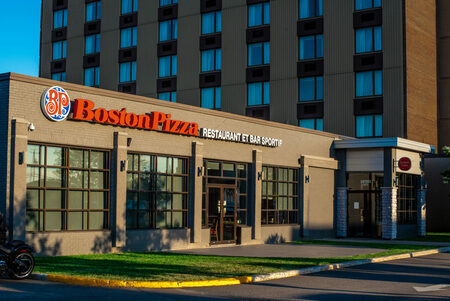
Located in the Jonquière sector of Saguenay, this 4-star Marriott hotel caters to both families and business travelers. It sits slightly outside the city center and away from the Saguenay River, 26 km from Bagotville Airport, which serves the region. With its Boston Pizza restaurant, newly added indoor pool, and fitness center, the Delta Saguenay is one of the premier hotel establishments in the area.

Delta Room 1 Delta Room 1
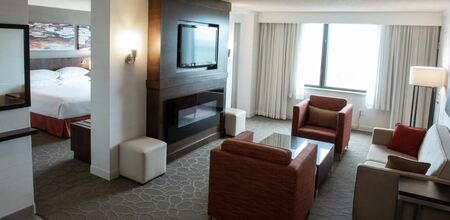
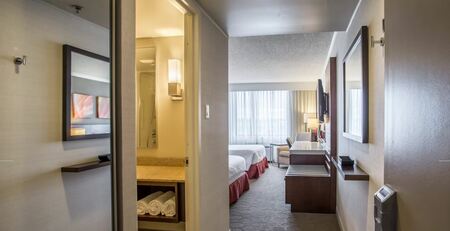
According to the hotel’s General Manager, Olivier Fortin-Tremblay, investments made by the owners since 2012 have transformed it into a unique location in the region. The refined rooms include amenities such as a desk, ergonomic chairs, free Wi-Fi, flat-screen TVs, coffee makers, and mini-fridges. Some rooms feature bathtubs, while others have walk-in showers. Suites additionally include a fridge, microwave, dining area, fireplace, and sofa bed.

Delta Room 1 Delta Room 1
All rooms were renovated in 2012, drawing inspiration from the Canadian landscape with a refreshing and modern color palette and maximized use of natural light. Previously owned by an Ontario financial group, the Delta Saguenay became locally owned in 2017, led by businessman Laval Boulianne with support from the regional FTQ Solidarity Fund.


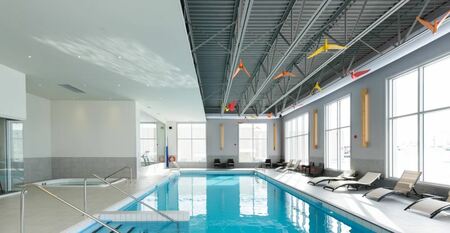
In 2018, the franchise managers invested in building a restaurant near the main lobby entrance, followed by a $1.2 million investment in a two-story annex housing an indoor pool with a spa and sauna, as well as an interactive playroom. These upgrades, operational since 2020, were necessary to attract more families, according to the General Manager. While maintaining its business focus with the conference center, the building now also offers a recreational purpose.

Delta Saguenay
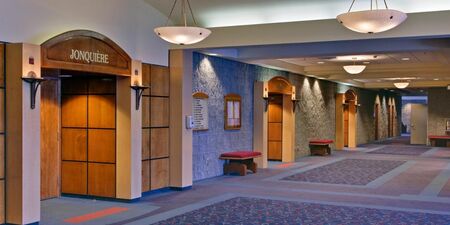
The Delta conference center boasts spacious rooms with all the necessary logistics for major events: 17 conference rooms and a ballroom spanning 11,660 square feet. The venue is highly regarded for the quality of its facilities and professional services provided to organizers of various events and meetings.

 Delta Room 1 Delta Room 1
Of note, the Delta Saguenay also welcomes snowmobiling enthusiasts during winter, given its proximity to major regional and provincial trails. Additionally, the management practices an inclusive guest policy for all visitors.


In fall 2023, the hotel owners hinted at plans to improve the region's accommodation offerings, which are deemed insufficient by local tourism development stakeholders. Studies show that event attendees prefer to stay onsite. The Delta Saguenay currently offers 160 rooms, with plans to increase to 200 by adding a new tower on businessman Laval Boulianne’s property. This project could be realized by early 2024.

Hôtel Delta Saguenay

Website

2675, Boul. du Royaume
Jonquière, QC G7S 5B8
(418) 548-3124

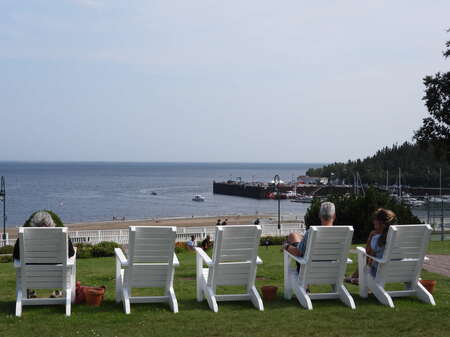
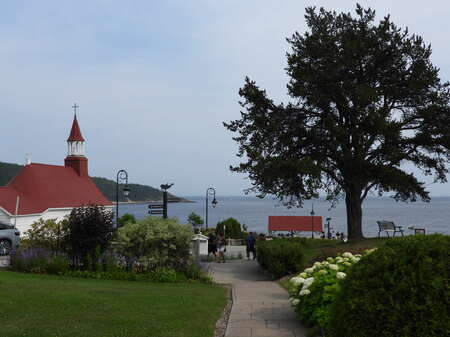
No visit to Tadoussac is complete without a stroll down Rue du Bord-de-l'Eau to admire the bay and its sheltered marina. This street captures the very soul of Tadoussac. It's easy to understand why locals remain captivated by the views before them - since 2000, Tadoussac Bay has belonged to an exclusive club of the world's most beautiful bays, alongside San Francisco Bay and the Bay of Mont-St-Michel in France.

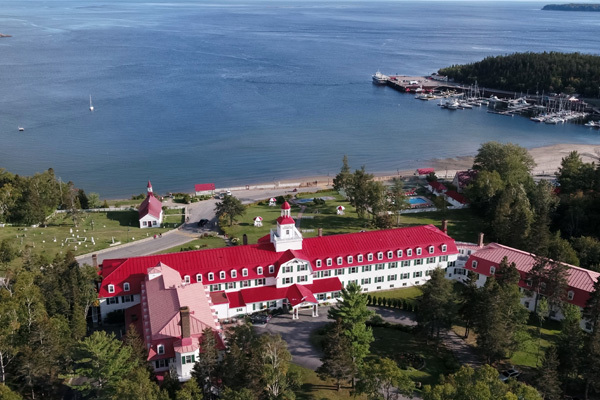
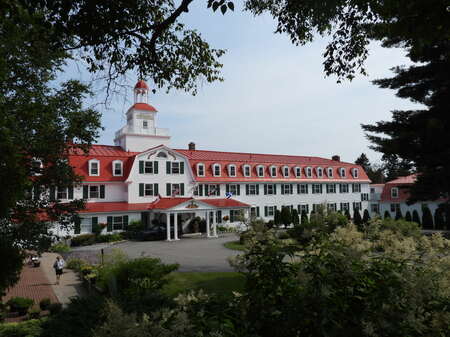
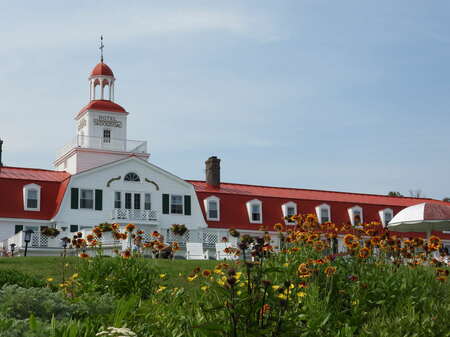
Standing proudly over the bay is an unmistakable landmark: the elegant white-and-red Hôtel Tadoussac. Everything about this property speaks to its exceptional character - from the vibrant flower gardens and towering trees that surround it, to its history-rich interior with period furnishings, renowned dining room, and breathtaking views.

Hôtel Tadoussac Hôtel Tadoussac

The story of the hotel begins in 1864, when wealthy families from Montreal and Quebec City built the original Hôtel Tadoussac. That first building boasted a grand façade with twelve windows spread across three floors. After changing hands in 1879 for $12,000, it underwent its first major renovation in 1888. Sadly, the original hotel was destroyed in the fall of 1941.

A new chapter began in 1942, when William Hugh Coverdale, an Ontario businessman and president of Canada Steamship Lines, rebuilt the hotel. When it opened its doors on June 27th that year, the new hotel offered 137 rooms to welcome guests.

Hôtel Tadoussac  Hôtel Tadoussac

Today's Hôtel Tadoussac carries forward its rich heritage while embracing the future. Though it has changed hands several times, it remains a cherished destination for travelers from around the world.

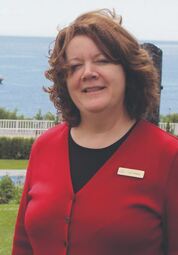
At the helm since 2000 is Tina Tremblay, who brings her own deep connection to Tadoussac. A graduate of Université Laval's business program in 1981, Tina joined the hotel as financial controller in 1985. She has guided the property through five different ownerships, including three changes between 2005 and 2016, when it was acquired by its current owner, a Canadian real estate management company.

The hotel's reputation as a regional leader in sustainable development owes much to Tina's dedication. Her commitment runs deep - not only does she work on Rue du Bord-de-l'Eau, she calls it home. Born in Tadoussac, she grew up playing on these very grounds and the nearby beach, where her grandmother also lived.

Hôtel Tadoussac General Manager since 2000, Tina Tremblay.
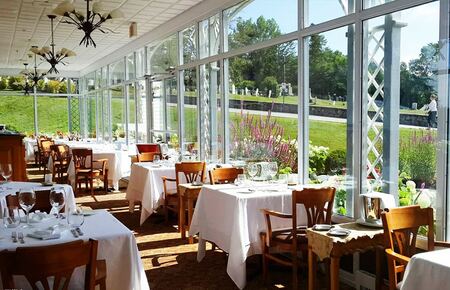
Today's guests can enjoy a full range of activities - from swimming and tennis to hiking and whale-watching excursions. The celebrated Coverdale dining room anchors the culinary experience, complemented by two additional venues: William and Café Lounge Coquart. With 60% of visitors coming from Europe, and year-round conference facilities hosting up to 200 people, the hotel buzzes with international energy.

Hôtel Tadoussac 

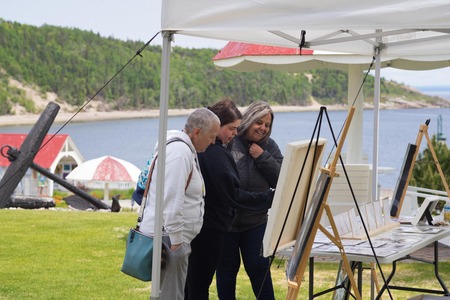
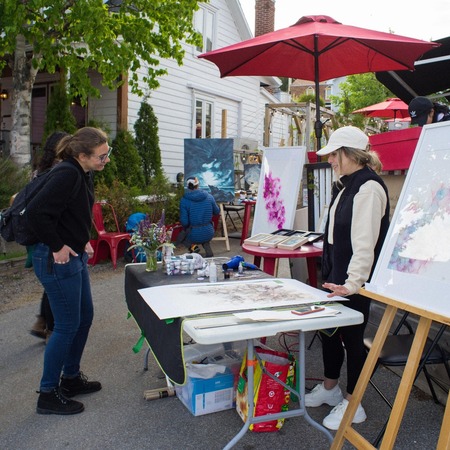
Each June, Tadoussac welcomes the Happening des arts, launching the summer season. In 2025, from June 6th to 8th, artists will once again transform the streets into living galleries, creating works in real time across promenades and outdoor spaces - a truly immersive celebration of art against a stunning backdrop.

Hôtel Tadoussac Hôtel Tadoussac

The Hôtel Tadoussac remains a key partner of this event, which grew from the Tadoussac Song Festival that Tina helped create in 1984. Each year, she also welcomes medical students from Université de Sherbrooke, who combine their conference with enjoying the festival's performances.

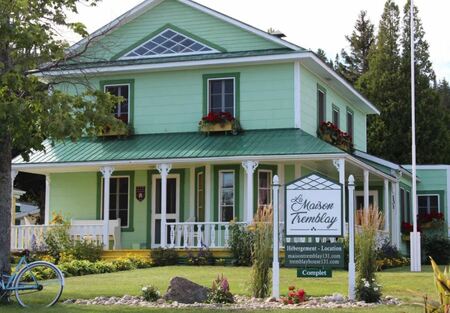
Tina's connection to local heritage extends beyond the hotel - she co-owns the historic Maison Tremblay, her family's home for four generations. Now available for rental, this century-old house offers a unique gathering space where families can come together, accommodating up to ten guests across five bedrooms.

Hôtel Tadoussac

Hôtel Tadoussac
Hôtel Tadoussac
hoteltadoussac.com
165, Rue du Bord-de-l'Eau
Tadoussac, QC G0T 2A0
(418) 235-4421

An authentically Mexican restaurant in the heart of Caraquet, in Acadia? This has been a reality since 2022. Forget some fast-food joints that offer "Mexican" dishes, which are far from representing the gastronomic delights of a country whose cuisine is undoubtedly one of the most varied and refined in the Americas.


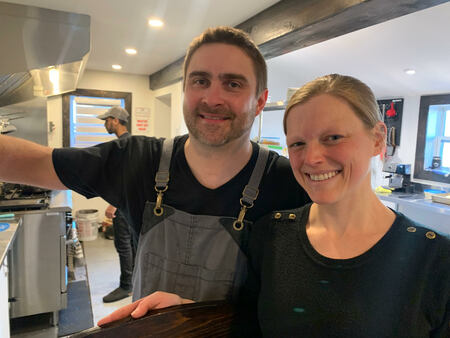
All of this came about after the meeting of an authentic Mexican, Rodolfo Cantu, originally from the city of Monterrey, and a pure Acadian, Marie-Pier Cormier. The couple envisioned their project based on a menu of traditional gastronomic dishes inspired by Mexican cuisine, using local and regional products. The result: flavorful, fresh, and unique dishes.

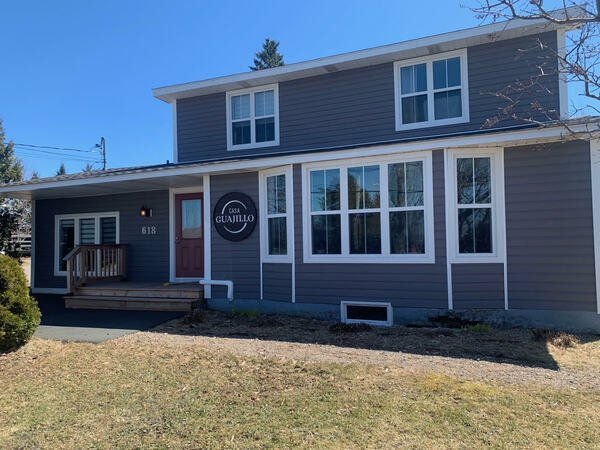
Casa Guajillo
The menu is simple yet varied. The dishes may vary according to the season and the arrival of products. Charcoal grilling and wood smoking, on highly professional and modern equipment, ensure exceptional quality for meats, among other things.

Casa Guajillo Casa Guajillo
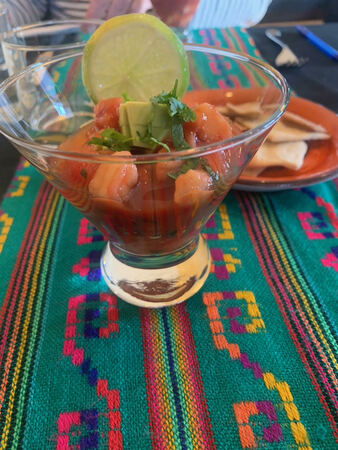
We enjoyed the tasting menu, which offers four different dishes. For starters, a shrimp cocktail, cut into pieces, in a savory sauce enhanced with avocado and seasoned tomatoes. A delight for the taste buds.

Casa Guajillo
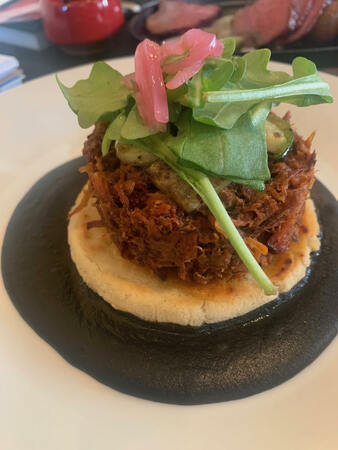
Next came the duo of Ensenada tacos (battered fish) and Pollo a la Parrilla (chicken), both made with corn flour and exquisitely prepared with accompanying sauces. In the third place, it was the Cochinita Pibil, Yucatan-style braised pork, which added a truly surprising touch of taste and flavor to the meal.

Casa Guajillo
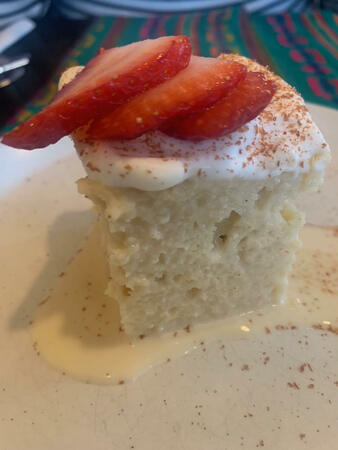
To finish, the Pastel Tres Leches (three milk cake) came to close this series of dishes, leaving no room for restraint or disappointment.

Casa Guajillo
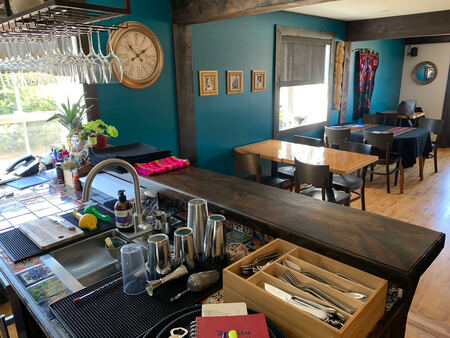
The restaurant also offers various cocktails, tequilas, and mezcals, as well as pairing wines to start the meal or accompany the dishes.
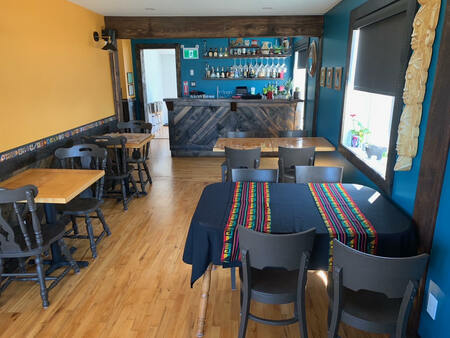
Another element that adds to the pleasure of a meal at Casa Guajillo: it is housed in a more than century-old building that has been creatively and colorfully decorated, as Mexicans know how to do. It can accommodate 22 people, and groups of up to 12 guests. It is also possible to reserve for private events (parties, office parties, etc.).


Marie-Pier, at the bar and service, and Rodolfo in the kitchen, are proud to contribute to diversifying the restaurant offerings in Caraquet and the region with their Mexican gastronomic experience. The numerous clientele has already embraced the place for two years, which is a source of joy for the restaurateur couple.

Casa Guajillo
618, boul. Saint-Pierre
Caraquet, NB E1W 1A2
506 727-4696
facebook.com/casaguajillo

RSS Feed

Subscribe

Categories

Tags

Latest Posts

Archives